Wild Beijing: 2023 Review

As we head into a new year, it’s traditionally a good time to reflect on the previous 12 months. After three difficult years of pandemic restrictions, 2023 was a welcome return to at least some kind of normality in China, with the borders opening up and physical meetings again being possible.  I have been incredibly fortunate to be involved in some exciting and innovative projects and to work with some of the best people I’ve ever met.  I haven’t been very efficient at updating the blog part of the website this year, so here are a few selected highlights from 2023.

First, the nocturnal bird migration study in partnership with the Asian Infrastructure Investment Bank (AIIB) and Peking University. Spring 2023 was the fourth consecutive season of recording nocturnal bird sounds from the rooftop of AIIB’s headquarters in Beijing. In total, we recorded more than 83,000 calls from at least 111 species, all from just one building.

Spectograms of the some of the species recorded at night from the roof of the Asian Infrastructure Investment Bank (AIIB).

A draft scientific paper, led by Peking University, has been submitted to a journal for consideration and, in late November, Liu Shuangqi presented the results to the British Ornithologists’ Union (BOU) conference. This is the first study of its kind in East Asia and, as well as helping to raise public awareness of the ‘invisible miracle’ that happens over our heads as Beijing’s residents sleep at night (thanks to media articles in China and even in The Economist), it has demonstrated the diversity of birds passing over the capital and, importantly, the diversity of their habitat requirements.  It was instructive that the top three species recorded by volume were Olive-backed Pipit Anthus hodgsoni 树鹨 Shù liù (woodland species), Eurasian Skylark Alauda arvensis 云雀 Yúnquè (grassland species) and Black-crowned Night Heron Nycticorax nycticorax 夜鹭 Yè lù (wetland species). This illustrates that if Beijing is to fulfil its role in the flyway – to secure safe passage of migratory birds – it must provide a balance of natural habitats to help these extraordinary travellers to cross what is, to them, a hostile urban environment.  Encouragingly, at the summer 2022 workshop in AIIB to present the initial results, the Beijing municipal government recognised the value of scrub and grassland habitats (until recently classified as ‘waste land’) and committed to integrate the findings of the nocturnal migration project into the way they manage green spaces in Beijing.  Given that the Beijing Municipal Forest and Parks Bureau manages 71% of Beijing’s land, that is a big step.  The last few decades have seen a heavy emphasis on tree-planting in the capital, often at the expense of scrub and grassland, driven by the use of ‘tree-cover’ as the overriding measure of the quality of the environment. In most cases, when trees are planted, it has usually involved single species monocultures, all the same age and in straight lines, with undergrowth and fallen leaves removed to keep the trees ‘tidy’, resulting in very little biodiversity.  We very much hope that this is a turning point towards a more balanced and qualitative approach to habitat management.  It’s going to take time to see significant change but, as the capital city of the country that presided over agreement by more than 190 countries on the new Global Biodiversity Framework under the UN Convention on Biological Diversity, it would be fitting if Beijing led the way towards aligning the city with biodiversity goals by integrating the needs of migratory birds into urban planning.

We are planning to continue monitoring nocturnal bird migration from AIIB’s roof and have received tremendous support from Cornell Lab (Andrew Farnsworth and Benjamin van Doren) to help with automated detections and identifications, which will make processing the recordings more efficient (thus far, all processing has been done manually). Once we have the automated processing working effectively, we plan to explore the potential for schools to deploy recorders on their campuses as a way to expand the monitoring of migratory birds.. and potentially even set up competitions, for example to see which school records the most Olive-backed Pipits in a season.  Huge thanks go to my partners at Peking University, especially Professor Hua Fangyuan and Liu Shuangqi, to AIIB staff for their invaluable support, especially Sir Danny Alexander, Alberto Ninio, Tian Hua, Yan Bo and Li Zeyu, and to the Beijing Municipal government, especially Wang Xiaoping, for the wonderful cooperation and positive response to the findings.

Second, the Ambassadors for Nature initiative has gone from strength to strength. Launched in July 2022 by Clare Fearnley, the former New Zealand Ambassador to China, with 14 founding members, as of 31 December there are 35 ambassadors signed up to support the “pledge for nature”, committing to manage their diplomatic green spaces in a more friendly way for nature. Events this year have been hosted by the Irish, Swiss, Belgian and Slovenian Ambassadors focusing on migratory birds, pollinators and guidance for embassy gardeners, with a field trip to Miyun Reservoir hosted by the Beijing Municipal government.

The Ambassadors for Nature group at the Qingshui River, Miyun District, May 2023.

In addition to encouraging actions – such as planting native pollinator-friendly species, keeping areas wild, reducing and eliminating the use of pesticides, monitoring wildlife and erecting insect hotels, bird and bat boxes to support biodiversity in diplomatic green spaces – the initiative has been a great way to get biodiversity onto the agenda of senior foreign policy officials and to promote international cooperation. For example, thanks to Bruno Angelet, the new Belgian Ambassador, there are plans for a new international cooperation project to study the Beijing Swift involving Chinese, European (Belgian, UK and Swedish) and African (Namibian) scientists, with political support from the Beijing Municipal government and the relevant embassies.  And it was thanks to this network of ambassadors that I was honoured to go birding with US Ambassador Nicholas Burns and his wife, Libby, to Shahe Reservoir in Beijing. Following that, Ambassador Burns invited me to a reception at his residence in honour of visiting California governor, Gavin Newsom. I briefed Governor Newsom on the incredible story of one particular migratory bird that connects China and the US (Alaska) – the Bar-tailed Godwit – and discussed the potential for a three-way ‘(Inter)National Park’ involving New Zealand, Yellow Sea of China and Alaska to celebrate this incredible bird as a way of celebrating biodiversity and building bridges. I believe Gavin has high political ambitions, so maybe it planted a seed!

California Governor Gavin Newsom at a reception at the US Embassy in Beijing at the end of his visit to China in October 2023.

The Ambassadors for Nature initiative has also provided opportunities to engage on biodiversity with visiting ministers from a range of participating countries, including the New Zealand Foreign Minister and the Canadian Environment Minister.

With the visiting Canadian Environment Minister, Steven Guilbeault, at Shahe Reservoir

In addition, building on the success of the Ambassadors for Nature initiative in Beijing, I understand that the New Zealand ministry of foreign affairs is considering the idea of encouraging ALL of its embassies overseas commit to the ‘pledge for nature‘.  And the UN Development Programme (UNDP) in the Republic of Korea is planning to begin a similar initiative with foreign embassies in Seoul.

At the same time, several schools have adopted the ‘pledge for nature‘ and are applying it to their campuses.  It has been wonderful to work with students and teachers, including at the Western Academy of Beijing (WAB), where different groups of students have led on implementing each aspect of the pledge.  Helping nature is infectious!

This group of students at the Western Academy of Beijing has taken responsibility for identifying a suitable area to leave wild and to monitor changes in the wildlife, especially insects, for comparison with the remainder of the campus.

Third, I’ve been part of a small group pushing for the control of the sale of mist nets. Despite strengthened wildlife protection laws, improved law enforcement and greater public awareness, mist nets remain one of the biggest killers of migratory birds in China (and SE Asia). Even in Beijing, poachers still operate.  In the capital, these criminals target mainly Siberian Rubythroat and Bluethroat for the cagebird trade but data from prosecutors show that mist nets have been used in many large-scale trapping efforts, both for the cagebird trade and for exotic food, all across China. Twice this year I have personally encountered poachers using nets to trap migratory birds in Shunyi District. The map below, produced by Gu Xuan, shows the locations where poachers have been apprehended in Beijing in 2023 alone. 

A map showing the locations where poachers have been caught in Beijing in 2023 (Gu Xuan).

The good news is that there is determination to tackle this illegal activity and there is a lot going on behind the scenes that I hope to be able to talk about in a future post.  Needless to say, action is starting and, today, if you search for mist nets on e-commerce platforms, a warning appears that it is illegal to capture wild birds, and this is just the start.

At the same time, it is likely that the UN Convention on Migratory Species will promote tackling the illegal killing of birds, including with nets, at its next meeting in February 2024, so I am optimistic that further progress will be made this year both in China and internationally.

Fourth, over the last few years it has been the privilege of my life to work with ShanShui Conservation Center to help set up the “Valley of the Cats” project in Qinghai Province on the Tibetan Plateau. This is the community-based conservation and wildlife-tourism project, working with a village of Tibetan yak herder families. The herder families host visitors in their homes and guide them to look for the special wildlife they have in the area, including snow leopard, wolf, lynx etc. Many visitors remark on what a privilege it is to experience authentic Tibetan hospitality, as well as having the opportunity to see the elusive snow leopard. At the end of 2023, the project is close to passing the milestone of 4 million RMB (GBP 440,000) of revenue, 100% of which has stayed in the community. The project was showcased at the 2nd National Parks forum in Xining in August 2023 as an example of sustainable tourism and a way to bring income into local communities to reward them for their stewardship of important and fragile landscapes, and has won a host of national awards. In late August 2023, following the National Parks Forum, with ShanShui Conservation Center I visited two other (spectacular) villages that are interested in setting up similar initiatives. 

A glacier at 5,000m asl near Diqing, Qinghai Province

One of the spectacular valleys in Diqing at 4,900m asl.  

There is no doubt that the Valley of the Cats model, focusing on low volume and community-led tourism, can help to bring income to relatively poor communities while protecting fragile ecosystems.  However, it is not a model that will work everywhere.  In my view, three conditions are required for success: first, the presence of sought after wildlife (to create demand); second, a robust and established community structure that is able to handle decision-making and deal authoritatively with any issues that arise; and third, a supportive local government (essential in China).  It will take time to establish similar projects in other villages but the high interest from other communities reflects the potential of this approach to engage and support communities inside China’s national parks.  ShanShui Conservation Center, powered by a terrific group of enthusiastic and dedicated young people, is doing brilliant work and I cannot praise them enough for the contribution this NGO is making to conservation in China.  

It was during the September visit to Qinghai that we were fortunate to enjoy a stunning encounter with a female snow leopard next to the track.. Alerted by the alarm calls of several marmots as we were driving, we stopped to check whether there was a predator in the vicinity. Looking at the directions faced by the calling marmots, and triangulating their lines of sight, we were able to spot the big cat as she stalked one of the rodents. When just a few metres away, she made a dash but the marmot disappeared down its burrow in a cloud of dust in the nick of time. The video below (low resolution for ease of uploading) was taken just after the failed hunt using my iPhone attached to my Swarovski ATX95 scope.

Watching a snow leopard from the track in the Valley of the Cats, August 2023

Special thanks to Shi Xiangying, Zhao Xiang, Yuqiu (Iris), Jun Yi (Audrey) and Qiuni for their hard work and for a wonderful trip in August.

Fifth, after my brush with TV in 2019 when I enjoyed the incredible experience of filming with Ray Mears as part of his Wild China series, I seem to have somehow become a (somewhat reluctant!) TV presenter in China. In April I spent a week at Tiaozini, Dongtan, Jiangsu Province, with CCTV4 making a documentary to highlight the importance of coastal wetlands and migratory birds.  Tiaozini is at the heart of the East Asian-Australasian Flyway and is a vital stopover for millions of migratory shorebirds – natural heritage that is shared by 22 countries from New Zealand in the south to Arctic Russia and Alaska in the north.  The programme aired in June on prime time TV. And September saw the launch of National Geographic/CICC’s “Road to Carbon Neutrality”, a two-part documentary series.  The two episodes, hosted by China-based photojournalist Sean Gallagher and me respectively, focus on nationwide efforts to reduce China’s carbon emissions in order to meet the twin goals of peaking emissions by 2030 and achieving net zero by 2060.  Filmed in 2022, navigating all manner of pandemic-related restrictions, the documentary has been shown in more than 50 countries worldwide.  And in November I appeared in an episode of UK explorer, Ash Dykes’ series “The Great Wall with Ash Dykes”, speaking with Ash about the wildlife of the Great Wall around Beijing.  Later that month I was invited to the studio of CCTV’s international channel, CGTN, to film a talk on the importance of biodiversity and what people can do to help.  That aired in early December.  It is encouraging to see the growing media interest in biodiversity in China and, although I am not a natural in front of the camera, I am happy to do anything that will help to advance the interests of nature.

Filming in Tiaozini about the importance of coastal wetlands and migratory birds, April 2023

Finally, at the end of the year, I was able to spend Christmas with my family in Norfolk for the first time since 2019.  It was a wonderful chance to spend time with my elderly parents and to catch up on some of the incredible wildlife experiences in north Norfolk, especially the spectacular flights of Pink-footed Geese at Holkham.

This year, I was keen to record the awesome sound of the geese and the 22-min soundscape below starts with the wakening of the local Eurasian Wrens and Blackbirds before the Pink-footed Geese begin to lift, passing over in groups, their calls slowly growing in intensity.  At 07m50s the local Jackdaws leave their roost and, towards the end, the calls and song of Goldfinches tinkle as the last of the geese leave the roost.  Best enjoyed with headphones!  Thanks to Holkham Nature Reserve manager, Jake Fiennes, for tips on where best to record the geese.

As if that experience wasn’t incredible enough, for a few days before Christmas, rare nacreous (“mother of pearl”) clouds were visible, providing a stunning backdrop as the geese returned to their roost at dusk… 

Pink-footed Geese returning to Holkham National Nature Reserve just after sunset against a backdrop of nacreous ‘mother of pearl’ clouds.

A lone Eurasian Curlew going to roost at dusk as nacreous clouds light up the evening sky.

It was a fitting end to 2023, a reminder of the breathtaking beauty of nature and why I do what I do.  

As we begin 2024, I would like to acknowledge the brilliant, and growing, group of conservationists in China who are doing wonderful work to celebrate and protect the special wildlife we have all around us, and the places it needs. It is an ongoing privilege to support what you do!

Finally finally, some of you may have noticed that Birding Beijing has evolved into Wild Beijing. This reflects the broadening interest and coverage of the website.  As well as the branding, the web address has also changed from birdingbeijing.com to wildbeijing.org.  There will be an automatic redirect for a few months but, in due course, only wildbeijing.org will be accessible, so please update any bookmarks.  Subscriptions for alerts about new posts have been automatically transferred to the new site.

Wishing everyone a happy, healthy and nature-filled 2024!

Watercolour of an (Amur) Leopard Cat (Prionailurus bengalensis, 豹猫, Bàomāo), January 2024.  This small cat (around 50% bigger than the average house cat) is native to Beijing and can be found in the mountains and in some wetlands where there is lots of cover.  As an ambush hunter it needs scrub and grassland, both habitats that have decreased significantly in lowland Beijing due to development and tree-planting.  Primarily nocturnal, sightings during daylight hours are rare. This small painting is in celebration of an incredible sighting in Tongzhou District in December 2023.  More details here.


Title image: a Beijing Swift (Apus apus pekinensis 北京雨燕 Běijīng yǔyàn) flying through a rainbow, Wenyu River, June 2023.
Battle Of Shunyi: Police Arrest Two Poachers!

After an evening of drama, tonight the Beijing police arrested two poachers on my local patch.  Returning home at about 5pm I decided to go to the roof of my apartment block to scan for illegal mist nets.  To my surprise there were two guys putting up nets in the same area as on Friday!  It was just a few days after I discovered, and took down, some illegal mist nets and told the poacher that if I saw him again I would send his photo to the police.  And yet here he was again, with a friend, in exactly the same spot.  He can’t say he wasn’t warned!

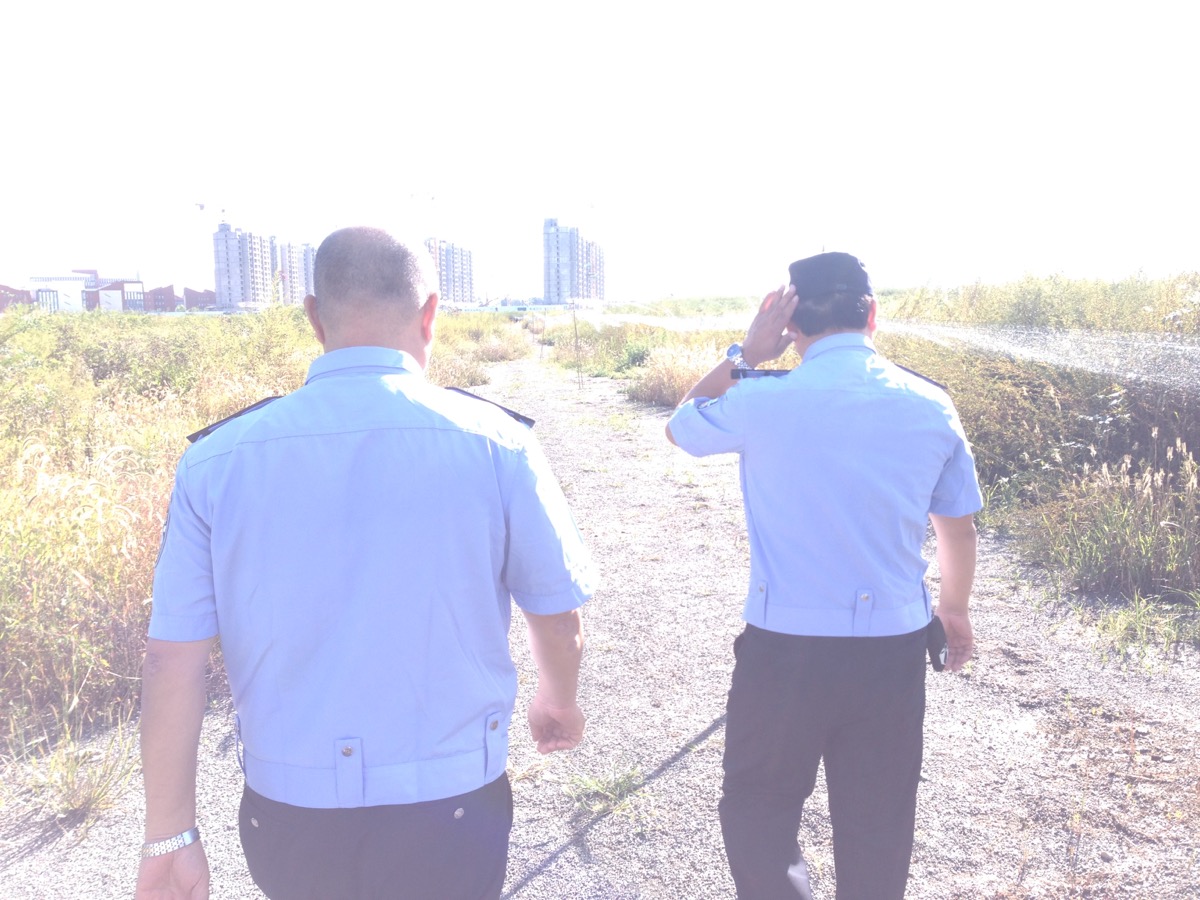
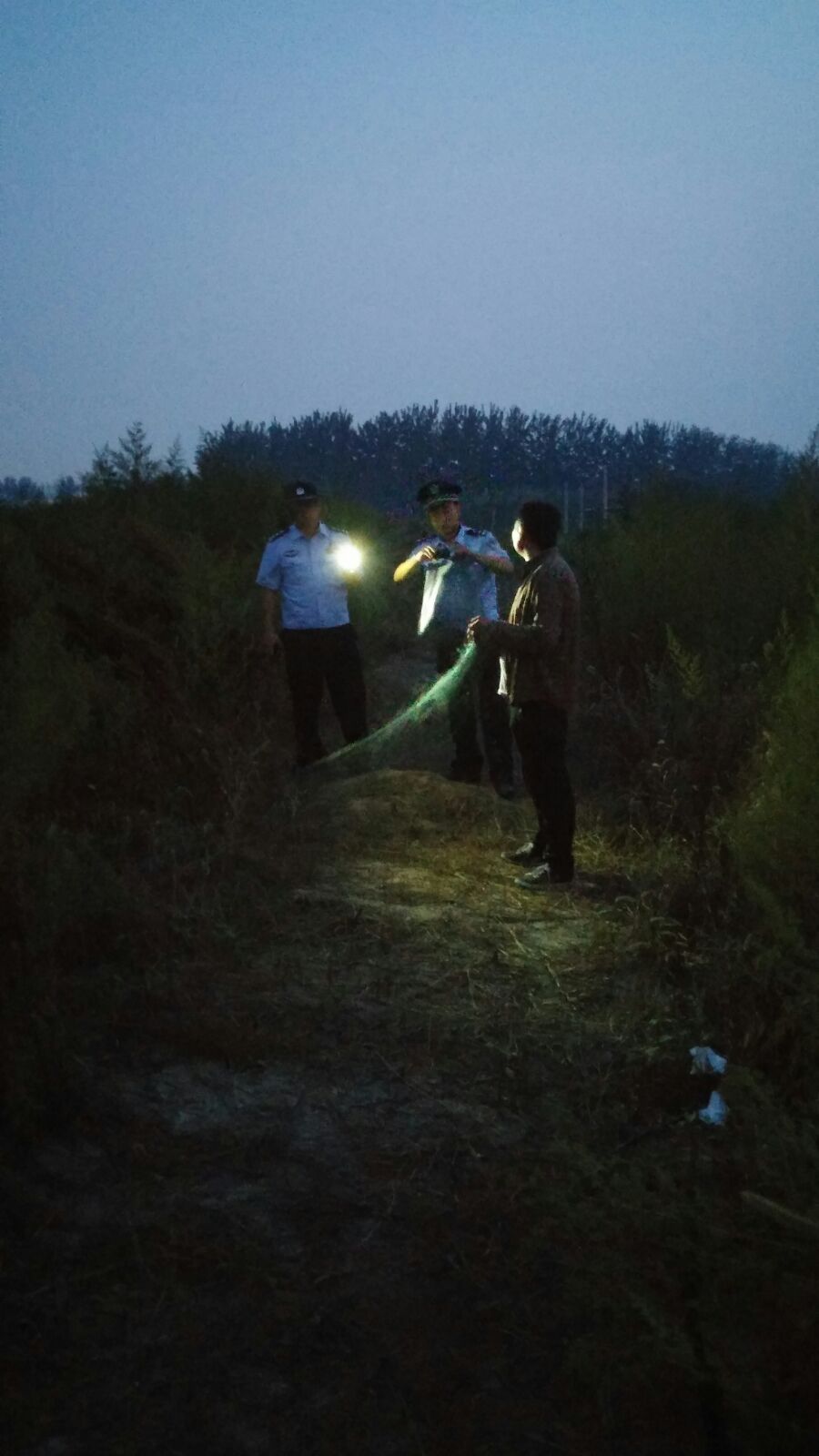
After a quick phonecall the police were on their way and, this time, they would catch the poachers red-handed.  One had a Japanese Sparrowhawk and, as I led the police to the spot, the poacher inadvertently walked straight towards us with his illegally caught bird of prey on his wrist.  He was so shocked to see us that he froze, allowing one of the officers to grab him by the scruff of the neck.  After a few choice words the poacher led the police to the mist nets and it was here that they apprehended, after a brief attempt to flea, the second poacher.  After taking photos for evidence and then taking down the nets, the police escorted the poachers to the local police station for questioning.  I don’t know what the outcome will be but being in possession of a bird of prey, a state protected species, is a serious offence.

And so, after several days of battling these poachers, it was gratifying to finally catch them.  I cannot praise the Shunyi State Forestry Police high enough.  They responded quickly, with enthusiasm, and effectively apprehended the poachers.  I am sure these guys will refrain from trapping wild birds for the foreseeable future.. and I hope their arrest will act as a deterrent for others, too.

The Beijing State Forestry Police apprehending one of the poachers.
Beijing police taking down the illegal mist nets.

The Battle of Shunyi: Local Police Act Fast To Tackle Wildlife Crime!

With autumn migration in full swing, poachers are out in force trying to trap species such as the Siberian Rubythroat or Bluethroat for the cage bird trade.  Encouragingly, the local police are acting fast and doing what they can to stop them!

When I moved to the Shunyi District of Beijing this Spring, I was lucky enough to find, very close to my apartment block, an area of scrub.  Scrub, as any birder will tell you, attracts birds and, during spring and autumn migration in Beijing, a LOT of birds.  Since early May I have recorded exactly 70 species in this little wild patch on the outskirts of one of the most populous capital cities in the world.  Right now it hosts Siberian Rubythroats, Thick-billed, Lanceolated, Pallas’s Grasshopper, Dusky and Yellow-browed Warblers, Stonechats and Brown Shrikes.

It is perhaps not a surprise that the area has also attracted the attention of poachers who illegally trap birds for the cage bird trade.  The last few days – peak migration season for some of the most sought-after species, such as Siberian Rubythroat and Bluethroat – has seen the beginning of a battle…  between me, the birder (and good guy, obviously), and the poachers (the bad guys).

Here are the events of the last few days:

First, three days ago, I discovered about 150m of mist nets with a MP3 player blaring out the song of Siberian Rubythroat.  In fact it was the song – which I assumed was coming from a wild bird, unusually singing in autumn – that first drew me to the precise spot.  As I climbed over a heavily weeded mound, there they were – mist nets, very carefully and professionally set up.

2015-09-09 Illegal nets in Shunyi
The poachers place their illegal mist nets along lines of cleared scrub, catching birds as they fly from one side of the clearing to the other.

At this point I couldn’t see anyone, although I suspected the poacher was nearby.  Without thinking, I immediately started to dismantle the nets, ripping them so they would be rendered useless and snapping the bamboo poles and chords..  After a few minutes the poacher appeared and shouted at me to leave the nets and to go.  I think he knew by the look in my eye and the expression on my face, that wasn’t going to happen.  I grabbed my camera and, despite him becoming incredibly camera-shy, I took a photo of him before continuing to dismantle the nets.  I told him that he was breaking the law and that I would call the police.  He suddenly became very cooperative, offered me a cigarette (refused) and even started to help me take down the nets.  After about 10-15 minutes I had destroyed all of the nets and poles.  I made it clear that if I saw him again, I would send his photo to the police.

2015-09-07 Illegal nets in Shunyi dismantled
Dismantled mist nets. These will never be used again to catch wild birds.
2015-09-07 poacher in shunyi
The camera-shy poacher in Shunyi.
2015-09-10 Siberian Rubythroat in illegal mist net
A SIBERIAN RUBYTHROAT trapped in an illegal net. This one was lucky – after release, it flew off strongly.

The next morning, I was on site at first light to check the area.  There were no nets and no poacher.  I began to check the vicinity and immediately found a mist net, not far from the scene of the encounter the day before and, I suspect, abandoned by the same poacher.  There were 6 birds caught up, their struggles to free themselves only causing them to become more entangled.  There were 2 Siberian Rubythroats, a Pallas’s Grasshopper Warbler, 2 Stonechats and a Richard’s Pipit.  My first priority was to release the birds and it took me 30 minutes of careful and concentrated effort to free them all.  One of the Rubythroats was particularly weak but, after resting on the ground for a few minutes, managed to fly into the scrub.  One of the Stonechats had a wounded leg but nevertheless was able to fly strongly.  The Richard’s Pipit flew up high, uttering it’s familiar “shreep” call before heading strongly southeast – a wonderful sight to see.  The Pallas’s Grasshopper Warbler, as anyone who has seen one will be familiar with, darted into deep cover never to be seen again.  After dismantling the net and breaking the poles and chords, I searched the rest of the area before heading home for breakfast.

Fast forward to this morning.  I was due to have a Chinese lesson at 0900, which would mean leaving my apartment at around 0800.  Before heading out, I decided to spend an hour or so on the roof of my apartment block to see whether there was any visible migration after the overnight rain.  With a few Richard’s Pipits and Yellow Wagtails moving, there were enough birds to hold my interest but nothing spectacular.  After about half an hour I realised that the height of the roof provided a great vantage point from which to scan the whole area for mist nets.  It wasn’t long before I could see about 300m of mist nets with four guys standing around and occasionally retrieving unfortunate birds as they flew into the invisible traps.  My heart sank.  A friend had provided me with the number of the local police and, after calling them, I was surprised and delighted with their response – they would come immediately!  My directions were not perfect (my Chinese is still not of a sufficient standard) so they asked me to meet them there to show them the spot.  I cycled and waited by the roadside, the poachers and nets out of sight the other side of a wall adjacent to the road.  It wasn’t long before one of the poachers appeared from behind the wall to fetch some water from his car.. As he walked past me, he looked at me suspiciously as I desperately tried to pretend (unsuccessfully, I think!) that the reason for me being there was that I had a problem with my bike..!  A few minutes later, two of the poachers emerged and drove away…  I suspected that they realised something was afoot.  Just a few seconds later the police arrived… but on climbing through the hole in the wall, the poachers were now nowhere to be seen – they had almost certainly been spooked and, as two of the poachers drove their cars to the other side of the scrubby area, another had taken out all of the birds and the poachers’ belongings via another entrance (the movement of cars seemed to suggest this).  Nevertheless, the police and I took down and destroyed all of the nets and the police took copies of the photos of the poachers’ vehicles I had taken with my iPhone.  Although the police must catch the poachers red-handed if they are to secure a prosecution, the evidence helps to build up a supporting case.

2015-09-11 Police examining nets in Shunyi
Shunyi Police were quickly on the scene and destroyed the nets.

So, although the poachers got away this morning, I feel hugely encouraged.  The Shunyi police were superb.  They responded quickly (on site within half an hour), they were supportive and the chief officer even gave me his personal mobile phone number and said to call him straight away if I find more nets or poachers.  I suspect the poachers were given a good scare, too, and I would be surprised if they returned to this area.  This was a model response by the police and they should be congratulated for taking wildlife crime seriously.  I will certainly be saying lots of good things about them on Chinese social media.

If further motivation was needed to stamp out this cruel practice, I was shocked to find the head of a Dusky Warbler underneath one of the nets.  The Dusky Warbler is insectivorous and is not a beautiful singer.  It is “by-catch” for the poachers who are targeting Siberian Rubythroats and Bluethroats. To see the way they trapped, killed and discarded this tiny bird, on its already hazardous migration from Siberia to southern China, was heartbreaking.  However, it makes me more determined to stand up for wild birds.

Tragic: The head of a Dusky Warbler. For the poachers, it's worthless and is simply discarded.
Tragic: The head of a Dusky Warbler. For the poachers, it’s worthless and is simply discarded.

The Battle of Shunyi rages but, with the police onside and the poachers on the run, it’s only a matter of time before the good guys win!

Shorebirding at Nanpu and more illegal trapping

At the Beijing birders meet-up we arranged for a group trip to Nanpu, near Tangshan in Hebei Province.  In total, 15 of us – both ex-pats and locals – spent the weekend at this world-class site and it was a superb trip – great fun with lots of birds!

2013-08-21 Birds
The backdrop may not be pretty but the birding is spectacular at Nanpu.

Perhaps the best single bird in terms of rarity was an ORIENTAL STORK that came in off the sea.  And amongst the other highlights were impressive numbers of shorebirds with 4,700 SHARP-TAILED SANDPIPERS and 2,325 DUNLIN, a single RUFF (rare here), five juvenile RED-NECKED PHALAROPES, at least six first-year SAUNDERS’S and up to 80 RELICT GULLS and decent numbers of passerines moving down the coast.  High counts included 54 BLACK-NAPED ORIOLES (including a single flock of 23 birds!), 100 DUSKY WARBLERS, 300 SIBERIAN STONECHATS, up to 150 RICHARD’S PIPITS, two BLYTH’S PIPITS, two PECHORA PIPITS and six YELLOW-BROWED BUNTINGS.

A typically thorough full report by Paul Holt can be downloaded here: Birding coastal Tangshan, Hebei 7 & 8 September 2013

Per shorebirding at Nanpu.
Per checking out the waders on a roadside pond at Nanpu.
This is "EVA" the Bar-tailed Godwit.  Colour-flagging of migratory shorebirds helps researchers to better understand the routes these birds take and the stopover sites they use which, in turn informs conservation measures.  You can read about EVA's history in the trip report.
This is “EVA” the Bar-tailed Godwit. Colour-flagging of migratory shorebirds helps researchers to better understand the routes these birds take and the stopover sites they use which, in turn informs conservation measures. You can read about EVA’s history in the trip report.
Juvenile Red-necked Stint.  Beautiful birds!
Juvenile Red-necked Stint. Beautiful birds!
Gull-billed Tern.
Gull-billed Tern.

It was hot at Nanpu and, fortunately, there is a small village where one can purchase ice creams!  I can thoroughly recommend the ‘traditional flavour’ ice lollies..  delicious (even though I am not sure of what exactly they taste!).  The locals here make their living from the mudflats, where they harvest the shellfish and shrimps.  Here are a few maintaining their nets.

Local ladies maintaining the shrimp nets

And in the early mornings, our 0500 starts were made (slightly) easier by the delicious bao zi (steamed dumplings) that were on sale for the equivalent of 5p each…

Jan-Erik and Andrew browsing the local bao zi stall.

At the coast, where passerine migration was most impressive, we unfortunately encountered more illegal bird trapping activity.  From the car, Paul heard a Yellow-breasted Bunting singing and we stopped to investigate.  We very quickly saw a line of mist nets in the grass close by.  The poacher had set up an elaborate line of nets accompanied by caged songbirds, clearly designed to lure in wild birds.  The caged birds included Common Rosefinch, Yellow-breasted and Yellow-browed Buntings – three species that were clearly moving at this time of year.

2013-09-07 YBBunting and mist nets

A male Common Rosefinch strategically placed to lure in wild birds.
A distressed-looking male Yellow-breasted Bunting, now officially an endangered species after years of persecution.

In the nets we found alive 2 Common Rosefinches plus Yellow-browed, Arctic and Dusky Warblers, which we promptly released. But it was too late for 4 Brown Shrikes which had fallen victim to this cruel practice.

The poacher soon arrived (claiming that the nets were his friend’s and not his – yeah right).  We told him firmly that this was illegal and that we would be taking photos and reporting him to the Hebei Forestry Administration.  He did not protest and actually helped us to dismantle and destroy the nets, snap the poles, release the caged birds and destroy the cages.  On return to Beijing I posted the photos on Sina Weibo (Chinese “Twitter”) asking for help in reporting this illegal activity.  Within 10 minutes, users on the microblogging service had translated my report into mandarin and submitted it to the Hebei Forestry Administration…  wow!  The power of social media.  Thanks guys!

Ironically, the next day we were ejected from this area by local security guards from the nearby oil terminal and police who claimed that it was a “nature reserve”.  So it’s ok to drill for oil and trap wild birds in a nature reserve but birding is a step too far…!  A big thank you to Lei Ming and friends for following up on my behalf with the Hebei Forestry Administration.

The trapper was surprisingly cooperative as we dismantled the nets and freed the trapped birds.
The trapper was surprisingly cooperative as we dismantled the nets and freed the trapped birds.  Here he frees a first year/ female Common Rosefinch

Action Against Illegal Mist Nets in China

I recently wrote a short blog post about illegal mist nets in China.  In that post I expressed optimism that the practice of trapping and killing birds might be slowly dying out in China.

Shortly after I wrote that post, a Swedish birding colleague based in Tianjin discovered up to 2km (!) of illegal nets in a large reedbed at Beidagang Reservoir, supposedly a nature reserve.  This sparked an outcry from local birders and, with the help of Chinese birding friends in Beijing and Tianjin, these nets have now been photographed, the details reported to the local authorities and those nets that were reachable have been destroyed.

Birders with experience of ringing birds in similar habitats in China have provided a rough estimate of the number of birds that might be killed in nets of this scale.  One explained that, in a typical 3-hour morning period, you would expect to catch and ring 50 to 60 birds in three lines of mist nets with a total length of 250 meters.

If we use these figures, and simple math, to estimate the impact of the illegal mist nets at Beidagang Reservoir, we reach a total of 400 birds per day.  However, this is clearly a minimum as the ringing data is based on only 3 hours of peak activities in the early morning.  The real number could easily be 600 or more per day for 2 kms of mist nets that are in place 24 hrs a day.  Going further, if we consider a migration period of 3 months, this gives a total of 55,000 birds that could be killed every year in this single line of mist nets.  If there are 20 places like this along the chinese coast (which is undoubtedly a conservative estimate), the total quickly multiplies to 1 million birds killed every year during autumn migration.  This is simply unacceptable.

Shi Jin, a Beijing-based birder, has had enough and has started a new initiative to publicise this illegal activity. A dedicated web page has been set up, in Chinese and English, with the purpose of highlighting and shaming those involved.  Readers are encouraged to send in photographs and short texts about their experiences.  Already several contributors have uploaded some shocking images.

At the same time, there has been outcry on Chinese social media networks this week after a video was published by undercover journalist Li Feng from Changsha Evening News showing how hunters in Hunan Province are using lights to lure in migrants at night before blasting them with (illegal) guns.  You can view the (disturbing) video here.

It is encouraging that this illegal activity is now receiving public attention and the reaction of ordinary netizens has been overwhelmingly hostile towards the perpetrators.  By building public awareness and increasing the pressure on the police and local authorities to put a stop to this practice, there is a chance that this disgusting and illegal activity can be eradicated.

If you have any examples of illegal bird trapping in China, or would simply like to offer your support to this campaign, please visit the site and either upload your experiences or leave a comment.  Let’s keep up the pressure to help save these wild birds.

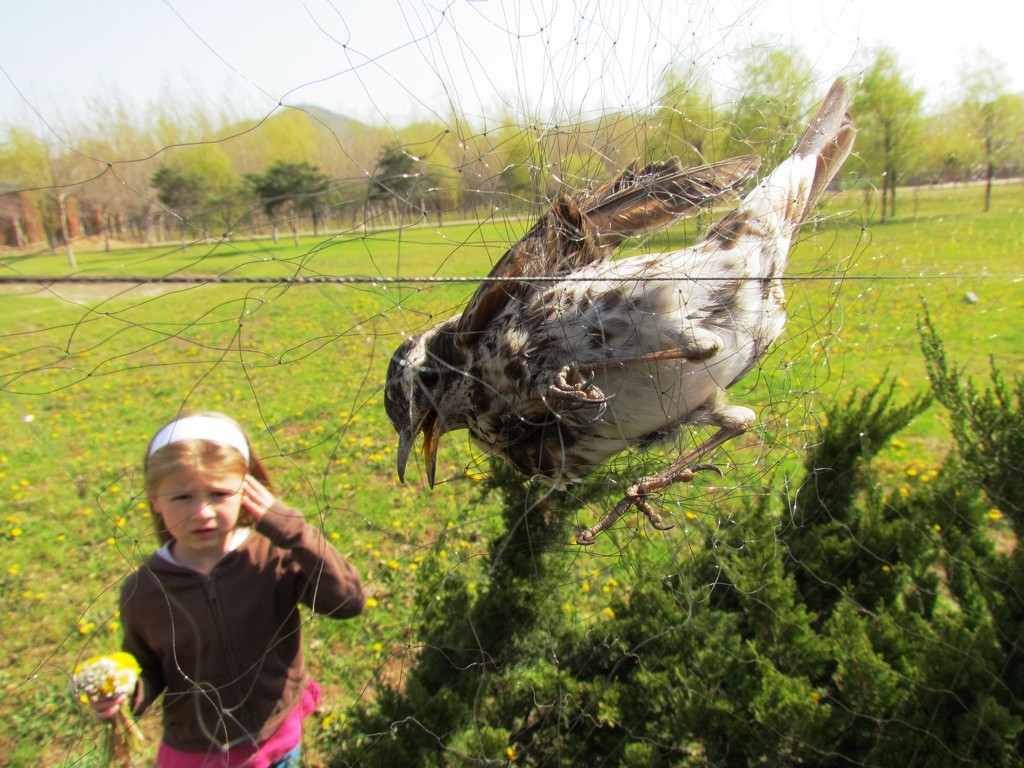
Finding birds in illegal mist nets is distressing. This image was taken near Dalian, Liaoning Province. Photo copyright Tom Beeke.

Illegal Mist Nets in China

Sadly, it is still relatively common to find illegal mist nets in China.  Most appear to be erected by poor people who will likely either eat the birds caught or sell them as cagebirds, if they are popular species.  For me, it is always with a heavy heart that I try to render the nets unusable, knowing on the one hand that they are illegal under Chinese law but, at the same time, that for some people, bird trapping may form an important part of their income.

Encouragingly, the practice of trapping birds seems to be declining, with the market for cagebirds predominantly being driven by a slowly shrinking older generation, so hopefully in the not too distant future illegal mist nets will be a thing of the past in China.

Whilst at Laotieshan for several days last week we bumped into a few members of the Panjin Birdwatching Society (from northern Liaoning).  The group, led by the famous Mr Zhang Ming (a very talented photographer) was predominantly interested in bird photography and were visiting to take advantage of the raptor migration at Laotieshan.  Mr Zhang told us about the sighting of a Band-bellied Crake on a very small pool near to Dalian city..  Having never seen this species, Mr Zhang and his friends offered to take us there..  so off we went in a small convoy of 4x4s for the short journey to the site.  After stopping for a delicious lunch, during which Mr Zhang showed us some stunning images of rare and difficult to see Chinese birds, including Jankowski’s Bunting, we arrived at the site and began to look for the specific pond.  It wasn’t long before we found it but, despite observing the weedy fringes for close on 2 hours, there were no signs of any crakes and we were forced to assume that the bird had moved on.  Whilst exploring the site we came across several illegal mist nets, some of which held live birds.  It was pleasing to see the Panjin Birdwatching Society members rescue the birds, take down the nets and destroy them.  And much better that they were taken down by Chinese birders and not ‘interfering foreigners’..!

Members of the Panjin Birdwatching Society proudly displaying their society’s flag, alongside Paul Holt and Wang Qingyu, Dalian, Liaoning Province.
Mr Zhang, who must be one of China’s most talented bird photographers (and a very nice guy).
Mr Zhang junior saved this Common Kingfisher from one of the illegal mist nets
This Brown Shrike was also released from the illegal mist nets.
This Yellow-browed Warbler, although released, was very poorly and, sadly, probably didn’t make it.