Spring is when nature puts its foot on the gas. Plants and insects emerge, migratory birds race to their breeding grounds, and mammals take advantage of the bounty to raise the next generation. Amphibians are no different — and this spring I put some effort into learning more about Beijing’s eight species of frog and toad, six native and two introduced.
Of the native species, the most common are the Dark-spotted FrogPelophylax nigromaculatus 黑斑侧褶蛙 and the Asiatic ToadBufo gargarizans 中华大蟾蜍, both widely seen in urban Beijing, including in many city parks.
Frogs encountered in the mountains and hills — Huairou, Miyun, Mentougou — will most likely be the Taihang Brown FrogRana taihangensis 太行林蛙, a species commonly found along mountain streams.
The Beijing Gold-striped FrogPelophylax plancyi 金线侧褶蛙 is much less common but turns up in some of the larger parks, such as Yuanmingyuan (the Old Summer Palace).
The charismatic Boreal Digging FrogKaloula borealis 北方狭口蛙 is closely tied to the summer monsoon, emerging en masse after the first heavy rains — usually in July — to breed in temporary pools before they dry up in late summer.
The Mongolian ToadStrauchbufo raddei 花背蟾蜍 is found at only a few sites in the capital. It prefers drier, sandy habitats and is most frequently encountered in Yanqing District.
Beijing also has two introduced amphibian species. The American BullfrogRana catesbeiana 美洲牛蛙 turns up occasionally in the city — I’ve heard its unmistakeable loud, vibrating call several times along the Wenyu River.
Audio: American Bullfrog calling, Wenyu River, June 2020.
The Oriental Fire-bellied ToadBombina orientalis 东方铃蟾 has a more interesting backstory. Native to Korea, far northeast China, southeast Russia, and Shandong Province, it was introduced to Beijing in 1927 by the herpetologist Liu Chengzhao, who collected around 200 individuals from Yantai in Shandong and released them at Peking University and the Botanical Gardens. Their descendants are thriving today at the Beijing Botanical Garden, Baiwangshan, and the Fragrant Hills (Xiangshan) area.
This spring I spent time getting to know two of the scarcer species — the Mongolian Toad in Yanqing District and the Oriental Fire-bellied Toad at Xishan Forest Park — and recorded their distinctive calls.
Audio: Mongolian Toad, Yanqing District
Audio: Oriental Fire-bellied Toad, Xishan Forest Park
I’m particularly fond of the soft calls of the Oriental Fire-bellied Toad. Its Chinese name, 东方铃蟾, translates literally as “Oriental Bell Toad” — and while the call may not quite resemble a chime, it’s certainly easy on the ears.
It is estimated that collisions with glass kill around a billion birds in the US alone (see here and here). The issue is particularly acute where major migratory routes overlap with urban centres. Light pollution causes migratory birds to become disoriented and, often exhausted, they drop down into urban green spaces. It is here that they are exposed to a raft of anthropogenic threats, including the risk of collision with glass. Most collisions happen in daytime during foraging, and at lower levels (particularly the first five floors). The main issue is the reflection of habitats that causes birds to see potential shelter and foraging sites and, flying at full speed, impact can often be fatal.
There are few data from China on the scale of bird collisions but, given that many of China’s major cities are located on a major flyway, it is reasonable to assume that the scale could be similar to North America.
A few months ago, at a meeting of Ambassadors for Nature, Bruno Angelet, the Ambassador of the Kingdom of Belgium to China, told me that his Embassy had experienced a few bird strikes (bird collisions with glass). Although sad to hear, it was not surprising given the new Embassy building is glass-intensive with large glass windows adjacent to the embassy garden, in which can be seen reflections of trees, shrubs and sky.
The embassy’s new buildings are glass-intensive, increasing the risk of bird collisions. Photo courtesy of the Embassy of the Kingdom of Belgium.Tell-tale sign of a bird collision on one of the windows at the embassy. Photo courtesy of the Embassy of the Kingdom of Belgium.A Spotted Dove (Spilopelia chinensis 珠颈斑鸠 Zhū jǐng bān jiū), one of the victims of collisions with glass at the Belgian Embassy in Beijing. Photo courtesy of the Embassy of the Kingdom of Belgium.
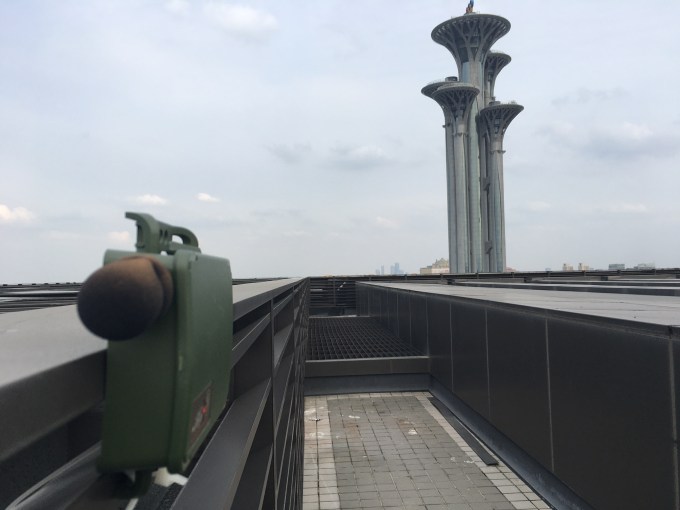
I mentioned the work that the Asian Infrastructure Investment Bank (AIIB) had implemented earlier this year, in partnership with local NGO – ShanShui Conservation Center – and TenCent Foundation, following the discovery of bird collisions around their headquarters in central Beijing. The AIIB bird collision project was inspired by the nocturnal migration project, that was conducted from the roof of its HQ near the Olympic Park. That project raised awareness about the extent of nocturnal migration over the AIIB’s HQ and led to staff taking more notice of migratory birds in the vicinity of their workplace, finding victims that had collided with glass, and wanting to do something about it.
Bruno was keen to draw on that experience to reduce the risk of bird collisions at his Embassy.
Volunteers fitting patterned film to glass at the headquarters of the Asian Infrastructure Investment Bank (AIIB) in central Beijing following the discovery of victims of collisions with glass. Photo courtesy of ShanShui Conservation Center.Fitting patterned glass to AIIB’s headquarters. Photo courtesy of ShanShui Conservation Center
A few short weeks later, thanks to the Embassy staff in cooperation with ShanShui Conservation Center, work has just been completed to retrofit patterned film to the highest risk windows at the Belgian Embassy. The film is essentially a pattern of dots that helps to break up the reflection, reducing the risk of birds mistaking the reflection for suitable habitat.
Patterned film is effective at breaking up the reflection sufficiently to significantly reduce the risk of bird collisions.The building after the retrofit. It’s clear that the pattern does not affect the aesthetics whilst reducing the risk to wild birds.
The Belgian Embassy’s work to tackle the risk of bird collisions is the latest in a string of high-profile projects in China.
In 2023, tech giant TenCent retrofitted its flagship HQ in Shenzhen with patterned film following the discovery by concerned staff of dead birds around glass windows.
This year, TenCent went a step further and retrofitted glass around its Beijing office in a similar way.
The glass wall around TenCent’s Beijing HQ was fitted with patterned film and gorgeous bird images to reduce the risk of bird collisions. Photo courtesy of TenCent.
And, in addition to AIIB’s efforts on their HQ, Beijing Forestry University found a creative solution to addressing the risk of bird collisions on their campus following a campaign by students.
A high-risk building at Beijing Forestry University adorned with a beautiful natural scene, as well as patterned film, following a campaign by students. Photo courtesy of Beijing Forestry University.
These are just a few of the recent examples in China, many of which have been inspired by the work of the China Anti-Bird Collision Alliance, a group of volunteers, NGOs and academics coordinated by Duke Kunshan University.
Addressing bird collision risk is one of the elements of the Pledge for `Nature adopted by the Ambassadors for Nature initiative. Together with the New Zealand Embassy’s piloting of ultraviolet patterns to mitigate bird collision risk, the Belgian Embassy’s work sets a great example for others to follow and we expect that other Embassies with significant areas of glass will follow suit.
Thanks again to Bruno Angelet and his team and to ShanShui Conservation Center for supporting this work!
The most recent confirmed Beijing sighting of the North China Leopard (Panthera pardus japonensis), a subspecies of leopard endemic to China, was in the 1970s. A combination of persecution, habitat loss and hunting of the leopard’s prey meant that this magnificent animal was forced to retreat to its stronghold deep in the inaccessible Taihang mountains of Shanxi Province.
For some time there has been a dream to ‘bring home the leopard’ to Beijing and, following greater protection and awareness, habitat restoration and the recovery of populations of prey species, such as Siberian Roe Deer (Capreolus pygargus) and Wild Boar (Sus scrofa), it seems that this dream now seems to be a genuine possibility and most conservationists say it is a matter of when, and not if, the North China Leopard will again be recorded in the capital.
At the end of April, to help accelerate the leopard’s return, a collaborative conservation project titled “Oaks for Leopards” was launched in Beijing. The capital is joining forces with Hebei and Shanxi provinces to restore habitat and provide greater protection for the wilderness of North China, with a view to providing food and habitat for the endangered North China leopard.
The project is jointly initiated by the National Forestry and Grassland Administration, the Chinese Society of Forestry, the Beijing Forestry and Parks Bureau, and the forestry and grassland authorities of Hebei and Shanxi.
The article below appeared in the China Daily on 30 April.
I suspect that the first modern record of leopard in Beijing will be a roaming young male looking for a territory and it may take many more years to establish a viable population.
It’s refreshing to see a positive attitude towards the potential return of an apex predator and it will be fascinating to see how the public reacts if and when this magnificent animal reappears in China’s capital.
This winter (2024-2025) is a poor one for some species we consider to be staple winter visitors in Beijing. Thrush numbers are well down, waxwings are scarce and there are almost no high-elevation redstarts in their usual mountain haunts. Certainly at Lingshan the sea buckthorn crop, which usually sustains good numbers of thrushes and redstarts, is the worst I have seen. Not only have few shrubs produced berries this year but those fruit that were gleaming orange at the beginning of autumn are now anaemic and shrivelled. This is most likely due to the fact that the autumn was wetter and milder than usual which seems to have resulted in most of the fruit succumbing to rot and fungi.
Sea buckthorn berries at Lingshan this winter (January 2025). Most seem to have rotted in the late autumn period, which was unusually mild and wet.
The best ‘thrush-watching’ this winter has been in the city parks, especially at drinking spots. Beijing is generally cold and very dry in winter, so after any juicy berries have been exhausted, winter birds tend to feed more on the drier fruits of cypress trees or similar, requiring them to drink frequently. Finding a spot close to a food source with running water and some cover is the best way to secure good views.
Of the four regular ‘winter thrushes’ in Beijing, Naumann’s (Turdus naumanni 红尾鸫 Hóng wěi dōng) is the most common in lowland Beijing, followed by Red-throated (Turdus ruficollis 赤颈鸫 Chì jǐng dōng), Dusky (Turdus eunomus 斑鸫 Bān dōng) and the scarce Black-throated (Turdus atrogularis 黑颈鸫 Hēi jǐng dōng) in order of abundance. In the mountains, the top two are reversed, with Red-throated the most abundant, followed by Naumann’s, Dusky and Black-throated.
This winter I have spent a bit of time at two regular spots for winter thrushes – Beihai Park and the Botanical Gardens. Although numbers have been relatively low, there has still been a reasonable variety, with some interesting mixes of genes on display. In Beijing it is common to see intergrades, most often between Naumann’s and Dusky and occasionally with the other species. However, as Beijing is a wintering area for these thrushes, we have no way of knowing the true parentage of any individual bird and thus we can only make educated guesses as to the origins based on visible plumage details.
Here are a few images, mostly from this winter, with some comments. As always, comments and corrections are welcome.
First up, some standard Naumann’s Thrushes (Turdus naumanni 红尾鸫 Hóng wěi dōng)
These birds show the classic strongly marked underparts, including undertail coverts and golden-orange fringes to the wing coverts and mantle. I speculate that the bird in the second image is likely a female based on off-white supercilium and dark spotting on throat sides.
I have very few images of Black-throated Thrush Turdus atrogularis 黑颈鸫 Hēi jǐng dōng from Beijing, reflecting the relative scarcity of this species in the capital.
This one from Peking University campus in January 2013.
Intergrades
The following images are of birds that show signs of intergradation. I have added some comments to each and welcome opinions.
Dusky x Naumann’s
By far the most common intergrade in Beijing.
8 January 2025, Beihai Park
This bird is presumably a Dusky x Naumann’s intergrade, showing a mixture of blackish and reddish underpart markings, a long, broad dusky-like supercilium and Naumann’s-like mantle and scapulars.
28 January 2025, Botanical Gardens
This bird looks Dusky-like on first glance but on closer inspection shows prominent reddish markings on the underparts and undertail coverts, most likely evidence of some Naumann’s genes.
5 February 2025, Botanical Gardens
5 February 2025, Botanical Gardens
The two above could easily pass for Dusky Thrushes on first glance but, again, close inspection in particular of the second image, reveals reddish markings on the undertail coverts.
Black-throated x Red-throated
5 February 2025, Botanical Gardens
With a mixture of red and black feathers on the upper breast, this is presumably a Red-throated x Black-throated.
5 February 2025, Botanical Gardens
Whilst some dark markings on the throat and upper breast can be indicative of young or female birds, this bird shows some black feathers mixed with red on the lower part of the gorget, suggesting intergradation.
5 February 2025, Botanical Gardens
This bird shows darker red feathers than usual. Is this an intergrade with Black-throated or just a variation in Red-throated?
5 February 2025
This bird shows predominantly blackish feathers on the gorget but the undertail and undertail coverts are reddish, ruling out a pure Black-throated. The rather heavy marks on the undertail coverts may be indicative of Naumann’s genes.
Black-throated x Naumann’s?
28 January 2025, Botanical Gardens
This striking bird is wintering in the Botanical Gardens and is presumably a Black-throated x Naumann’s intergrade. The obvious black upper breast pattern combined with the Naumann’s like flanks and tail suggest this combination.
5 February 2025, Botanical Gardens
5 February 2025, Botanical Gardens
Two more images of the same bird showing the flank pattern and undertail coverts.
Red-throated x Naumann’s?
25 December 2021, Botanical Gardens
The denisty of red on the upper breast of this bird, combined with the relatively plain head pattern, may indicate Red-throated genes, while the flanks and reddish panel on the wing suggest Naumann’s.
Red-throated x Dusky?
The images below are from Beihai Park in January 2021. If only the head and breast pattern are considered, my best guess would be a Red-throated x Black-throated Thrush but the rufous wings suggest Dusky or Naumann’s influence. A Red-throated x Dusky may make most sense here.
18 January, 2021, Beihai Park
18 January 2021, Beihai Park
First generation intergrades are probably, in most cases, relatively easy to work out but there must be all sorts of combinations of second and third generation birds, and beyond, out there.
Watching winter thrushes in Beijing is always rewarding. Whether pure or intergrades, the majority are striking birds and a joy to spend time with, even if sometimes we can’t know for sure what we are looking at!
On 26 November, the U.S. Ambassador to China, Nicholas Burns, and his wife, Ms. Elizabeth Baylies, hosted the latest Ambassadors for Nature event at their residence. Entitled “Unexpected Biodiversity of Beijing”, the centrepiece was a lecture by Peking University Professor Luo Shu-Jin about Beijing’s leopard cats. The audience, including ambassadors and senior diplomats from eight countries, Chinese academics, and PhD students, were treated to a wonderful presentation about the secret lives of these elusive predators which can be found in healthy numbers in the mountains and wetlands of Beijing, even inside the 6th ring road.
We learned that Beijing is one of only eight G20 capitals to host populations of wild cats and that the leopard cat is one of the “big 10” mammals in China’s capital city, alongside two species of badger, two species of weasel, masked palm civet, raccoon dog, wild boar, siberian roe deer and Chinese goral.
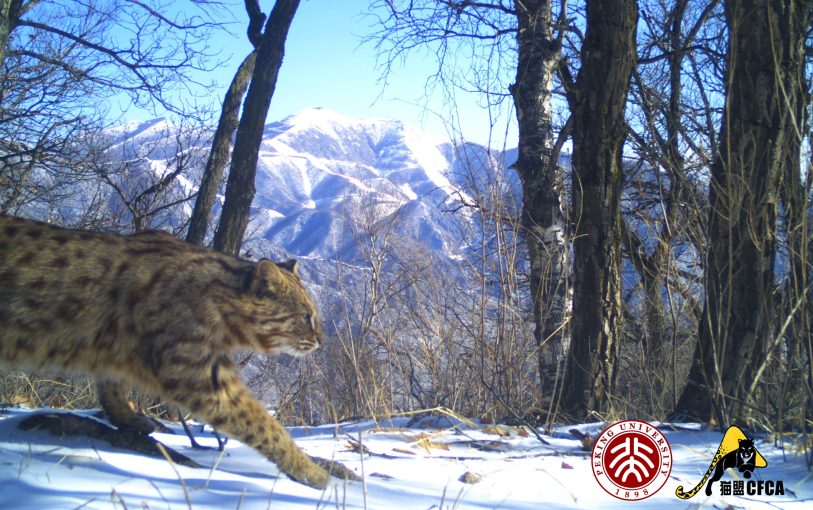
Professor Luo, ably supported by her students, told the story of Beijing’s leopard cats being photographed at the venue for the 2022 Winter Olympics and, at the end of the talk, presented Ambassador Burns with a personalised photograph of a leopard cat walking a trail with the downhill ski slope in the background.
In his remarks, Ambassador Burns highlighted how diplomatic missions can lead by example by incorporating biodiversity and environmental practices into their operations and facilities. The Ambassador underscored the common interest of the United States, China, and other countries to work together on pressing international environmental challenges, including by tackling climate change at the recently concluded COP 29.
The Ambassadors for Nature initiative is an informal group of 37 ambassadors who have developed and committed to the Pledge for Nature with the aim of incorporating biodiversity into the way diplomatic green spaces are managed and promoting biodiversity among staff and in diplomatic exchanges. For more about the initiative, see this link: https://wildbeijing.org/the-ambassadors-for-nature-initiative/
This post provides the results of a small-scale study of Pallas’s Buntings (Emberiza pallasi, 苇鹀 Wěi wú) in Beijing focusing on racial identification of birds using vocalisations at one site – the ChaoBai River in Shunyi District.
Pallas’s Bunting (Emberiza pallasi) is a common, sometimes abundant, passage migrant and winter visitor in Beijing from breeding grounds in N China, Mongolia and Russia. Autumn arrivals begin as early as August, with the bulk arriving in September and October. Many remain through the winter before departing in April and May.
According to Birds of the World, there are at least three races of Pallas’s Bunting:
pallasi: “breeds in Altai and Sayan Mts E to Transbaikalia and W Amurland (S of Tukuringra Mts) and S to N Mongolia and possibly NE China (Inner Mongolia, N Heilongjiang), perhaps also disjunctly in E Tien Shan; winters in W and N China (Xinjiang and Inner Mongolia).”;
polaris, whose distribution is quoted as “NE European Russia E in Siberia (S to basins of R Angara, R Lena and R Aldan) to Chukotskiy Peninsula, Sea of Okhotsk coast and N Kamchatka; winters in NE and E China, extreme SE Russia (S Ussuriland) and Korea.”;
and lydiae, with a distribution of “S Siberia (Tuva and S Transbaikalia) through N, C and E Mongolia, probably to adjacent NE China (NE Inner Mongolia); non-breeding probably in N China.”
It is unclear whether the race minor is legitimate.
The status of these three races in Beijing has not, to my knowledge, been studied but the recently-published The Birds of China (Princeton, 2024) states: “E.p.polaris is a passage migrant or winter visitor in eastern China; E.p.pallasi is a breeder or passage migrant in northwestern China; E.p.lydiae breeds in Inner Mongolia.”
Given that my local patch at the ChaoBai River in Shunyi District holds good numbers of Pallas’s Buntings during the spring and autumn migration seasons and during winter (counts of three figures are not uncommon from October to April), I decided to conduct an experiment to see whether I could understand more about the races of Pallas’s Buntings that were using this site.
How to identify the different races in the field is not well-understood. However, it appears from sound recordings that there are noticeable differences in the vocalisations of the three races, at least from the spectograms. Geoff Carey provided me with some information about calls of lydiae and polaris from the breeding grounds (some examples are available on Xeno-canto) and also one recording of pallasi. Assuming these recordings are representative of the three races, they offer a way to gain an understanding of the races present at my local ChaoBai River site in Beijing.
Vocalisations of Pallas’s Buntings
In my experience, Pallas’s Buntings in Beijing typically use two calls, which I have labelled as “call-type 1” and “call-type 2”. Call-type 1 is a downward-inflected call, with call-type 2 more level or in some cases slightly upward-inflected.
Here are some examples of the three races (these are all recordings from the ChaoBai River in Beijing)
Lydiae call-type 1
Lydiae call-type 2
Pallasi call-type 1
Pallasi call-type 2
Polaris call-type 1
Polaris call-type 2
If one listens carefully, the calls of lydiae, although similar to pallasi and polaris, have a more ‘buzzy’ tone. This is often possible to distinguish in the field. However, to my ears at least, the calls of pallasi and polaris are extremely similar and, thus far, I have been unable to distinguish between these two in the field.
The good news is that, although the calls of all three races sound similar, the spectograms show some noticeable differences.
Spectograms
Lydiae call-types 1 and 2
Spectograms of the lydiae call types 1 and 2. Note the ‘buzzy/fuzzy’ nature of the latter part of the spectograms.
Pallasi call-types 1 and 2
Spectograms of the pallasi call types 1 and 2. Note the ‘cleaner’ nature of these calls, compared with lydiae, the distinctive ‘humped’ shape of call-type 1. Call 2 is variable but seems to consistently show obvious parallel lines on the first part of the spectogram without the obvious protruding ‘giraffe neck’ of polaris (see below)
Polaris call-types 1 and 2
Spectograms of polaris call types 1 and 2. Again, note the ‘cleaner’ nature of the calls, compared with lydiae, and the different shape, with call-type 1 resembling a heartbeat on a monitor and call-type 2 resembling a giraffe (at least that is how I remember them!).
Over the period October 2023 to May 2024, whenever I visited the ChaoBai River, I placed my sound recorder in an area favoured by Pallas’s Buntings (a scrubby area with long grass and some small bushes – see below) and recorded for one hour. The timing of my visits was usually in the early morning but occasionally was in the late afternoon.
The habitat at the ChaoBai River in Shunyi District – some long grass, reeds and a few shrubs.
I processed the recordings using Audacity to create spectograms of each hour-long file and scanned for calls of Pallas’s Buntings, logging each call and identifying it to race. Over 25 visits, I recorded 21,573 calls of Pallas’s Buntings. Of these, polaris was the most numerous with 13,252 calls, followed by lydiae with 6,985 calls and finally pallasi with 1,336. The graph below shows the volume of calls by race over the period.
Of course, the number of calls does not necessarily give a true representation of the number of individuals – one individual could sit above the recorder and call constantly while many others remain silent – but over time, I think it is reasonable to assume that the volume of calls is indicative of the relative abundance of the races.
In terms of dates, polaris was by far the most numerous taxon between November and March. Lydiae peaked in October and again in April, with a few lingering all winter, and pallasi was by far the scarcest of the three, with only a handful recorded in late autumn and winter, and a distinct peak in late April and May.
These results suggest that polaris is the dominant wintering race in Beijing; lydiae appears to be predominantly a passage migrant in Beijing, with smaller numbers wintering, suggesting that the bulk of this race may winter further south? The relative scarcity of pallasi is perhaps not a surprise given the bulk of this race is thought to breed quite a long way west of Beijing (NW China, W Mongolia), although, according to Birds of the World, it may also breed in Inner Mongolia and Heilongjiang.
Throughout the winter, I made ad-hoc recordings of a further five Pallas’s Buntings from the Wenyu River, all of which were polaris, reinforcing the suggestion that polaris is the dominant race in winter in Beijing. Interestingly, one recording from c1800m asl at Lingshan in Mentougou District on 30 October 2023 was a pallasi. This race apparently breeds at high elevations in subalpine tundra in high mountains, including the Altai and Sayan Mountains.
Possible plumage differences
During my visits, I was able – on some occasions – to sound record and photograph specific individuals, enabling racial identification of photographed birds. The small number of birds photographed AND sound-recorded means that the sample size is too small for any meaningful conclusions. Nevertheless, I have included some photographs below of positively identified birds with some comments.
As with vocalisations, birds of the race lydiae are perhaps the easiest to identify in the field. They seem to be consistently pale, sandy and with less contrasting upperparts. Adult males in breeding plumage are relatively straightforward to identify on colour/contrast of upperparts alone. For females and immature males, it is more difficult. However, it appears that there may be some structural characteristics that apply to both males and females. For example, from the small sample size, primary projection may be an indicator. Lydiae birds seem to have a relatively short primary projection and certainly appear longer-tailed (the latter may, of course, be a function of the shorter wings). This makes sense given that lydiae is most likely a relatively short-distance migrant compared with polaris, which breeds further north. However, again, I would stress that with this limited sample size, it is impossible to draw firm conclusions.
Photographs
Lydiae
Male lydiae, 10 April 2024
Male lydiae, 10 April 2024
Female lydiae, 10 April 2024
Female lydiae, 30 April 2024
Pallasi
Male pallasi, 16 May 2024
Male pallasi, 14 May 2024
Male pallasi, 16 May 2024
Male pallasi, 16 May 2024
Female (or 2cy male given dark ear coverts?) pallasi, 16 May 2024
Female pallasi, 16 May 2024
Polaris
Note the long primary projection relative to lydiae.
Male polaris, 30 April 2024
Male polaris, 30 April 2024
Male polaris, 24 April 2024
Female polaris, 24 April 2024
Conclusion
From this small experiment at one site, and assuming that the recordings from Xeno-canto on which this study is based are correctly identified, it is clear that three races of Pallas’s Bunting visit Beijing and that, by recording vocalisations, racial identification of individual birds is possible. At the study site, polaris was by far the most numerous, especially in winter, followed by lydiae, which peaked in October and April with a reasonable number in winter, and finally pallasi, the scarcest of the three races by some margin, with a noticeable peak in late April and May.
I hope that this small study helps to enthuse birders about Pallas’s Buntings and encourages more people to gather data from other parts of Beijing, and indeed across China, to better understand the distribution, and movements, of the various races.
Thanks again to Geoff Carey for his support at the beginning of this study and to Patrick Franke for providing some recordings of pallasi from the breeding grounds, which helped to put together the pieces of the puzzle from my recordings at the ChaoBai River site.
Title image: Pallas’s Bunting (Emberiza pallasi), male of the race polaris, ChaoBai River, 24 April 2024 (Terry Townshend)
As we head into a new year, it’s traditionally a good time to reflect on the previous 12 months. After three difficult years of pandemic restrictions, 2023 was a welcome return to at least some kind of normality in China, with the borders opening up and physical meetings again being possible. I have been incredibly fortunate to be involved in some exciting and innovative projects and to work with some of the best people I’ve ever met. I haven’t been very efficient at updating the blog part of the website this year, so here are a few selected highlights from 2023.
First, the nocturnal bird migration study in partnership with the Asian Infrastructure Investment Bank (AIIB) and Peking University. Spring 2023 was the fourth consecutive season of recording nocturnal bird sounds from the rooftop of AIIB’s headquarters in Beijing. In total, we recorded more than 83,000 calls from at least 111 species, all from just one building.
Spectograms of the some of the species recorded at night from the roof of the Asian Infrastructure Investment Bank (AIIB).
A draft scientific paper, led by Peking University, has been submitted to a journal for consideration and, in late November, Liu Shuangqi presented the results to the British Ornithologists’ Union (BOU) conference. This is the first study of its kind in East Asia and, as well as helping to raise public awareness of the ‘invisible miracle’ that happens over our heads as Beijing’s residents sleep at night (thanks to media articles in China and even in The Economist), it has demonstrated the diversity of birds passing over the capital and, importantly, the diversity of their habitat requirements. It was instructive that the top three species recorded by volume were Olive-backed Pipit Anthus hodgsoni 树鹨 Shù liù (woodland species), Eurasian Skylark Alauda arvensis 云雀 Yúnquè (grassland species) and Black-crowned Night Heron Nycticorax nycticorax 夜鹭 Yè lù (wetland species). This illustrates that if Beijing is to fulfil its role in the flyway – to secure safe passage of migratory birds – it must provide a balance of natural habitats to help these extraordinary travellers to cross what is, to them, a hostile urban environment. Encouragingly, at the summer 2022 workshop in AIIB to present the initial results, the Beijing municipal government recognised the value of scrub and grassland habitats (until recently classified as ‘waste land’) and committed to integrate the findings of the nocturnal migration project into the way they manage green spaces in Beijing. Given that the Beijing Municipal Forest and Parks Bureau manages 71% of Beijing’s land, that is a big step. The last few decades have seen a heavy emphasis on tree-planting in the capital, often at the expense of scrub and grassland, driven by the use of ‘tree-cover’ as the overriding measure of the quality of the environment. In most cases, when trees are planted, it has usually involved single species monocultures, all the same age and in straight lines, with undergrowth and fallen leaves removed to keep the trees ‘tidy’, resulting in very little biodiversity. We very much hope that this is a turning point towards a more balanced and qualitative approach to habitat management. It’s going to take time to see significant change but, as the capital city of the country that presided over agreement by more than 190 countries on the new Global Biodiversity Framework under the UN Convention on Biological Diversity, it would be fitting if Beijing led the way towards aligning the city with biodiversity goals by integrating the needs of migratory birds into urban planning.
We are planning to continue monitoring nocturnal bird migration from AIIB’s roof and have received tremendous support from Cornell Lab (Andrew Farnsworth and Benjamin van Doren) to help with automated detections and identifications, which will make processing the recordings more efficient (thus far, all processing has been done manually). Once we have the automated processing working effectively, we plan to explore the potential for schools to deploy recorders on their campuses as a way to expand the monitoring of migratory birds.. and potentially even set up competitions, for example to see which school records the most Olive-backed Pipits in a season. Huge thanks go to my partners at Peking University, especially Professor Hua Fangyuan and Liu Shuangqi, to AIIB staff for their invaluable support, especially Sir Danny Alexander, Alberto Ninio, Tian Hua, Yan Bo and Li Zeyu, and to the Beijing Municipal government, especially Wang Xiaoping, for the wonderful cooperation and positive response to the findings.
Second, the Ambassadors for Nature initiative has gone from strength to strength. Launched in July 2022 by Clare Fearnley, the former New Zealand Ambassador to China, with 14 founding members, as of 31 December there are 35 ambassadors signed up to support the “pledge for nature”, committing to manage their diplomatic green spaces in a more friendly way for nature. Events this year have been hosted by the Irish, Swiss, Belgian and Slovenian Ambassadors focusing on migratory birds, pollinators and guidance for embassy gardeners, with a field trip to Miyun Reservoir hosted by the Beijing Municipal government.
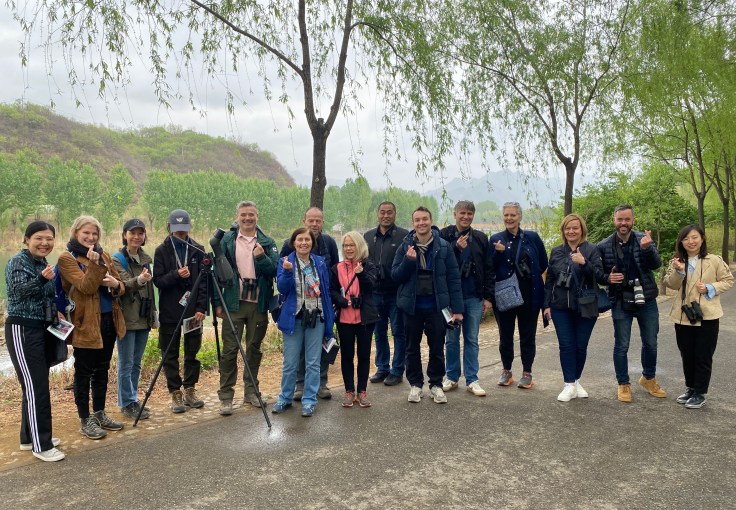
The Ambassadors for Nature group at the Qingshui River, Miyun District, May 2023.
In addition to encouraging actions – such as planting native pollinator-friendly species, keeping areas wild, reducing and eliminating the use of pesticides, monitoring wildlife and erecting insect hotels, bird and bat boxes to support biodiversity in diplomatic green spaces – the initiative has been a great way to get biodiversity onto the agenda of senior foreign policy officials and to promote international cooperation. For example, thanks to Bruno Angelet, the new Belgian Ambassador, there are plans for a new international cooperation project to study the Beijing Swift involving Chinese, European (Belgian, UK and Swedish) and African (Namibian) scientists, with political support from the Beijing Municipal government and the relevant embassies. And it was thanks to this network of ambassadors that I was honoured to go birding with US Ambassador Nicholas Burns and his wife, Libby, to Shahe Reservoir in Beijing. Following that, Ambassador Burns invited me to a reception at his residence in honour of visiting California governor, Gavin Newsom. I briefed Governor Newsom on the incredible story of one particular migratory bird that connects China and the US (Alaska) – the Bar-tailed Godwit – and discussed the potential for a three-way ‘(Inter)National Park’ involving New Zealand, Yellow Sea of China and Alaska to celebrate this incredible bird as a way of celebrating biodiversity and building bridges. I believe Gavin has high political ambitions, so maybe it planted a seed!
California Governor Gavin Newsom at a reception at the US Embassy in Beijing at the end of his visit to China in October 2023.
The Ambassadors for Nature initiative has also provided opportunities to engage on biodiversity with visiting ministers from a range of participating countries, including the New Zealand Foreign Minister and the Canadian Environment Minister.
With the visiting Canadian Environment Minister, Steven Guilbeault, at Shahe Reservoir
In addition, building on the success of the Ambassadors for Nature initiative in Beijing, I understand that the New Zealand ministry of foreign affairs is considering the idea of encouraging ALL of its embassies overseas commit to the ‘pledge for nature‘. And the UN Development Programme (UNDP) in the Republic of Korea is planning to begin a similar initiative with foreign embassies in Seoul.
At the same time, several schools have adopted the ‘pledge for nature‘ and are applying it to their campuses. It has been wonderful to work with students and teachers, including at the Western Academy of Beijing (WAB), where different groups of students have led on implementing each aspect of the pledge. Helping nature is infectious!
This group of students at the Western Academy of Beijing has taken responsibility for identifying a suitable area to leave wild and to monitor changes in the wildlife, especially insects, for comparison with the remainder of the campus.
Third, I’ve been part of a small group pushing for the control of the sale of mist nets. Despite strengthened wildlife protection laws, improved law enforcement and greater public awareness, mist nets remain one of the biggest killers of migratory birds in China (and SE Asia). Even in Beijing, poachers still operate. In the capital, these criminals target mainly Siberian Rubythroat and Bluethroat for the cagebird trade but data from prosecutors show that mist nets have been used in many large-scale trapping efforts, both for the cagebird trade and for exotic food, all across China. Twice this year I have personally encountered poachers using nets to trap migratory birds in Shunyi District. The map below, produced by Gu Xuan, shows the locations where poachers have been apprehended in Beijing in 2023 alone.
A map showing the locations where poachers have been caught in Beijing in 2023 (Gu Xuan).
The good news is that there is determination to tackle this illegal activity and there is a lot going on behind the scenes that I hope to be able to talk about in a future post. Needless to say, action is starting and, today, if you search for mist nets on e-commerce platforms, a warning appears that it is illegal to capture wild birds, and this is just the start.
At the same time, it is likely that the UN Convention on Migratory Species will promote tackling the illegal killing of birds, including with nets, at its next meeting in February 2024, so I am optimistic that further progress will be made this year both in China and internationally.
Fourth, over the last few years it has been the privilege of my life to work with ShanShui Conservation Center to help set up the “Valley of the Cats” project in Qinghai Province on the Tibetan Plateau. This is the community-based conservation and wildlife-tourism project, working with a village of Tibetan yak herder families. The herder families host visitors in their homes and guide them to look for the special wildlife they have in the area, including snow leopard, wolf, lynx etc. Many visitors remark on what a privilege it is to experience authentic Tibetan hospitality, as well as having the opportunity to see the elusive snow leopard. At the end of 2023, the project is close to passing the milestone of 4 million RMB (GBP 440,000) of revenue, 100% of which has stayed in the community. The project was showcased at the 2nd National Parks forum in Xining in August 2023 as an example of sustainable tourism and a way to bring income into local communities to reward them for their stewardship of important and fragile landscapes, and has won a host of national awards. In late August 2023, following the National Parks Forum, with ShanShui Conservation Center I visited two other (spectacular) villages that are interested in setting up similar initiatives.
A glacier at 5,000m asl near Diqing, Qinghai Province
One of the spectacular valleys in Diqing at 4,900m asl.
There is no doubt that the Valley of the Cats model, focusing on low volume and community-led tourism, can help to bring income to relatively poor communities while protecting fragile ecosystems. However, it is not a model that will work everywhere. In my view, three conditions are required for success: first, the presence of sought after wildlife (to create demand); second, a robust and established community structure that is able to handle decision-making and deal authoritatively with any issues that arise; and third, a supportive local government (essential in China). It will take time to establish similar projects in other villages but the high interest from other communities reflects the potential of this approach to engage and support communities inside China’s national parks. ShanShui Conservation Center, powered by a terrific group of enthusiastic and dedicated young people, is doing brilliant work and I cannot praise them enough for the contribution this NGO is making to conservation in China.
It was during the September visit to Qinghai that we were fortunate to enjoy a stunning encounter with a female snow leopard next to the track.. Alerted by the alarm calls of several marmots as we were driving, we stopped to check whether there was a predator in the vicinity. Looking at the directions faced by the calling marmots, and triangulating their lines of sight, we were able to spot the big cat as she stalked one of the rodents. When just a few metres away, she made a dash but the marmot disappeared down its burrow in a cloud of dust in the nick of time. The video below (low resolution for ease of uploading) was taken just after the failed hunt using my iPhone attached to my Swarovski ATX95 scope.
Watching a snow leopard from the track in the Valley of the Cats, August 2023
Special thanks to Shi Xiangying, Zhao Xiang, Yuqiu (Iris), Jun Yi (Audrey) and Qiuni for their hard work and for a wonderful trip in August.
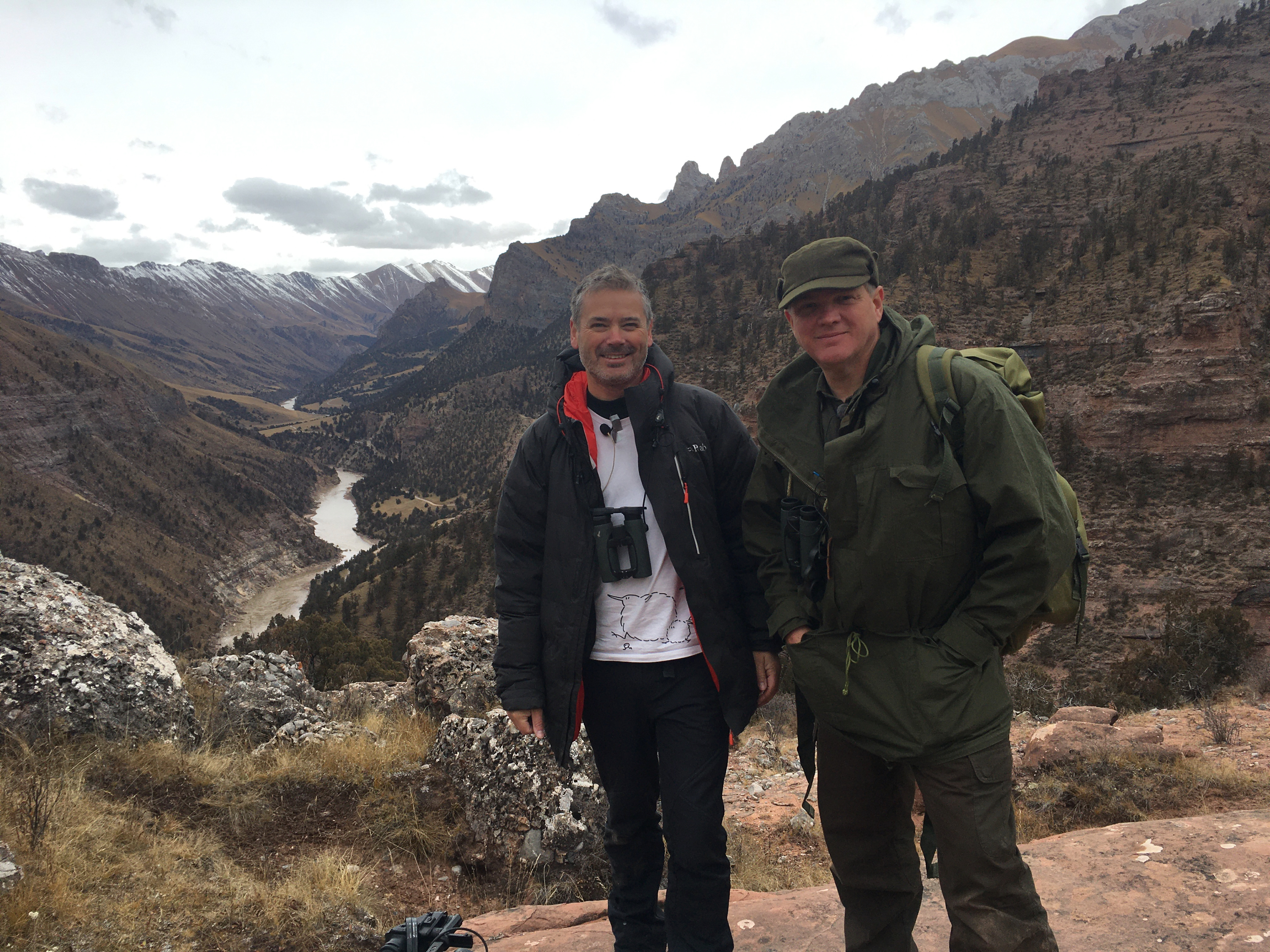
Fifth, after my brush with TV in 2019 when I enjoyed the incredible experience of filming with Ray Mears as part of his Wild China series, I seem to have somehow become a (somewhat reluctant!) TV presenter in China. In April I spent a week at Tiaozini, Dongtan, Jiangsu Province, with CCTV4 making a documentary to highlight the importance of coastal wetlands and migratory birds. Tiaozini is at the heart of the East Asian-Australasian Flyway and is a vital stopover for millions of migratory shorebirds – natural heritage that is shared by 22 countries from New Zealand in the south to Arctic Russia and Alaska in the north. The programme aired in June on prime time TV. And September saw the launch of National Geographic/CICC’s “Road to Carbon Neutrality”, a two-part documentary series. The two episodes, hosted by China-based photojournalist Sean Gallagher and me respectively, focus on nationwide efforts to reduce China’s carbon emissions in order to meet the twin goals of peaking emissions by 2030 and achieving net zero by 2060. Filmed in 2022, navigating all manner of pandemic-related restrictions, the documentary has been shown in more than 50 countries worldwide. And in November I appeared in an episode of UK explorer, Ash Dykes’ series “The Great Wall with Ash Dykes”, speaking with Ash about the wildlife of the Great Wall around Beijing. Later that month I was invited to the studio of CCTV’s international channel, CGTN, to film a talk on the importance of biodiversity and what people can do to help. That aired in early December. It is encouraging to see the growing media interest in biodiversity in China and, although I am not a natural in front of the camera, I am happy to do anything that will help to advance the interests of nature.
Filming in Tiaozini about the importance of coastal wetlands and migratory birds, April 2023
Finally, at the end of the year, I was able to spend Christmas with my family in Norfolk for the first time since 2019. It was a wonderful chance to spend time with my elderly parents and to catch up on some of the incredible wildlife experiences in north Norfolk, especially the spectacular flights of Pink-footed Geese at Holkham.
This year, I was keen to record the awesome sound of the geese and the 22-min soundscape below starts with the wakening of the local Eurasian Wrens and Blackbirds before the Pink-footed Geese begin to lift, passing over in groups, their calls slowly growing in intensity. At 07m50s the local Jackdaws leave their roost and, towards the end, the calls and song of Goldfinches tinkle as the last of the geese leave the roost. Best enjoyed with headphones! Thanks to Holkham Nature Reserve manager, Jake Fiennes, for tips on where best to record the geese.
As if that experience wasn’t incredible enough, for a few days before Christmas, rare nacreous (“mother of pearl”) clouds were visible, providing a stunning backdrop as the geese returned to their roost at dusk…
Pink-footed Geese returning to Holkham National Nature Reserve just after sunset against a backdrop of nacreous ‘mother of pearl’ clouds.
A lone Eurasian Curlew going to roost at dusk as nacreous clouds light up the evening sky.
It was a fitting end to 2023, a reminder of the breathtaking beauty of nature and why I do what I do.
As we begin 2024, I would like to acknowledge the brilliant, and growing, group of conservationists in China who are doing wonderful work to celebrate and protect the special wildlife we have all around us, and the places it needs. It is an ongoing privilege to support what you do!
Finally finally, some of you may have noticed that Birding Beijing has evolved into Wild Beijing. This reflects the broadening interest and coverage of the website. As well as the branding, the web address has also changed from birdingbeijing.com to wildbeijing.org. There will be an automatic redirect for a few months but, in due course, only wildbeijing.org will be accessible, so please update any bookmarks. Subscriptions for alerts about new posts have been automatically transferred to the new site.
Wishing everyone a happy, healthy and nature-filled 2024!
Watercolour of an (Amur) Leopard Cat (Prionailurus bengalensis, 豹猫, Bàomāo), January 2024. This small cat (around 50% bigger than the average house cat) is native to Beijing and can be found in the mountains and in some wetlands where there is lots of cover. As an ambush hunter it needs scrub and grassland, both habitats that have decreased significantly in lowland Beijing due to development and tree-planting. Primarily nocturnal, sightings during daylight hours are rare. This small painting is in celebration of an incredible sighting in Tongzhou District in December 2023. More details here.
Title image: a Beijing Swift (Apus apus pekinensis 北京雨燕 Běijīng yǔyàn) flying through a rainbow, Wenyu River, June 2023.
I have quite a bit of catching up to do with blog posts. There is a lot happening, which is good, and I’ll do my best to write some posts over the next few days. First up is a short note about the ongoing irruption of Northern long-tailed Tits (Aegithalos caudatus 北长尾山雀 Běi cháng wěi shān què) into Beijing.
The first group of these charming birds was seen at the ChaoBai River on 10 October (Terry Townshend and Paul Holt) and, since then, they have been recorded at most birding sites, including many urban parks and even in residential compounds. Known by locals as ‘glutinous rice balls’, they have a high cute factor and are proving popular with birders and photographers alike.
At the same time there has been a noticeable, but on a smaller scale, irruption of Coal Tits (Periparus ater 煤山雀 Méi shānquè), usually scarce in lowland Beijing, and some record counts of Hawfinch (Coccothraustes coccothraustes 锡嘴雀 Xī zuǐ què), including an impressive 247 at the ChaoBai River on 23 October (Paul Holt). Some record counts of Eurasian Siskin (Carduelis spinus 黄雀 Huáng què), with 347 recorded at Lingshan earlier this week (Paul Holt and Terry Townshend), notable numbers of Common Redpoll (Carduelis flammea 白腰朱顶雀 Bái yāo zhū dǐng què) and a smattering of Red Crossbills (Loxia curvirostra 红交嘴雀 Hóng jiāo zuǐ què) have added to the ‘northern feel’.
The reason for irruptions such as these are poorly understood but likely to relate to food availability in the usual range further north.
The movements seen in Beijing are clearly not unique. Nial Moores in Republic of Korea reported on Facebook:
“Substantial movement of white headed long-tailed tits this winter into inner border region of South Korea too. Much more numerous than in last 5 winters or so. We also have big movements of coal tit at least locally (as locally in part of japan it seems) ; Red crossbills started to move in mid Oct(irruption in Japan too it seems); and eurasian bullfinches started about a week ago. Some treecreepers perhaps moving this winter too?”
The latter two species – Eurasian Bullfinch (Pyrrhula pyrrhula 红腹灰雀 Hóng fù huī què) and Eurasian Treecreeper (Certhia familiaris 旋木雀 Xuán mù què) are both rare in Beijing, especially the former with fewer than half a dozen records and none since January 2020. Could this be the year we see another? And what else could be on the cards – possibly Varied Tit (Poecile varius 杂色山雀 Zá sè shān què) or even the previously unrecorded Pine Grosbeak (Pinicola enucleator 松雀 Sōng què)? Time will tell! Whatever happens, it promises to be an exciting winter of birding in the capital.
Title image: one of a group of at least six Northern long-tailed Tits (Aegithalos caudatus 北长尾山雀 Běi cháng wěi shān què) on the wooded slopes of Lingshan, Beijing’s highest mountain in Mentougou District, on 31st October.
The Ambassadors for Nature initiative is one year old! To celebrate, H.E. Dr Ann Derwin, Ambassador of Ireland to China, hosted a seminar to commemorate the occasion.
Speakers included 王小平 Dr. Wang Xiaoping, Deputy Director General of Beijing Forest and Parks Bureau, 钱时雨 Qian Shiyu from the Urban Biodiversity team at ShanShui Conservation Center, Chris Liu, a grade 10 student from the Western Academy of Beijing and Irish artist Niamh Cunningham.
H.E. Dr. Ann Derwin, Ambassador of Ireland to China, speaking at the opening of the one year anniversary event.
We heard how the initiative has expanded from 14 original members to 32 today, all of whom have signed up to the Pledge for Nature at ambassadorial level, and about the individual actions at embassies in Beijing, including:
The Irish embassy allocating a wild area with an area greater than 10% and, in spring, it was awash with colour and a haven for pollinators.
France initiating a ‘green embassy’ initiative looking at reducing emissions and supporting biodiversity to align with the Paris Agreement on climate change and the Global Biodiversity Framework
The New Zealand embassy piloting ultraviolet patterns on glass windows to help reduce bird collisions
The Swedish embassy’s elimination of pesticide and herbicide use
Indonesia’s planting of the embassy grounds using only native species
The US embassy’s creation of a wildlife pond and planting of native trees and replacing of traditional vehicles with electric vehicles
UNDP holding capacity building events for staff and making and erecting bird boxes and insect hotels
Belgian embassy hosting a seminar for embassy gardeners to help share best practice
…and many more!
The participants also heard about efforts to ‘export’ the initiative to the diplomatic network beyond Beijing, with efforts underway in Seoul, Republic of Korea.
Dr. Wang Xiaoping thanked the embassies for contributing to Beijing’s biodiversity and briefed about the new guidelines for the management of parks in Beijing, in particular the recommendation that 10% of the area of parks in urban Beijing should be left ‘wild’ with minimal management, with the target figure increasing to 20% for suburban parks. This was all part of the vision to make Beijing “a capital of biodiversity”.
Dr. Wang Xiaoping, Deputy Director General of the Beijing Forest and Parks Bureau (which manages 71% of Beijing’s landmass) briefed on the city’s efforts to make Beijing “a capital of biodiversity”.
Chris Liu, a grade 10 student at the Western Academy of Beijing, spoke about how the school had adopted the Pledge for Nature and had teams of students leading on various aspects of implementation, including ‘rewilding’ an area around their ‘duck lake’, monitoring wildlife using infrared cameras and photographing and identifying plants and insects using an APP called “Seek”, designing insect hotels and erecting swift boxes.
Chris Liu gave an overview of actions to support biodiversity at the Western Academy of Beijing
Qian Shiyu of ShanShui Conservation Center, who arrived straight from a pollinator survey in the Botanical Gardens, briefed about the ‘audits’ of embassy grounds undertaken at the German and Danish embassies and how the team was working with the embassies to implement the recommendations.
Qian Shiyu from the urban biodiversity team at ShanShui Conservation Center
Irish artist, Niamh Cunningham, presented samples of her work promoting nature through art, including ‘tree stories’, short videos produced by members of the public about special trees.
Niamh Cunningham gave a thought-provoking presentation on the power of art to promote nature
During the discussion, attention focused on how to build on the year’s achievements, including the potential for an annual award to recognise and highlight extraordinary efforts, a series of interviews with ambassadors to explore why biodiversity is important to them and to learn more about individual embassies’ activities, the potential to design a short leaflet with the pledge for nature that could be translated into multiple languages to help spread the word, and the importance of involving diplomatic children in embassy initiatives.
It was wonderful to receive a written message of support from Clare Fearnley, former NZ Ambassador to China, who was the driving force behind the establishment of the Ambassadors for Nature and who did so much in the early days to build the momentum.
With the enthusiasm and energy from the embassies, there is no doubt that year two promises to be an exciting journey!
Thank you so much to Dr. Ann Derwin, Ambassador of Ireland to China, and her brilliant team especially Fergus Scott, for hosting the event, to the Beijing Municipal Government and ShanShui Conservation Center for their incredible support, to WAB for the excellent collaboration and to all the embassies for fabulous work throughout the last 12 months.
On Friday 28th April the Irish Embassy in Beijing arranged the first Ambassadors for Nature field trip. Hosted by the Miyun District Foreign Affairs Bureau, the group of Ambassadors and senior diplomats visited the QingShui River, one of the rivers that drains into Miyun Reservoir, Beijing’s most important drinking water source and a hotspot for migratory waterbirds.
As well as a two-hour bird walk guided by local experts – Zhang Dehuai of the Miyun Reservoir Forest and Parks Bureau and local bird photographer 安妮 “Annie”, the group enjoyed lunch at a local restaurant, two expert presentations and a discussion on how the international community can share good practice in support of the local government’s efforts.
We totalled 26 species during the bird walk – see below for a full list – with the undoubted highlight being the sighting of two Oriental Scops Owls (Otus sunia 红角鸮 Hóng jiǎo xiāo) roosting close to the path. This species is a summer visitor to Beijing and it’s likely that this pair has recently arrived in the capital after spending the winter in S China or SE Asia.
A pair of Oriental Scops Owls roosting close to the path was a definite highlight.
The first presentation was by Zhang, including a short video of the rich biodiversity of Miyun Reservoir and a summary of the actions being taken to monitor and improve the habitat for water birds, especially cranes.
A lecture by Miyun Forest and Parks Bureau about efforts to manage the area for wildlife
The second was by Tan Lingdi, leader of the urban conservation programme at ShanShui Conservation Center, who spoke about the recent ‘wildlife audit’ of the German Embassy compound and the recommendations developed to help make the compound more friendly for wildlife.
Tan Lingdi from ShanShui Conservation Center presented the results of a ‘wildlife audit’ of the German Embassy compound.
During the discussion there was a commitment from the diplomats to identify and share good practice to help inform the actions of the Miyun local government and great demand for ShanShui to conduct similar ‘wildlife audits’ of other embassies in Beijing. The next such audit will take place on Friday 5 May at the Danish Embassy.
Huge thanks to Ambassador Ann Derwin, Ambassador of the Republic of Ireland to China and her team, especially Fergus Scott and Li Meng, for the arrangements, to the Miyun Foreign Affairs Bureau for hosting, to Zhang and Annie for guiding the bird walk, to Tan Lingdi of ShanShui Conservation Center and to all the ambassadors for senior diplomats for participating.
The Ambassadors for Nature is an informal network of ambassadors in Beijing committed to managing their diplomatic green spaces in a way that is consistent with the new Global Biodiversity Framework agreed by more than 190 countries at the UN Convention on Biological Diversity in December 2022 under China’s presidency. See this dedicated page for more details.
Title image: the Ambassadors for Nature group at the Qingshui River, including ambassadors and senior diplomats from Ireland, Denmark, Japan, Latvia, United Nations and United States of America.
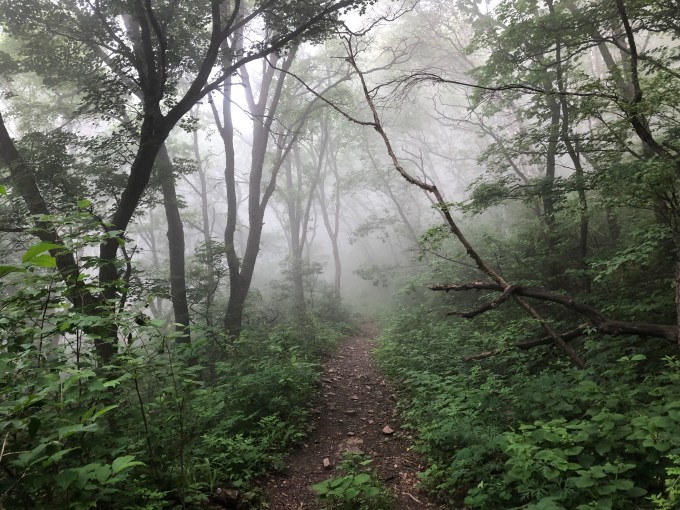
In mid-June, during a period of easing of Covid-related travel restrictions, I was able to visit Lingshan, Beijing’s highest mountain. June is always a brilliant month to visit with breeding birds in full song and a vast array of insects, including some special butterflies.
The recording below is of the dawn chorus on the morning of 17 June 2022. It begins with the song of the White-bellied Redstart and includes Chinese Leaf, Claudia’s Leaf and Hume’s Warblers, Siberian Blue Robin, Chinese Thrush and many more. At a little over 17 minutes in total, it’s perfect for a tranquility break – put on your headphones, sit back and relax!
This is a summary of the rare, scarce and notable birds in Beijing in 2021. Although I have included all information to which I have access, this summary is certainly not comprehensive. In particular, the number of previous records for species stated below is based on publicly available records, and may not be fully accurate. If you know of any errors or additions, please comment at the end of this post or contact me directly via email/WeChat so that they can be corrected or added.
Overall Highlights:
New records include Beijing’s 1st SHORT-TAILED SHEARWATERArdenna tenuirostris 短尾鹱 Duǎn wěi hù, KAMCHATKA WARBLERPhylloscopus examinandus 堪察加柳莺 Kān chá jiā liǔ yīng and GREY-CROWNED WARBLERPhylloscopus tephrocephalus 灰冠鹟莺 Huī guān wēng yīng, and the 1st and 2nd records of BLUE-FRONTED REDSTARTPhoenicurus frontalis 蓝额红尾鸲 Lán é hóng wěi qú
The 1st record of CHESTNUT-CHEEKED STARLING 紫背椋鸟 Zǐ bèi liáng niǎo (of questionable origin)
The 1st and 2nd documented records of Vega Gull Larus vegae 西伯利亚银鸥 Xībólìyǎ yín ōu. Note that Vega Gull (L.vegae) and Mongolian Gull (L.v.mongolicus) are treated as the same species by Chinese taxonomic authorities.
The 2nd record of SANDHILL CRANEGrus canadensis 沙丘鹤 Shāqiū hè
The 2nd record of WOOD WARBLERPhylloscopus sibilatrix 林柳莺 Lín liǔ-yīng
Possibly only the 2nd record of BROWN-HEADED THRUSHTurdus chrysolaus 赤胸鸫 Chì xiōng dōng
Possibly only the 2nd, 3rd and 4th records of PALE SAND MARTINRiparia diluta (淡色沙燕 Dàn sè shā yàn)
The 3rd NORTHERN WHEATEAROenanthe oenanthe 穗䳭 Suì jí
The 3rd and 4th records of BLACK BITTERN Dupetor flavicollis 黑鳽 Hēi yán
The 3rd, 4th and 5th records of BESRAAccipiter virgatus 松雀鹰 Sōng què yīng
The 4th REDWINGTurdus iliacus 白眉歌鸫 Báiméi gē dōng
The 4th record of COMMON RINGED PLOVERCharadrius hiaticula (剑鸻 Jiàn héng)
The 5th record of RED-CROWNED CRANEGrus japonensis 丹顶鹤 Dān dǐng hè
The 5th record of BONELLI’S EAGLEAquila fasciata 白腹隼雕 Bái fù sǔn diāo
The 5th record of GREAT WHITE PELICANPelecanus onocrotalus 白鹈鹕 Bái tí hú
The 5th, 6th and 7th records of GREY-TAILED TATTLERTringa brevipes 灰尾漂鹬 Huī wěi [piào] yù
A WHITE-THROATED KINGFISHERHalcyon smyrnensis 白胸翡翠 Bái xiōng fěicuì in the Olympic Forest Park, a rare vagrant with very few recent records.
A month by month summary of the birding highlights from Beijing in 2021 is below, in chronological order. It is worth noting that Beijing does not yet have a committee to assess the accuracy of records, and some of the reports outlined in this summary without photos, audio or descriptions, are taken at face value. It’s possible that some may be reviewed if and when a committee is created.
A big THANK YOU to the thousands of birders who have shared news of sightings throughout the year, whether via WeChat, email, eBird, Birdreport.cn or any other means. There is no doubt that sharing bird news has helped many people to see new and unusual species for the first time, building the knowledge base among birders in Beijing and, importantly, enthusing more people about the natural world. Particular thanks to Liu Aitao, Lou Fangzhou, Wei Zichen, “Oriental Stork”, Gao Xiaoyan and Colm Moore for providing written accounts of their spectacular finds this year (see links in text), to Paul Holt for providing comments and additional information on a draft of this post, to 大好 for providing additional records, to Wei Chunzhi for assistance, and to the photographers – including Liu Aitao, Lou Fangzhou, 大好 DaHao, Guan Xueyan, “Oriental Stork”, Gao Xiaoyan, Dave Guo, Colm Moore, Su Peng and 清子Zoey – for granting permission to use their images to illustrate this summary.
For highlights of the latest bird news in Beijing click here. And for a basic summary of the Status of the Birds of Beijing, click here. Contributions, corrections and additions always welcome!
Here’s wishing everyone a healthy, happy, rewarding and bird-filled 2022.
Birding Highlights of 2021 Month by Month
January 2021 2021年1月
Early January saw a few wintering rarities and scarcities from late 2020 staying into the new year, including two ROUGH-LEGGED BUZZARDButeo lagopus 毛脚鵟 Máo jiǎo kuáng at Ming Tombs Reservoir on 1st (黑眼豆豆), a WESTERN WATER RAILRallus aquaticus 西方秧鸡 Xī fāng yāng jī at Shahe Reservoir on 2nd (麦克曹), remaining until 7 March at least, two BROWN-EARED BULBULMicroscelis amaurotis 栗耳短脚鹎 Lì ěr duǎn jiǎo bēi in Yuyuantan Park (无名浪客), up to ten JANKOWSKI’S BUNTINGEmberiza jankowskii 栗斑腹鹀 Lì bān fù wú at Ming Tombs Reservoir, with the last report of three seen on 20 March, a MEADOW PIPITAnthus pratensis 草地鹨 Cǎodì liù that remained until 22 March, also at Ming Tombs Reservoir, and a YELLOWHAMMEREmberiza citrinella 黄鹀 Huáng wú seen on and off at the same site.
Eleven DAURIAN PARTRIDGEPerdix dauurica 斑翅山鹑 Bān chì shān chún were seen at Lingshan on 2nd (大牙齿 458, XiaoPT et al.), a notable record given the recent decline in the number of reports of this species in the capital. There was a NORTHERN LONG-TAILED TITAegithalos caudatus 北长尾山雀 Běi cháng wěi shān què in Chaoyang Park on the 4 & 5 January while another was at Nanhaizi on 9th (李云帆). The third of the month stayed longer, remaining in Yuanmingyuan Park from the 31 January to 26 February.
On 8th, a NORTHERN LAPWINGVanellus vanellus 凤头麦鸡 Fèng tóu mài jī at Yuxinzhuang, Tongzhou (ameramer) was a rare winter record. On 10th there was the first of what turned out to be a series of records of SCALY-SIDED MERGANSERMergus squamatus 中华秋沙鸭 Zhōng huá qiū shā yā from the Summer Palace (via Liu Aitao and Zhang Xiaoling) with up to 1,000 COMMON MERGANSERMergus merganser 普通秋沙鸭 Pǔ tōng qiū shā yā and a single RED-BREASTED MERGANSERMergus serrator 红胸秋沙鸭 Hóng xiōng qiū shā yā. On 11th there were three RED-BILLED LEIOTHRIXLeiothrix lutea (红嘴相思鸟, Hóng zuǐ xiāngsī niǎo) of unknown origin in the Botanical Gardens (Wang Qihan) and, on 12th, the count of COMMON MERGANSERMergus merganser 普通秋沙鸭 Pǔ tōng qiū shā yā at the Summer Palace reached an estimated 1,200 (_星畔_). Possibly only Beijing’s 2nd BROWN-HEADED THRUSH Turdus chrysolaus 赤胸鸫 Chì xiōng dōng was reported from the Olympic Forest Park on the 13th (稻草大魔王).
The overwintering LESSER WHITETHROATSylvia curruca 白喉林莺 Báihóu lín yīng was seen again on 14th and 15th January in the Agricultural Exhibition Center Park (niaotu and 麦克曹 respectively) and remained until at least 16th March. On 16th January, a female SCALY-SIDED MERGANSERMergus squamatus 中华秋沙鸭 Zhōng huá qiū shā yā was found along the Wenyu River (Terry Townshend), staying on and off until at least 14 February.
The female Scaly-sided Merganser found along the Wenyu River on 16 January 2021. Photo by Terry Townshend.
A second YELLOWHAMMEREmberiza citrinella 黄鹀 Huáng wú was reported from Cuihu Wetland on 21st (夜色阑珊) and the next day at least ten BROWN-EARED PHEASANT Crossoptilon mantchuricum, 褐马鸡 Hè mǎ jī were recorded at Da’anshan Forest Station (restricted access) (Zhang Shen, XiaoPT, 大牙齿 458 et al.). A COLLARED CROWCorvus torquatus 白颈鸦 Bái jǐng yā, apparently with a damaged wing, at Yongdingzhen on 25th January (Wang Xiaobo) remained until 30th at least.
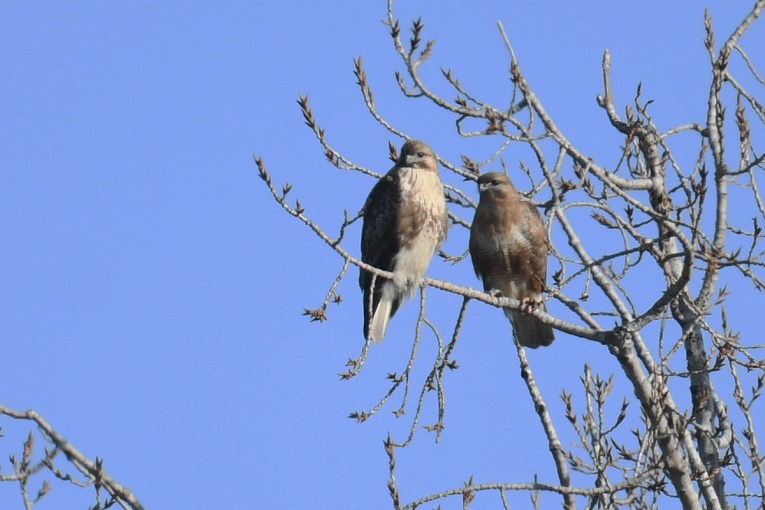
On 30th, an instructive Buteo sp. showing some characteristics of Steppe Buzzard (Buteo buteo vulpinus) was found along the Wenyu River (Terry Townshend). After excellent photographs were obtained by 没着落 (Méi zhuóluò) and Wang Yibin, the ‘file’ was sent to world raptor expert, Dick Forsman, who suggested it was most likely an intergrade between Eastern Buzzard (Buteo japonicus) and Steppe Buzzard (Buteo buteo vulpinus).
The month ended with the excellent find of a ROSY PIPITAnthus roseatus 粉红胸鹨 Fěnhóng xiōng liù along the Wenyu River on 31st (Liu Aitao), possibly the first winter record of this species in Beijing.
This Rosy Pipit 粉红胸鹨 was a great find by Liu Aitao on 31 January along the Wenyu River, possibly the first winter record of this species in Beijing. Photo by Liu Aitao.
February 2021 2021年2月
On 7th there was a GREATER SCAUPAythya marila 斑背潜鸭 Bān bèi qián yā at the Tongzhou-Dayunhe Forest Park (netfish) and a JAPANESE GROSBEAK at Jingzhongdu Park, Fengtai (小小小小鱼). On 8th an exceptionally early LITTLE RINGED PLOVER was at the Qingshui River (Catherine Dong). 11th saw reports of a very early PACIFIC SWIFT and a RUFOUS-BELLIED WOODPECKER from Liangshui River, Tongzhou (ericblue). A MUTE SWANCygnus olor 疣鼻天鹅 Yóu bí tiān’é was reported from the Liangshui River on 14th (京通燕雀), the same day that a spectacular count of 842 LITTLE GREBETachybaptus ruficollis 小鸊鷉 Xiǎo pì tī was reported from the Yunhe near the Yulinzhuang Bridge, Tongzhou (通州大好). On 18th a REDWINGTurdus iliacus 白眉歌鸫 Báiméi gē dōng was found at the Institute of Botany (Wang Qihan), remaining until 24th at least, only the fourth Beijing record. Two BAER’S POCHARD (青头潜鸭, Qīng tóu qián yā), were at the Summer Palace on 22nd (天书) with another at Yuanmingyuan the next day (应武), increasing to two on 24th and 25th. The first BARN SWALLOWS (家燕 Jiāyàn) of the year were reported from the Summer Palace on 24th (Hang Ye). A NORTHERN SHRIKE (灰伯劳 Huī bóláo) was at Yangtaishan Rosefields on the 26th (Wang Xiaobo).
March 2021 2021年3月
A report of 560 SWAN GOOSE (鸿雁 Hóngyàn) at Cuihu Wetland Park on 3rd was possibly a record count for Beijing (夜色阑珊) but are they wild? On the same day, a MUTE SWAN (疣鼻天鹅 Yóu bí tiān’é) was at the Yongding River, Junzhuang Village (D逍遥法外) and an adult PALLAS’S GULL (渔鸥 Yú ōu) was at Shahe Reservoir (Anonymous). On 6th there were two PALLAS’S GULL (渔鸥 Yú ōu) at Shahe Reservoir (hermitress geng) and a female BAER’S POCHARD (青头潜鸭, Qīng tóu qián yā) at Dayunhe Forest Park (Qiuyang Zheng), with two of the latter remaining in Yuanmingyuan (SANGSANG). The 7th will live long in the memory for 大好 as he photographed Beijing’s second SANDHILL CRANE (沙丘鹤 Shāqiū hè) at Miyun Reservoir.
The Sandhill Crane 沙丘鹤, with Common Cranes, at Miyun Reservoir on 7 March 2021. Photo by 大好.
On 8th there was a fantastic count by Colm Moore of 25+ taimyrensisLESSER BLACK-BACKED (SIBERIAN) GULL (乌灰银鸥 Wū huī yín ōu) at Shahe Reservoir (5 ads, 15+ first-winter types and 5 sub-adults, probably 2nd winter) and another BAER’S POCHARD (青头潜鸭, Qīng tóu qián yā青头潜鸭) at Nanhaizi (amal amer). On 12th there were four MUTE SWAN (疣鼻天鹅 Yóu bí tiān’é) at the Liangshui River (Zongzhuang Sanderling Liu). On 14th a RED-NECKED GREBE (赤颈䴙䴘 Chì jǐng pì tī) was reported from Nanhaizi (SANGSANG) and news broke of a SIBERIAN CRANE (白鹤 Báihè) that had been satellite-tracked (but not seen) over Beijing (Zhou Haixiang via Liu Yang). Four LESSER WHITE-FRONTED GOOSE (小白额雁 Xiǎo bái é yàn) were at Ming Tombs Reservoir on 16th (Colm Moore), remaining until 19 April, and two MUTE SWAN (疣鼻天鹅 Yóu bí tiān’é) were at Shahe Reservoir on the same day (niaotu). On 18th, two BROWN-EARED PHEASANT (褐马鸡 Hè mǎ jī) and a WHITE-BACKED WOODPECKER (白背啄木鸟 Bái bèi zhuó mù niǎo) were at Xiaolongmen (XiaoPT, 大牙齿 458 et al.) and, on 19th the first COMMON SWIFT (普通楼燕 Pǔtōng lóu yàn) of the year was reported from Baiwangshan (atz088). On 20th, Beijing’s first documented record of Vega Gull was an excellent find by Liu Aitao, Lou Fangzhou and Wei Zichen at Shahe Reservoir. Note that the Chinese taxonomic authority treats Vega Gull (Larus vegae) and the much more frequent Mongolian Gull (Larus vegae mongolicus) as the same species.
An image of the Vega Gull at Shahe Reservoir on 20 March 2021. For more images and background, see here. Photo by Lou Fangzhou.
Also on 20th, four EURASIAN CURLEW (白腰杓鹬 Bái yāo biāo yù) were at Ma Chang (Zongzhuang Sanderling Liu, Liu Chunhong and Xu Shi). On 21st there was a EURASIAN TREECREEPER (旋木雀 Xuán mù què) at Xiaolongmen (Jun Yang et al.) and an unusual lowland record of a RED-BILLED CHOUGH (红嘴山鸦 Hóng zuǐ shān yā) from the Olympic Forest Park (Xu Jun). On 24th three BLACK-TAILED GULL (黑尾鸥 Hēi wěi ōu) were at Shahe Reservoir (Guan Xueyan et al.) – see photo here. At least one had been present since the 20th with four reported there on the 22nd; two remained until 29th and one into early April. On 28th there was a NORTHERN WHEATEAR (穗䳭 Suì jí) at the DaShi River (关翔宇,丫丫鱼(万伟)和北京飞羽的志愿者们) and a PIED WHEATEAR (白顶䳭 Bái dǐng jí) at Yeyahu (yaohongbo). On 29th a CRESTED GOSHAWK (凤头鹰 Fèng tóu yīng) was at Baiwangshan (via 黑眼豆豆). The month ended with five ORIENTAL PLOVER (东方鸻 Dōngfāng héng) at the Liangshui River, Tongzhou (D逍遥法外) on 31st, a rare record away from the most frequented site of Ma Chang.
April 2021 2021年4月
April began with the unlikely occurrence of a SOOTY TIT 银脸长尾山雀 Yín liǎn cháng wěishān què in the Temple of Heaven Park (麦克曹) on 1st. Given that this species is considered resident and has a distribution in the mountains of Central China, plus the location of Temple of Heaven, it is most likely this individual was an escape or deliberate release.
One of the star birds of the year was a BONELLI’S EAGLE (白腹隼雕 Bái fù sǔn diāo) photographed at Baiwangshan on 4th (一缕清风, Zhou Chun, Bu Xinchen et al.), possibly only the fifth record for the capital. Also on 4th an alba WHITE WAGTAIL (白鹡鸰 Bái jí líng) was at the Wenyu River (Terry Townshend), remaining until 6th at least. On 10th, a pale morph BOOTED EAGLE (靴隼雕 Xuē sǔn diāo) was at Shahe Reservoir (Zhang Weimin). On 11th there was a LESSER KESTREL (黄爪隼 Huáng zhǎo sǔn) at Baiwangshan and an ORIENTAL STORK (东方白鹳 Dōngfāng bái guàn) at Shahe Reservoir (both records by 天书). On 13th there were three BOOTED EAGLES (靴隼雕 Xuē sǔn diāo) at Baiwangshan (amal amer et al.). On 14th there was a BESRA (松雀鹰 Sōng què yīng) at the same site (atz088) and a rare spring record of STEPPE EAGLE (草原雕 Cǎoyuán diāo草原雕 Cǎoyuán diāo) at Ming Tombs Reservoir (Colm Moore). There was another BOOTED EAGLE (靴隼雕 Xuē sǔn diāo) at Baiwangshan on 15th (atz088) and yet another at Shahe Reservoir the following day (Guan Xueyan), when there was also a COLLARED CROW (白颈鸦 Bái jǐng yā) at Ming Tombs Reservoir (Anonymous). A COMMON RINGED PLOVER (剑鸻 Jiàn héng) on 17th was a great find by Colm Moore and, on the same day, there was a PALE THRUSH (白腹鸫 Bái fù dōng) in the Temple of Heaven Park (amal amer et al.) and another BOOTED EAGLE (靴隼雕 Xuē sǔn diāo) at Baiwangshan (Ge Mengshuai et al.). The 24th produced a BAILLON’S CRAKE (小田鸡 Xiǎo tiánjī) at HuoYing (Wang Xiaobo) which stayed until at least 3 May. There were two (female) SCALY-SIDED MERGANSER (中华秋沙鸭 Zhōnghuá qiū shā yā) at Shahe Reservoir on 26th (amal amer et al.) and, on 29th, both NORTHERN HOUSE MARTIN (Bái fù máo jiǎo yàn) and ASIAN HOUSE MARTIN (烟腹毛脚燕 Yān fù máo jiǎo yàn) were reported from Baiwangshan (果茶2020, 山阴秋雁 and atz088, 云飞扬, 一缕清风, taizhoudragon et al. respectively). Also on 29th a LITTLE STINT (小滨鹬 Xiǎo bīn yù) was at Ma Chang (amal amer and Terry Townshend) and a PALLAS’S GULL (渔鸥 Yú ōu) was at Shahe Reservoir (天书). The month ended with a GREY-BACKED THRUSH (灰背鸫 Huī bèi dōng) in the Olympic Forest Park on 30th (Catherine Dong).
May 2021 2021年5月
May began with a bang when two PALE SAND MARTIN (淡色沙燕 Dàn sè shā yàn) were photographed at Shahe Reservoir (Dave Guo). This species is hard to identify in the field and is presumably an often overlooked passage migrant.
One of two Pale Sand Martins 淡色沙燕 at Shahe Reservoir on 1 May. Photo by Dave Guo.
Also on 1 May were two BOOTED EAGLES (靴隼雕 Xuē sǔn diāo) at Baiwangshan (云飞扬), a remarkable eight GREEN-BACKED FLYCATCHER`S (Lǜ bèi jī wēng) reported from Temple of Heaven Park (jmj) and a GREY-SIDED THRUSH (褐头鸫 Hè tóu dōng) at Yangtian Village, Tongzhou (通州大好). On 2nd, there was another BOOTED EAGLE (靴隼雕 Xuē sǔn diāo) at Yeyahu (alphah) and GREY-BACKED THRUSHES (灰背鸫 Huī bèi dōng) at Hóu shí yá, Mentougou (无名浪客) and Yuyuantan Park (sunliemily). On 4th a CRESTED GOSHAWK (凤头鹰 Fèng tóu yīng) was seen at Baiwangshan (Zhou Tingting), there was a NORTHERN HOUSE MARTIN (白腹毛脚燕 Bái fù máo jiǎo yàn) at Ming Tombs Reservoir (Colm Moore) and a rare lowland record of a male PLUMBEOUS WATER REDSTART (红尾水鸲 Hóng wěi shuǐ qú) at Peking University campus (Dave Guo et al.). On 6th another PALE SAND MARTIN (淡色沙燕 Dàn sè shā yàn) was seen well at close quarters at the Wenyu River (Terry Townshend), there were two CURLEW SANDPIPER (弯嘴滨鹬 Wān zuǐ bīn yù) at Shahe Reservoir (Jun Shuai), and there was a rare lowland record of an ALSTRÖM’S WARBLER (淡尾鹟莺 Dàn wěi wēng yīng) in the Olympic Forest Park (David Mou) with an ASHY MINIVET (灰山椒鸟 Huī shānjiāo niǎo) at the same site (Zhang Xiaoling). On 8th there was at least one, and up to three, PALE SAND MARTIN (淡色沙燕 Dàn sè shā yàn) at the Chaobai River (Terry Townshend), a GREATER PAINTED SNIPE (彩鹬 Cǎi yù) at Shahe Reservoir (Dave Guo) and a GREY-BACKED THRUSH (灰背鸫 Huī bèi dōng) at Nanhaizi (Liu Zhiheng). On 9th there was another lowland ALSTRÖM’S WARBLER (淡尾鹟莺 Dàn wěi wēng yīng) and an EYEBEROWED THRUSH (白眉鸫 Báiméi dōng) at Temple of Heaven Park (Liu Chunhong et al.), an ASHY MINIVET (灰山椒鸟 Huī shānjiāo niǎo), an EYEBROWED THRUSH (白眉鸫 Báiméi dōng) and a RUFOUS-TAILED ROBIN (红尾歌鸲 Hóng wěi gē qú) at the ChaoBai River (Catherine Dong and DaHao) and two more BOOTED EAGLE (靴隼雕 Xuē sǔn diāo) at Yeyahu (Lin Yiwei and Ge Mengshuai). The 10th produced the first and second of the year’s five MUGIMAKI FLYCATCHER (鸲姬鹟 Qú jī wēng) at the Temple of Heaven Park (蛐蛐) and in Tongzhou (大好), with two GREY-SIDED THRUSH (褐头鸫 Hè tóu dōng) at the former site.
Male Mugimaki Flycatcher 鸲姬鹟 in the Temple of Heaven Park, 10 May 2021. Photo by Su Peng.
On 11th, RUFOUS-TAILED ROBINS (红尾歌鸲 Hóng wěi gē qú) were in the Olympic Forest Park (Grady Singleton) and at Peking University campus (Dave Guo). On 12th there was a SIBERIAN THRUSH (白眉地鸫 Báiméi di dōng) at Shahe Reservoir (Stefan Andrew) and RUFOUS-TAILED ROBINS (红尾歌鸲 Hóng wěi gē qú) were still at Peking University campus and at Liuyin Park (Shu Zhu via amal amer). The 13th produced possibly only Beijing’s third BLACK BITTERN (黑鳽 Hēi yán) at Ming Tombs Reservoir (Colm Moore) with a female SIBERIAN THRUSH (白眉地鸫 Báiméi di dōng) at the same site and a male SIBERIAN THRUSH (白眉地鸫 Báiméi di dōng) was in the Temple of Heaven Park (天书). On 14th a male SLATY-BACKED FLYCATCHER (锈胸蓝姬鹟 Xiù xiōng lán jī wēng) was found in the Olympic Forest Park (Terry Townshend) with an ASHY MINIVET (灰山椒鸟 Huī shānjiāo niǎo) at the same site.
The male Slaty-backed Flycatcher 锈胸蓝姬鹟 in the Olympic Forest Park on 14 May 2021 (Terry Townshend)
Also on 14th, the male SIBERIAN THRUSH (白眉地鸫 Báiméi di dōng) was still in the Temple of Heaven Park, where it had been joined by a GREY-SIDED THRUSH (褐头鸫 Hè tóu dōng) (茶 茶丸), with both remaining until 16th at least. On 15th there was a DOLLARBIRD (三宝鸟 Sānbǎo niǎo) at the Temple of Heaven Park (Zichen Zhou) and at Ma Chang there was a single RUDDY TURNSTONE (翻石鹬 Fān shí yù), two CURLEW SANDPIPER (弯嘴滨鹬 Wān zuǐ bīn yù) and a TEREK SANDPIPER (翘嘴鹬 Qiào zuǐ yù) (Wang Xiaobo). On 16th the two CURLEW SANDPIPER (弯嘴滨鹬 Wān zuǐ bīn yù) and a TEREK SANDPIPER (翘嘴鹬 Qiào zuǐ yù) at Ma Chang were joined by a SHARP-TAILED SANDPIPER (尖尾滨鹬 Jiān wěi bīn yù) (Zheng Qiuyang). A CHINESE BUSH WARBLER (中华短翅莺 Zhōnghuá duǎn chì yīng) was a nice find at HuoYing (Wang Xiaobo) on 17th and Beijing’s first GREY-CROWNED WARBLERPhylloscopus tephrocephalus 灰冠鹟莺 Huī guān wēng yīng was photographed in Yuanmingyuan Park 17 May 2021 (Song Huiqiang et al. via Paul Holt). A PALE-LEGGED LEAF WARBLER (淡脚柳莺 Dàn jiǎo liǔ yīng) was at Peking University campus on 18th (Dave Guo), and a PIED WHEATEAR (白顶䳭 Bái dǐng jí) was at Baiwangshan on 19th (Yi Lin). On 20th there was a LESSER CUCKOO (小杜鹃 Xiǎo dùjuān), a DOLLARBIRD (三宝鸟 Sānbǎo niǎo) (flying north) and an ASHY MINIVET (灰山椒鸟 Huī shānjiāo niǎo) at Ming Tombs Reservoir (Colm Moore). On 22nd a SCHRENCK’S BITTERN (紫背苇鳽 Zǐ bèi wěi jiān) was at DaYunHe Forest Park (Wang Xiaobo), one of few reports of this species in 2021. Also on 22nd, a report of three BROWNISH-FLANKED BUSH WARBLER (强脚树莺 Qiáng-jiǎo shù-yīng) at Wanshou Anshan, Mentougou (Oriental Stork) and a GREY-SIDED THRUSH (褐头鸫 Hè tóu dōng) at the Temple of Heaven Park (Li Xingyu). On 23rd, a wonderful flock of 20 ASIAN DOWITCHER (半蹼鹬 Bàn pǔ yù) was found at Shahe Reservoir (云天) and an ORIENTAL CUCKOO (北方中杜鹃 Zhōng dùjuān) was at Cuihu Wetland Park (Ge Mengshui). On 26th a PIED WHEATEAR (白顶䳭 Bái dǐng jí), was at DaShiHe (大牙齿 458) and, the following day, the second BLACK BITTERN (黑鳽 Hēi yán) of the year, and possibly only Beijing’s fourth, was reported from Ruilinwan Hot Spring Resort (独行虾 Bird.soong). On 29th there were three (two female and one male) ASIAN PARADISE FLYCATCHER (Terpsiphone paradisi 寿带 Shòu dài) in the Olympic Forest Park (David Mou et al.) and a BROWNISH-FLANKED BUSH WARBLER (强脚树莺 Qiáng-jiǎo shù-yīng) was sound recorded at the same site (Lu Zhuofei). Also on 29th, a MANCHURIAN REED WARBLER (远东苇莺 Yuǎndōng wěi yīng) was at the DaYunHe Forest Park (Wang Xiaobo). On 30th a CINNAMON BITTERN (栗苇鳽 Lì wěi jiān) was in the Olympic Forest Park (天书) where it remained into June. A PHEASANT-TAILED JACANA (Hydrophasianus chirurgus 水雉 Shuǐ zhì) was a nice find at Shahe Reservoir on 31st (niaotu, pksunking, atz088, Wang Xiaobo et al.). In addition, a male Chestnut-cheeked Starling 紫背椋鸟 Zǐ bèi liáng niǎo of unknown origin was photographed in Yuanmingyuan sometime in May by an unknown observer.
June 2021 2021年6月
The 1st was a red letter day for Colm Moore as he found a KAMCHATKA WARBLER (堪察加柳莺 Kān chá jiā liǔ yīng) at Ming Tombs Reservoir, well-documented by his recording of the song and calls. The first record of this species in Beijing.
A ‘wing-flicking’ Phylloscopus, possibly the P. examinandus, from 1 June 2021 at Ming Tombs Reservoir. Photo by Colm Moore.
Also on 1st a CHINESE BUSH WARBLER ((中华短翅莺 Zhōnghuá duǎn chì yīng) was at Shahe Reservoir (Wang Xiaobo). On 2nd the CINNAMON BITTERN (栗苇鳽 Lì wěi jiān) was joined by a BLUNT-WINGED WARBLER (钝翅苇莺 Dùn chì wěi yīng) in the Olympic Forest Park (楼燕12138). On 3rd there was another SCHRENCK’S BITTERN (紫背苇鳽 Zǐ bèi wěi jiān), this time at Peking University campus, and on the same day a DOLLARBIRD (三宝鸟 Sānbǎo niǎo) was in the Botanical Gardens (Grady Singleton) and another CHINESE BUSH WARBLER (中华短翅莺 Zhōnghuá duǎn chì yīng) was at the Wenyu River with a BLUNT-WINGED WARBLER (钝翅苇莺 Dùn chì wěi yīng) (Terry Townshend). Another BLUNT-WINGED WARBLER (钝翅苇莺 Dùn chì wěi yīng) was at HuoYing on 5th (Wang Xiaobo). On 8th a BROWNISH-FLANKED BUSH WARBLER (强脚树莺 Qiáng-jiǎo shù-yīng) was reported from Miaofengshan (alphah) and on 9th came the remarkable news of a SHORT-TAILED SHEARWATER (短尾鹱 Duǎn wěi hù) picked up exhausted the previous day at Tuancheng Lake near the Summer Palace, the first record for Beijing. On 10th a DOLLARBIRD (三宝鸟 Sānbǎo niǎo) was seen flying south early evening at the Wenyu River (Terry Townshend). 清子Zoey and friends found a GREY-TAILED TATTLER (灰尾漂鹬 Huī wěi [piào] yù) in the Olympic Forest Park on 13th, perhaps only the fifth record for Beijing, and on the same day a TIGER SHRIKE (虎纹伯劳 Hǔ wén bóláo), was found in Fengtai District (Oriental Stork), with a pair seen later. Subsequently breeding was confirmed. A COMMON RINGED PLOVER (剑鸻 Jiàn héng) was reported from Ma Chang on 16th (Wang Qihan).
The Grey-tailed Tattler 灰尾漂鹬 in the Olympic Forest Park on 13 June. Photo by 清子Zoey.
July 2021 2021年7月
On 11th there were two interesting records from Lingshan by Cory Gao with an unusual summer record of LONG-TAILED ROSEFINCH (长尾雀 Cháng wěi què) and a spectacular record of a PALE-LEGGED LEAF WARBLER (淡脚柳莺 Dàn jiǎo liǔ yīng). Also on 11th there was a LESSER COUCAL (小鸦鹃 Xiǎo yā juān), at Miyun Reservoir (Wang Xiaobo), which remained until 13th at least (amal amer, Liu Aitao et al.), when three YELLOW-LEGGED BUTTONQUAIL (黄脚三趾鹑 Huáng jiǎo sān zhǐ chún) were at the same site. Four RED KNOT (红腹滨鹬 Hóng fù bīn yù) were a nice find at Ma Chang on 18th (Zhao Xiaojian) and, on 19th, there was another DOLLARBIRD (三宝鸟 Sānbǎo niǎo) at the Jiadaowan Grand Canyon Scenic Area, Miyun (te te). Two CURLEW SANDPIPER (弯嘴滨鹬 Wān zuǐ bīn yù) were at Ma Chang on 22nd (amal amer and Terry Townshend). On 24th Wang Qihan found a GREAT WHITE PELICAN (白鹈鹕 Bái tí hú) at Shahe Reservoir. This immature bird (2cy?) stayed until 26th at least and, although in good condition, fully winged, un-ringed and wary, some birders questioned its origin, pointing to the fact that this species is widely bred in captivity in China, with almost all breeders not marking captive birds through ringing or colour-banding.
The Great White Pelican 白鹈鹕 at Shahe Reservoir. Photo by Su Peng.
A TEREK SANDPIPER (翘嘴鹬 Qiào zuǐ yù) was at ChaoBaiHe on 28th (Terry Townshend) with even better records of shorebirds the following day at Ma Chang when Liu Aitao, Lou Fangzhou and 大牙齿 458 found the second GREY-TAILED TATTLER (灰尾漂鹬 Huī wěi (piào) yù) of the year, and possibly only Beijing’s sixth overall, a RUDDY TURNSTONE (翻石鹬 Fān shí yù), and a BROAD-BILLED SANDPIPER (阔嘴鹬 Kuò zuǐ yù). The GREY-TAILED TATTLER 灰尾漂鹬 Huī wěi (piào) yù and RUDDY TURNSTONE (翻石鹬 Fān shí yù) were still at Ma Chang on 30th when they were joined by two EURASIAN CURLEW (白腰杓鹬 Bái yāo biāo yù), a SHARP-TAILED SANDPIPER (尖尾滨鹬 Jiān wěi bīn yù) and two CURLEW SANDPIPER (弯嘴滨鹬 Wān zuǐ bīn yù) (Anonymous).
August 2021 2021年8月
A BULL-HEADED SHRIKE (牛头伯劳 Niútóu bóláo) was at Lingshan on 17th (Liu Aitao et al.) and on 21st a WHITE-THROATED KINGFISHER (白胸翡翠 Bái xiōng fěicuì) was found in the Olympic Forest Park by Guan Xueyan, a very rare vagrant in Beijing. On 25th there was a BROAD-BILLED SANDPIPER (阔嘴鹬 Kuò zuǐ yù) at Ma Chang (Li Zhaonan et al.) with a PALLAS’S GULL (渔鸥 Yú ōu) at the same site on 27th (Lu Zhuofei). An AMUR PARADISE FLYCATCHER (寿带 Shòu dài) was at Shahe Reservoir on 28th (Cinclus cinclus et al.) and, on 30th, another DOLLARBIRD (三宝鸟 Sānbǎo niǎo) was at the Changping City Riverside Forest Park (amal amer et al.). The month ended with a BESRA at Changping City Riverside Forest Park on 31st (amal amer et al.).
September 2021 2021年9月
On 1st there were two DOLLARBIRD (三宝鸟 Sānbǎo niǎo) at the University of Chinese Academy of Sciences (Xing Jiahua). On 2nd there was another DOLLARBIRD (三宝鸟 Sānbǎo niǎo) at Baiwangshan (Lang Dongchen) and, even better, a CRESTED GOSHAWK (凤头鹰 Fèng tóu yīng) at Miaofengshan (Colm Moore). On 3rd there was a BAILLON’S CRAKE (小田鸡 Xiǎo tiánjī) at the Binhe Forest Park (Zheng Qiuyang and Yan Shen) and, on 4th, a MANCHURIAN REED WARBLER (远东苇莺 Yuǎndōng wěi yīng) was at Shahe Reservoir (Oriental Stork et al.), remaining until 6th at least. Also on 6th there was a PALE-LEGGED LEAF WARBLER (淡脚柳莺 Dàn jiǎo liǔ yīng) in the Olympic Forest Park (via David Mou). On 7th there were two juvenile BROAD-BILLED SANDPIPER (阔嘴鹬 Kuò zuǐ yù) and a juvenile DUNLIN (黑腹滨鹬 Hēi fù bīn yù) at Ma Chang (amal amer and Terry Townshend). On 10th there was a RUFOUS-TAILED ROBIN (红尾歌鸲 Hóng wěi gē qú) at Ming Tombs Reservoir (Colm Moore). On 13th there were two CHINESE BUSH WARBLER (中华短翅莺 Zhōnghuá duǎn chì yīng) at Changping City Riverside Forest Park (Jun Shuai) and, the next day, there were two more at Ming Tombs Reservoir, where there were also two PECHORA PIPIT (北鹨 Běi liù) (Colm Moore). Also on 14th there was a MANCHURIAN REED WARBLER (远东苇莺 Yuǎndōng wěi yīng) at Peking University campus (Sincera et al.), a 1cy BROWN-HEADED GULL (棕头鸥 Zōng tóu ōu) at Ma Chang (Terry Townshend) and only Beijing’s second ever WOOD WARBLERPhylloscopus sibilatrix 林柳莺 Lín liǔ-yīng was trapped and ringed at Hanshiqiao, Shunyi District (Li Zhaonan et al. via Paul Holt). On 19th Beijing’s 7th GREY-TAILED TATTLER 灰尾漂鹬 Huī wěi (piào) yù, and the 3rd of the year, was recorded at night from the roof of the AIIB building at 0123 hrs (Terry Townshend et al.). On 21st there were two ASIAN HOUSE MARTIN (烟腹毛脚燕 Yān fù máo jiǎo yàn) at Baiwangshan (Cinclus cinclus) and the following day there was a BULL-HEADED SHRIKE (牛头伯劳 Niútóu bóláo) in the Olympic Forest Park (amal amer , Su Peng et al.). A SWINHOE’S RAILCoturnicops exquisitus 花田鸡 Huā tián jī was a great find by 大好 at the ChaoBai River on 25th.
Video grab of the Swinhoe’s Rail 花田鸡 at the ChaoBaiHe on 25 September (大好).
October 2021 2021年10月
On 4th there were four PECHORA PIPIT (北鹨 Běi liù) at the Wenyu River (Stefan Andrew). On 5th there was a 1cy NORTHERN HAWK CUCKOO at the Temple of Heaven Park (Cinclus cinclus), apparently present for several days and remaining until 10th at least. Also on 5th there was a RUFOUS-TAILED ROBIN (红尾歌鸲 Hóng wěi gē qú) at the Wenyu River (Terry Townshend) and two juvenile BULL-HEADED SHRIKE (牛头伯劳 Niútóu bóláo) at Shahe Reservoir (Chen Xier and Xiaowu). One of the BULL-HEADED SHRIKE (牛头伯劳 Niútóu bóláo) was still at Shahe on 7th, when one was also in Yuyuantan Park (Jia Yu). Also on 7th, there were three RUFOUS-TAILED ROBIN (红尾歌鸲 Hóng wěi gē qú) at Tsinghua University campus (Hama King). On 10th there was a GREY-BACKED THRUSH (灰背鸫 Huī bèi dōng) in the Temple of Heaven Park (铭俊 黄). RUFOUS-TAILED ROBINS (红尾歌鸲 Hóng wěi gē qú) were at Jingshan Park on 13th (via Frank Gao) and at Tsinghua University campus on 15th (Tz Hsuan Tseng). A juvenile RED-NECKED GREBE (赤颈䴙䴘, Chì jǐng pì tī) was at Ming Tombs Reservoir on 16th (Colm Moore) and, on the following day, there was no sign of the Red-necked but a SLAVONIAN (HORNED) GREBE (角䴙䴘 Jiǎo pì tī) was on site instead, with the latter remaining until 21st at least (amal amer and Cinclus cinclus).
The Red-necked Grebe 赤颈䴙䴘 at Ming Tombs Reservoir on 16 October 2021. Photo by Colm Moore.
On 18th there was a GREATER SCAUP (斑背潜鸭 Bān bèi qián yā) at Huairou Reservoir (amal amer et al.) and two RED-BREASTED MERGANSER (红胸秋沙鸭 Hóng xiōng qiū shā yā) at Ming Tombs Reservoir (悟空天下), increasing to four on 21st (Su Peng, amal amer and Qian Dan’an). Also on 21st there was a RED-BREASTED FLYCATCHER (红胸姬鹟 Hóng xiōng jī wēng) at the Temple of Heaven Park (安妮). On 24th there was a GREY-BACKED THRUSH (灰背鸫 Huī bèi dōng) at Tsinghua University campus (Tz Hsuan Tseng) and a PALE-LEGGED LEAF WARBLER (淡脚柳莺 Dàn jiǎo liǔ yīng) at the DaShi River (Stefan Andrew). On 28th there was a NORTHERN SHRIKE (灰伯劳 Huī bóláo) at Lingshan (大牙齿 458, and Liu Aitao). Finally, on 30th there was a JAPANESE GROSBEAK (黑头蜡嘴雀 Hēitóu là zuǐ què) at the Agricultural Exhibition Center (Stefan Andrew).
November 2021 2021年11月
On 3rd there was a confiding SLAVONIAN (HORNED) GREBE (角䴙䴘 Jiǎo pì tī) at Yuanmingyuan (Ge Mengshuai) and another NORTHERN SHRIKE (灰伯劳 Huī bóláo) at Yangtaishan Rosefields (Miaofengshan) (Jun Shuai), with two there the following day (Colm Moore). On 6th there was a very late female COMMON STONECHATSaxicola maurus (stejnegeri) 黑喉石䳭 Hēi hóu shí jí in the Olympic Forest Park (Catherine Dong). On 7th there was an ORIENTAL STORK (东方白鹳 Dōngfāng bái guàn) at Kangxi Grassland (Luo Shujin et al.). On 13th there was a PALE THRUSH (白腹鸫 Bái fù dōng) at the Temple of Heaven Park (Cinclus cinclus et al.) and two SLAVONIAN (HORNED) GREBE (角䴙䴘 Jiǎo pì tī) at the Summer Palace (Richard Zhang). On 15th the RED-BREASTED FLYCATCHER (红胸姬鹟 Hóng xiōng jī wēng) was still at the Temple of Heaven Park (Zhou Zichen and Jun Shuai), where it was joined by two PALE THRUSH (白腹鸫 Bái fù dōng). On 21st there were two RED-BREASTED MERGANSER (红胸秋沙鸭 Hóng xiōng qiū shā yā) at the DaYunHe Golf Course, Tongzhou (Catherine Dong) and a NORTHERN SHRIKE (灰伯劳 Huī bóláo) near Baihuashan (Terry Townshend et al.). On 23rd a COMMON GULL of the ssp kamtschatschensis (“Kamchatka Gull”), was at Ming Tombs Reservoir, a nice find by Colm Moore. On 24th there was a BROWN-EARED BULBUL (栗耳短脚鹎 Lì ěr duǎn jiǎo bēi) in Yuyuantan Park (Zichen Zhou) and two RED-BILLED LEIOTHRIX (红嘴相思鸟, Hóng zuǐ xiāngsī niǎo) of unknown origin were in the Botanical Gardens (peng su et al.). The 27th was a magical day for 霍圣哲 (Huò Shèngzhé, known by his social media moniker of “Oriental Stork”) and 高孝延 (Gāo Xiàoyán) when they found a female BLUE-FRONTED REDSTART (蓝额红尾鸲 Lán é hóng wěi qú) at Shahe Reservoir (Oriental Stork et al.), the first record of this species in Beijing. This spectacular find remained until 30th at least.
The female Blue-fronted Redstart 蓝额红尾鸲 at Shahe Reservoir found by 霍圣哲 (Huò Shèngzhé) and 高孝延 (Gāo Xiàoyánon) on 27 November 2021. The first record of this species for Beijing. Photo by 高孝延 Gāo Xiàoyán.Another image of the female Blue-fronted Redstart 蓝额红尾鸲 at Shahe Reservoir found by 霍圣哲 (Huò Shèngzhé) and 高孝延 (Gāo Xiàoyánon) on 27 November 2021. This photo by 霍圣哲 (Huò Shèngzhé).
Also on 27th there was a LONG-TAILED DUCK (长尾鸭 Cháng wěi yā) at Miyun Reservoir (Lou Fangzhou). On 28th a 2cy or 3cy Vega Gull Larus vegae 西伯利亚银鸥 Xībólìyǎ yín ōu was at Shahe Reservoir (Terry Townshend), identified by a combination of the heavy streaking on the crown, neck and breast and, structurally, with a more rounded head, smaller size and relatively short-winged look compared with mongolicus.
December 2021 2021年12月
On 4th there were two RED-CROWNED CRANE (丹顶鹤 Dān dǐng hè) at Ma Chang (刘双祺 刘星语 田思译 黄明攀 布昕辰 et al.), remaining until 6th at least. One sported an engraved red colour ring, fitted on the breeding grounds at Zhalong Nature Reserve in Heilongjiang Province.
The pair of Red-crowned Cranes 丹顶鹤 at Kangxi Grassland. Photo by Su Peng.
On 5th there was a female RED-BREASTED MERGANSER (红胸秋沙鸭 Hóng xiōng qiū shā yā) at the Summer Palace (天书). Remarkably on 7th a female BLUE-FRONTED REDSTART (蓝额红尾鸲 Lán é hóng wěi qú) was seen in the Botanical Gardens (98号电车 – WeChat name). The bird from Shahe Reservoir relocating or a different individual? Also on 7th there were two (one adult and one 1cy) PALLAS’S GULL (渔鸥 Yú ōu) at Shahe Reservoir (Colm Moore and Terry Townshend) and a RED-BREASTED MERGANSER (红胸秋沙鸭 Hóng xiōng qiū shā yā) at Green Bank Park, Yongding River (Jun Shuai). On 10th there were two LONG-TAILED DUCK (长尾鸭 Cháng wěi yā) at Huairou Reservoir (Cinclus cinclus and amal amer). On 14th there was a BEARDED VULTURE (胡兀鹫 Hú wù jiù) at Yanhecheng, Mentougou District (关雪燕 Guan Xueyan et al.). The third record for Beijing.
The 1cy Bearded Vulture 胡兀鹫 at Yanhecheng, Mentougou District, on 15 December 2021. Photo by 关雪燕 Guan Xueyan.
On 16th a JAPANESE GROSBEAK (黑头蜡嘴雀 Hēitóu là zuǐ què) was reported from Nanhaizi (Vandy L) and a RED-BREASTED MERGANSER (红胸秋沙鸭 Hóng xiōng qiū shā yā) was still at the Summer Palace (辰 吕) on 17th. On 25th six JAPANESE GROSBEAK (黑头蜡嘴雀 Hēitóu là zuǐ què) were reported from 东方太阳城/Oriental Sun City (Bonnie Jiang) and on the same day a PALE THRUSH (白腹鸫 Bái fù dōng) was photographed in the Olympic Forest Park (云天).
Finally, a major highlight in the Beijing birding year was the publication of the “Birds of Beijing”, put together by a team of authors led by Professor Zhao Xinru. It includes text and images on 508 species and is available for order via WeiDian on WeChat at this link. It should be on the bookshelf of every birder in Beijing and, indeed, wouldn’t it be great if a copy was in every school and every family home?! When the book is available for international buyers (coming soon), the link will be added here.
=====
Title image: the female Blue-fronted Redstart at Shahe Reservoir found by 霍圣哲 (Huò Shèngzhé) and 高孝延 (Gāo Xiàoyánon) 27 November 2021. The first record of this species for Beijing. (Photo by 高孝延 Gāo Xiàoyán).
=====
For summaries from previous years, click the links below.
Have you ever wondered what birds are flying over your home at night? If you are on any sort of flyway, during the migration season it is possible that many hundreds, even thousands, of birds fly over your home in a single night. Recording sound during the dark hours can help to shed light on the number of birds and the diversity of species that are flying overhead as we sleep.
The practice of recording nocturnal flight calls (NFC) is gaining in popularity in Europe and the US (and elsewhere?) but is still in its relative infancy. Even with little knowledge of individual species’ calls, it is possible to gain an insight into the volume of birds that call as they pass overhead.
Of course most birders are also interested in identifying the species, but identification of the calls can be a challenge. Not only does successful ID require a strong knowledge of the vocalisations of many of the resident and migratory species in the area but it appears that some species use different calls at night to those with which we are familiar, thus adding to the difficulty. Lots of work is underway, including at Cornell Lab, to use AI to help scan recordings to identify the species but, for now at least, in East Asia that is a long way off.
With Beijing situated on a major flyway for birds commuting between Siberian breeding grounds and non-breeding grounds in China, SE Asia, Australasia and even Africa, there simply *must* be lots of nocturnal migration over the capital so, back in autumn 2017, living on the 13th floor of an apartment building at the time, I made my first attempts at nocturnal recording from my window. Using a simple digital recorder, I was able to record species such as Olive-backed Pipit (Anthus hodgsoni 树鹨 Shù liù), Eurasian Skylark (Alauda arvensis 云雀 Yúnquè), Great Bittern (Botaurus stellaris 大麻鳽 Dà má jiān) and Siberian Rubythroat (Luscinia calliope 红喉歌鸲 Hóng hóu gē qú). That experiment gave me a tantalising glimpse into the nocturnal migration over my apartment but a subsequent move to an apartment much less suitable for recording meant that the potential remained unfulfilled.
Fast forward to summer 2021 and, in a conversation with Sir Danny Alexander, Vice President of the Asian Infrastructure Investment Bank (AIIB), we hatched an idea to begin a recording project on the roof of AIIB’s headquarters. The building, 15 storeys high, is in a great location for such a project. It is immediately south of the Olympic Forest Park in the north of the city, not close to any major roads, suffers very little from aircraft noise and with almost no tall buildings close by.
The headquarters of the Asian Infrastructure Investment Bank (AIIB) in Beijing.
We purchased a Wildlife Acoustics Song Meter Mini (weatherproof and programmable), and set it up on the roof, programming it to begin recording from 24 August until mid-November. The recorder is perfect for this project as the only maintenance needed is a change of batteries every two weeks or so. The recorder automatically adjusts the recording time to allow for the changing sunset and sunset times and a 512GB memory card is capable of storing all the files for the whole period.
The Wildlife Acoustics Song Meter Mini digital recorder.
The primary objective of this project is to gain an insight into the volume of birds flying over central Beijing at night. With identification of most calls straightforward, we hope to be able to gain an improved understanding of the timings, including peaks, of individual species and potentially also the relationship between weather patterns and the extent of migration. Given the impressive volume of calls, we are already building up a large file of “unidentified calls” and, with the help of birders in the region and experienced ‘nocmiggers’ elsewhere, we hope to identify as many of the unknowns as possible.
The files from the first few weeks of recording have been downloaded and we are beginning to analyse them. It’s a time-consuming process to go through them all but using the excellent free sound analysis software, “Audacity“, to produce spectograms in order to ‘visualise’ the files means it’s relatively easy to find the bird calls and skip through periods of silence.
A typical sonogram, in this case showing a visualisation of the calls of Eurasian Skylark (Alauda arvensis 云雀 Yúnquè).
More than 4,000 calls have been identified so far. Perhaps not surprisingly, in late August and September, the most dominant species have been Common Rosefinch (Carpodacus erythrinus 普通朱雀 Pǔtōng zhūquè), Olive-backed Pipit (Anthus hodgsoni 树鹨 Shù liù) and Eurasian Skylark (Alauda arvensis 云雀 Yúnquè) but these have been supported by a good selection of other species including Black-crowned Night Heron (Nycticorax nycticorax 夜鹭 Yè lù), Striated Heron (Butorides striata 绿鹭 Lǜ lù), Great Bittern (Botaurus stellaris 大麻鳽 Dà má jiān), Green Sandpiper (Tringa ochropus 白腰草鹬 Bái yāo cǎo yù), Common Sandpiper (Actitis hypoleucos 矶鹬 Jī yù), Wood Sandpiper (Tringa glareola 林鹬 Lín yù), Common Redshank (Tringa totanus 红脚鹬 Hóng jiǎo yù), Eurasian Curlew (Numenius arquata 白腰杓鹬 Bái yāo biāo yù), Forest Wagtail (Dendronanthus indicus 山鹡鸰 Shān jí líng), white-eye sp. (Zosterops sp., 绣眼鸟 xiù yǎn niǎo), Yellow-bellied Tit (Periparus venustulus 黄腹山雀 Huáng fù shānquè), and lots of thrushes and Muscicapa flycatchers (still to be identified to species).
You can follow the progress of the project at this dedicated page, where we will upload good examples of calls, a batch of unidentified calls (on which we welcome suggestions!) and, in due course, some statistics about the volume of birds each night and a full species list. Analysis of all the files probably won’t be completed until well into 2022 but we are already excited about what this project will reveal about nocturnal bird migration in Beijing.
Huge thanks to the AIIB team, in particular Sir Danny Alexander, Alberto Ninio and Li Zeyu, for their support for this project and for their ongoing help and assistance. And thank you to David Darrell-Lambert for initial advice about NocMig and to Geoff Carey and Paul Holt for advice and assistance with identifications. Thanks also to all the birders in the East Asian Bird Vocalisation WeChat group and the NocMig WhatsApp group for help and assistance.
For the latest news about this project, to hear some of the calls we are recording and for a list of unidentified sounds, please see this dedicated page.
Header image: The Wildlife Acoustics Song Meter Mini in place on the roof of the Asian Infrastructure Investment Bank (AIIB) in Beijing.
On 1 June 2021, Beijing resident, Colm Moore, found Beijing’s first Kamchatka Warbler (Phylloscopus examinandus, 堪察加柳莺 Kān chá jiā liǔ yīng) at the Ming Tombs Reservoir in Beijing. It is the latest in a series of excellent records from Colm, crowned by the astonishing record of a Streak-throated Swallow (Petrochelidon fluvicola 彩石燕 Cǎi shíyàn) at Shahe Reservoir in May 2014 which was not only a first record for Beijing but also for the whole of China!
Colm is one of the best birders I know and also one of the most genuine guys around. This is his account of the incredible find on 1 June.
=====
By Colm Moore.
More than half a decade ago, on Professor Per Alström’s advice, I began the slow, laborious process of recording Beijing warbler songs in some systematic manner. This was solely to further my own meagre knowledge and in order to make sense of the plethora of spring song from that myriad of phylloscopid taxa we hear and see each year. Per’s breakthrough work (Alstrom, P, et al., Ibis (2011), 153, 395–410) on the three “borealis” sibling species, Arctic WarblerP. borealis, Kamchatka Leaf Warbler P. examinandus and Japanese Leaf WarblerP. xanthodryas was on my desktop but surely an academic exercise, and not for the field….. surely.
Six years later, almost to the day, I crept into the woodland of pollarded Salix at Ming Tombs Reservoir’s Flower Garden to record Arctic WarblerP. borealis and compare it with some earlier recordings. I carried a lightweight Sony PCM D100 digital recorder and enough water to last an eight hour vigil. Six years has taught me infinite patience.
Four days of light easterly breezes, a drier than usual Meiyu Low Pressure System and a waning gibbous moon meant that on 1st June, there were very few nocturnal migrant warblers present, but a mellifluous fall of Black-naped OriolesOriolus chinensis also guaranteed that the trees were alive with an orchestra of sound. Against this background I could hear the ‘dzrt’ calls of a few Arctic Warblers and an occasional burst of song from the same species, transcribed here as ‘zezezezezezezezezezezezezeze’, increasing in strength mid-way and fading somewhat at the end. All other warblers had indeed vacated the area, apparently. Every phylloscopid sound was borealis-like in nature, all my photographs showed borealis-type birds apparently and so I settled down to listen and perhaps make a few decent recordings.
About two hours into the vigil, listening with too little deep attention to the ‘dzrt‘ and the high mechanical ‘zezezeze‘, like a dreamer awakening from a drowsy woodland sleep, I began to hear a distant stuttering call, ‘drt‘..’drrt‘, audibly underneath and beyond the rest. It had probably been present for hours. Still stupefied, I slowly rummaged for my recorder, with all the time in the world, apparently. Meanwhile the bird or the sound had moved to my right and a short strophe of pumping action phylloscopid song leaked out from behind an Oriole’s chortle. Galvanized, I swung around wildly to catch some precious phrase, stumbled upon the correction direction and there, 10s into the recording, was that unique harsh pumping action of an examinandus song, electronically captured, and transcribed in the field as: ‘zeze-zeh zeze-zeh zeze-zeh zeze-zeh zeze-zeh zeze-zeh zeze-zeh’. It was a rather rough, rapid, short series of notes with a regular pumping, pulsing rhythm. The pumping rhythm seemed to be caused by two different syllables ‘zeze’ and ‘zeh’ being repeated.
Minutes passed in exquisite breathless panic as I waited for the bird to sing again. But the shadow of a Black StorkCigonia nigra, flying low over the wood now threw the place into silence and though the Orioles were undisturbed, the bird with that unique examinandus sound had departed or rendered silent. Hours and hours later I stumbled into the light, exhausted from combing the wood, leaf by warbler-shaped leaf, frequency by dizzy frequency. I had dozens of photographs of borealis-types, but I could not definitively match call with image. I even noted wing-flick behaviour in some, but again was unable to match behaviour with call.
Terry Townshend, to whom I sent the recording, was able to support my tentative identification as examinandus, and with his encouragement I sent the recording and all my photographs to Per Alström, who confirmed the song, saying:
…. I note that there’s a Kamchatka Leaf Warbler on your recording. First there’s a call which sounds like borealis, shortly afterwards is a call that sounds like examinandus (though I’ve heard birds which I thought were borealis on migration in SE China calling pretty examinandus-like, though I couldn’t be absolutely sure they were indeed borealis). However, at c. 10 s, behind an oriole is a very faint song strophe of a definite examinandus….. I see the odd wing flicking behaviour in one or two of your photos. I haven’t noted this in any ”Arctic Warbler”….. Something to check.
Colm’s original recording, with the call of Arctic Warbler (Phylloscopus borealis), followed by a two-note call that could be Kamchatka Warbler (P. examinandus), then the diagnostic strophe of song from Kamchatka Warbler (P. examinandus), with background Black-naped Orioles (Oriolus chinensis).
The taxon examinandus was first described by Professor E. Stresemann in 1913 but the morphological similarity to xanthodryas and borealis meant that it took a century to fully untangle the phylogenetic complexity of what are now considered three unambiguous clades, based on mitochondrial DNA, an analysis of songs and detailed morphometrics. But it became clear that for field workers, calls and songs were essentially the field evidence and recordings the tools by which to map the distribution of these sibling species. It has been established that examinandus breeds in south Kamchatka, Sakhalin and north-east Hokkaido. Likewise, among two-hundred sound-recordings in Xeno-canto (Xeno-canto Foundation and Naturalis Biodiversity Center 2005-2021: accessed September 13, 2021), winter-time records concentrate in S.S.E. Asia, specifically Indonesia. Passage migrants have been recorded in Japan, Nansei-Shoto, S.Korea and China. Remarkably, it has been recorded in Australia and in Finland (www.birdguides.com/articles/western-palearctic/kamchatka-leaf-warbler-in-finland-a-new-western-palearctic-species/).
Some records of the species on presumed passage, have come from as near to Beijing as Dandong, in Liaoning (Birding Beijing: accessed September 13, 2021), Tianjin (eBird Explore: Cornell Lab of Ornithology: accessed September 13, 2021) and coastal Hebei, with one recorded by Matt Slaymaker on 26 May 2013 and 1 June 2013 at the ‘prison trees’ at Nanpu, Tangshan (see https://www.xeno-canto.org/species/Phylloscopus-examinandus?pg=1). Thus the Beijing record is probably not wholly unexpected, given the geographical location of the capital, just west of the mapped migratory trajectory.
=====
Big thanks to Colm for writing up his extraordinary find and for helping to raise awareness about this poorly-known species and its occurrence in Beijing. With greater awareness among birders, we can expect more records from the capital in future.
Title image: a ‘wing-flicking’ Phylloscopus, possibly the P. examinandus, from 1 June 2021 at Ming Tombs Reservoir (Colm Moore)
Not many capital cities can boast populations of wild cats and some may be surprised to learn that Beijing is one. I am delighted to publish a new page dedicated to Leopard Cats in Beijing. This page provides information and updates from an exciting new project about this poorly known species, led by Peking University’s Professor Luo Shu-Jin in collaboration with the China Felid Conservation Alliance (CFCA). The project has already made some exciting discoveries, revealing just how little we know about biodiversity, even in one of the world’s major capital cities. The page can be found here and includes some fantastic images of Leopard Cat from Beijing. Check back regularly for updates!
Huge credit to Luo Shu-Jin and her team for her work on what must be one of the jewels in the crown of Beijing’s biodiversity.
Back in 2019, which almost seems a lifetime ago, I had the honour of working with a hero of mine – Ray Mears – and his team as part of a new series on China’s wild places. Entitled “Wild China with Ray Mears”, the seven-episode ITV series chronicles his journey across this vast and diverse country, exploring some of its special wildernesses.
The previous year, two of his researchers contacted me when they were scouting for locations. They were keen to visit the Valley of the Cats, the location of the community-based wildlife watching tourism project. I arranged for them to stay with a local family in one of the most spectacular locations and met them there on arrival. The idea was that we would have two days to explore potential filming opportunities and locations. The following morning, the local ShanShui staff and I drove to meet them at their homestay and there was quite a commotion. Several members of the family were chatting loudly and gesturing towards one of the rooms of their house which looked as if a bomb had hit it. The two researchers had been woken with a bang at 1am when the family started banging pots and pans, and were startled to learn that a brown bear had broken into the room adjacent to their sleeping quarters! Huge paw prints around the house and some muddy prints on the walls betrayed the bear’s shenanigans.
Inspecting the evidence of the bear’s visit in the Valley of the Cats.
Unfazed by their experience, the first thing the researchers said to me when I arrived was “ok, we know already this is a good place for Ray!”
I won’t reveal how Ray fared in the Valley, except to say that this episode is not to be missed.
The series will be broadcast on ITV in the UK this summer, beginning with episode 1 from a very cold Beijing on Tuesday 13 July from 1930-2000. With visits to the country’s tropical rainforest, the bamboo forest home of giant pandas, bat caves in karst landscapes as well as the Tibetan Plateau, this series is a must-watch for anyone with an interest in China and its wild places.
Of the 2,153 species of butterfly recorded throughout China (壽 等, 2006), more than 170 have been recorded in Beijing. That is a large number by any standards, and indeed many more than the whole of the UK (59)*.
It includes the official list of species recorded in Beijing, including scientific names, Chinese names (with pinyin) and English names where given. Species are illustrated with images where available and contributions are welcome, especially for species not yet illustrated. Over time, it is hoped that this page can become a helpful resource for any visitor to Beijing interested in these beautiful insects.
For some time I have been wanting to record the dawn chorus at Lingshan, a fantastic wooded mountain on the western boundary of Beijing. In late Spring, when the breeding birds have arrived, the woodland comes alive and it’s a cacophony of birdsong.
On the morning of 31 May I set out to record at a series of elevations and stitch them together to provide a 30-minute compilation. The recording begins with the haunting whistle of a White’s Thrush at 0200am before moving to the dawn chorus proper at 0415am at an elevation of 1100m. From there, the recordings move up the mountain, some of which were recorded during light rain, until the final cut at 1550m. Each location provides a different mix of species and includes some of the signature birds of Beijing’s mountains such as Green-backed Flycatcher, Grey-sided Thrush, Himalayan Cuckoo, Large Hawk Cuckoo and many many more. At some point I will make a list of all the species involved but, in the meantime, I hope you enjoy listening!
Nearly 400 individuals, along with three schools representing more than 2,500 students have written a letter to the Beijing government to ask for a new park to be designed not only for people, but also for nature. A wonderful initiative that has the potential to change attitudes about the design, and purpose, of urban parks.
What do people want from a park? The conventional wisdom in Beijing is that local residents want somewhere “beautiful to look at, neat and tidy”. Anyone who has enjoyed one or more of the city’s parks will have noticed that they are certainly neat, tidy and well-maintained, with an army of workers collecting litter, tidying up dropped leaves, spraying insecticide and strimming any vegetation more than a few centimetres high. But what does this meticulous management mean for wildlife? In most cases, although many parks provide temporary shelter for migrant birds during spring and autumn, Beijing’s parks are generally wildlife-deprived. There are signs that this may be about to change.
And, as part of Beijing’s ‘greening’, the government is planning a series of new parks on the outskirts of Beijing. One such park is being planned along part of the Wenyu River, a well-known birding spot, an important habitat for wintering waterbirds, and a corridor for migrants in spring and autumn. In total, more than 300 species of bird have been recorded along the river, including endangered species with Class I protection in China, such as Scaly-sided Merganser and Yellow-breasted Bunting. Parks in the capital are traditionally designed by landscaping companies with little understanding of the needs of wildlife. Fortunately, in the case of the Wenyu River park, the local government has invited Peking University and Beijing Forestry University to provide advice on how to make the new park better for wildlife. Several suggestions have been made, including using a ‘zoning’ system for activities such as fishing and recreation in order to ensure some areas are relatively undisturbed.
The academics working on these proposals suggested that a letter from local residents to make it known that they would like their park to be designed not only for human leisure but also for wildlife, would strengthen their case.
A few weeks later, the letter below has been submitted to the Director General of the Beijing Forest and Parks Bureau and the local governments of Shunyi and Chaoyang Districts (the river marks the border of these two districts and the park will include land on both sides of the river). The letter has been signed by three local schools, representing more than 2,500 students, and nearly 400 individuals.
The hope is that the letter will demonstrate to government that the traditional view that people want parks to be places solely for human recreation is out of date and that, in a modern global city, people want their parks to deliver multiple benefits, including supporting and nurturing wildlife.
Changing attitudes takes time but, with 190 countries due to meet in Kunming, Yunnan Province, in October to thrash out a new international framework to tackle the global biodiversity crisis (the 15th Conference of the Parties to the UN Convention on Biological Diversity, commonly known as COP15), it is clear that governments – both national and subnational – business, and indeed all of society will need to integrate biodiversity considerations into their operations if the world is to be successful in slowing and halting biodiversity loss. The role of cities, home to more than 50% of the world population (expected to increase to 66% by 2050), is vital not only in terms of supporting urban wildlife and providing safe spaces for migrant birds to navigate large urban areas, but also to allow the increasingly disconnected urban population to connect with nature.
We await the response of the Beijing Municipal government with interest. A huge thank you to everyone who signed and promoted the letter. It is wonderful to see the overwhelming support from local residents for Beijing’s public parks to put the interests of wildlife at the heart of their design and management.
Title image: a river providing space for people and wildlife by Madeleine Donahue
Anyone who has studied Common Buzzard (Buteo buteo) in Europe will know they can be hugely variable, with colouration from almost white to uniformly dark and almost everything in between. In East Asia, the Eastern Buzzard (Buteo japonicus) is, in my experience, less variable and perhaps that is why unusual Buteos stand out.
On Saturday 30 January 2021 I began my latest winter survey of my local stretch of the Wenyu River at 0800 and, at around 1100, reached the end of my transect at the so-called “upper weir”. As I scanned the area to count Grey Herons roosting in the trees, I picked up two Buteos in a tree at about 200m distance on the opposite (northern side) of the river. One was a typical japonicus Eastern Buzzard but the other was clearly smaller, more rufous overall and with barring on the underparts. I had never seen an Eastern that small, sporting those colours or with that underpart pattern, including a dark hood and barring on the breast. It got my attention and I recorded a short video and took a few record photos of the two together. The smaller bird then flew from its perch, with purpose, across the river to the southern side, where I was standing, caught a rat from the river bank and flew back up to the trees on the other side of the river.
Eastern Buzzard (Buteo japonicus) and the possible Steppe Buzzard (Buteo buteo vulpinus), Wenyu River, 30 January 2021 (Terry Townshend)
Shortly after, an Upland Buzzard (Buteo hemilasius) drifted over, and both of the buzzards I had been watching flew up to intercept it and, over the next five minutes or so, the three Buteos interacted, with the Upland being mobbed until it drifted NE. This gave me an opportunity to capture some images in flight and I did my best to record both the underparts and upperparts. In flight, and in direct comparison with the Eastern Buzzard, the rufous bird was clearly smaller and with a more compact structure.
The possible Steppe Buzzard (Buteo buteo vulpinus), Wenyu River, 30 January 2021 (Terry Townshend)The upperparts of the possible Steppe Buzzard (Buteo buteo vulpinus), Wenyu River, 30 January 2021 (Terry Townshend)The possible Steppe Buzzard (Buteo buteo vulpinus), Wenyu River, 30 January 2021 (Terry Townshend)
The images show the underparts, including the underwing, pretty well, and show:
– a lack of the usual strong, dark carpal patch of japonicus, with a more broken, speckled and muted carpal patch
– dark lesser underwing coverts
– striking pale bases to the primaries
– conspicuously pale crescent breast band
– lack of a dark upper belly band
– a prominent dark trailing edge to the underwing
– a pale tail, finely barred and with an obvious (more so on the upperparts) sub-terminal band
I have certainly never seen a japonicus with these features, and I began to think of the possibility of Common Buzzard (Buteo buteo) and the subspecies that was most likely to occur in Beijing – vulpinus (Steppe Buzzard).
For context, although there have been a couple of candidates, Common Buzzard (Buteo buteo) has never been reliably recorded in Beijing, so it was important to document this bird as well as possible.
Back home, having looked at Forsman’s excellent “Flight Identification of Raptors”, the Beijing bird fits well the adult ‘fox-red’ vulpinus, as depicted in plates 605-609 on pages 323 and 324.
One unusual feature highlighted by Paul Holt is the dark area on the face and forehead. Is this within the range of variability for vulpinus or is it a sign of japonicus?
Having alerted local birders, a few people visited the site and more photos were taken, including these excellent series by 没着落 (Méi zhuóluò).
The Eastern Buzzard (Buteo japonicus), left, with the possible Steppe Buzzard (Buteo buteo vulpinus), Wenyu River, 2 February 2021 (Photo by 没着落, Mei Zhuoluo).The possible Steppe Buzzard (Buteo buteo vulpinus), Wenyu River, 2 February 2021 (Photo by 没着落, Mei Zhuoluo).The possible Steppe Buzzard (Buteo buteo vulpinus), Wenyu River, 2 February 2021 (Photo by 没着落, Mei Zhuoluo).
And yesterday I spent the last hour of daylight at the site and captured a little more and better quality video showing the upperparts and underparts.
Given the variability of Buteos, I am not sure whether this bird can be identified with certainty. With thanks to Colm Moore, the “file” is now with Dick Forsman and we hope to receive an opinion from him in due course. Any comments, especially from people with experience of vulpinus (Steppe Buzzard) very welcome. I’d like to thank Colm Moore, Paul Holt, Igor Felefov in Russia and Ayuwat Jearwattanakanok in Thailand for their helpful and instructive comments and 没着落 (Mei Zhuoluo) for the wonderful images of the Wenyu bird taken on 2 February.
Whatever this bird’s identity, it’s been a great learning curve and I’ve thoroughly enjoyed spending time watching this beautiful bird so close to my apartment in Beijing.
Update 22 February 2021:
I have received a reply from Dick Forsman. The bottom line is that he does not think it’s a vulpinus Common Buzzard, or at least not a pure one. He cites the dark malar stripe, dark forehead/face, rather uniform breast and flanks and the rather uniform uppertail as features not so consistent with vulpinus. He says despite the plumage differences, he would put more emphasis on structural differences, with japonicus (Eastern) having shorter and broader wings than vulpinus with a broader blunter wingtip. He says the size difference could be explained by the size difference between the sexes, the males being smaller than the females. Interestingly, he goes on to say that genetic studies have shown the genus Buteo to be fairly young and its species are poorly defined. One of the results of this poor differentiation is widespread interbreeding between the taxa. Hybridization is known to take place between Common x Rough-legged, Common x Long-legged and Long-legged x Upland. He says it appears that nobody knows what happens when vulpinus meets japonicus, which is very likely to happen. He recalls a trip to Mongolia where he found a breeding pair of buzzard including a male with mixed japonicus and vulpinus features paired with a female japonicus. He suspects that mixed pairs are likely to be quite common where the two taxa meet and that maybe the Wenyu bird was one of these, a bird with some vulpinus genes combined with a migratory habit inherited from japonicus. He hopes people will pay more attention to buzzards in the future and document them wherever possible, especially during the breeding season as this is the only way to tackle the issue.
A key lesson is that we cannot identify everything we see, no matter how well-documented, and sometimes it’s good to just enjoy watching birds for what they are and not try to label them..
Update: 3 March 2021
Two superb new images of the Wenyu buzzard have been submitted by Wang Yibin and reproduced here with permission.
The Wenyu buzzard, Wenyu River, 5 February 2021 (Wang Yibin)Another superb image of the Wenyu buzzard, Wenyu River, 5 February 2021 (Wang Yibin)
Header image: Eastern Buzzard (Buteo japonicus) with the possible (Steppe) Common Buzzard (Buteo buteo vulpinus), Wenyu River. Photo by 没着落 (Méi zhuóluò).
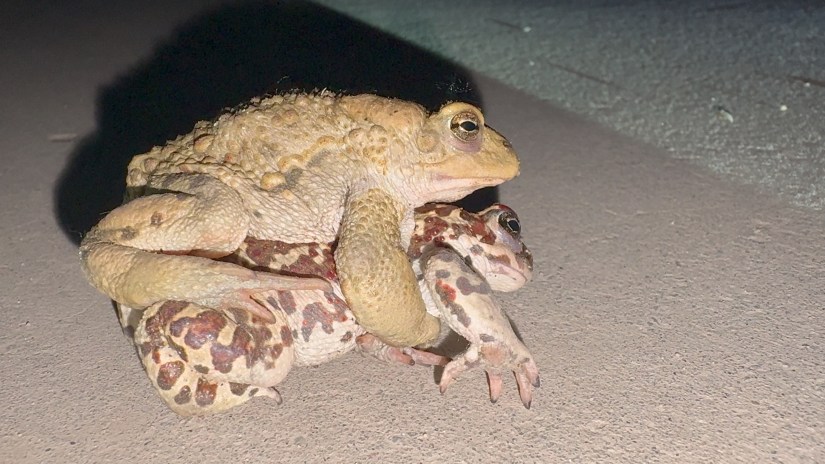


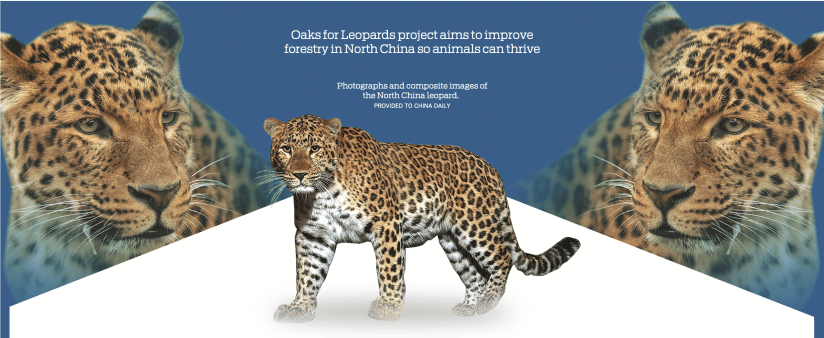


 8 January 2025, Beihai Park
 8 January 2025, Beihai Park





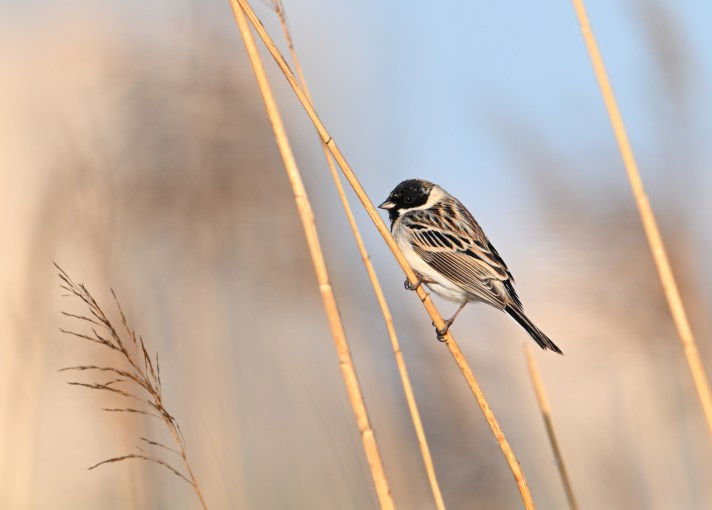


 Male polaris, 30 April 2024
 Male polaris, 24 April 2024