Wild Beijing: 2023 Review

As we head into a new year, it’s traditionally a good time to reflect on the previous 12 months. After three difficult years of pandemic restrictions, 2023 was a welcome return to at least some kind of normality in China, with the borders opening up and physical meetings again being possible.  I have been incredibly fortunate to be involved in some exciting and innovative projects and to work with some of the best people I’ve ever met.  I haven’t been very efficient at updating the blog part of the website this year, so here are a few selected highlights from 2023.

First, the nocturnal bird migration study in partnership with the Asian Infrastructure Investment Bank (AIIB) and Peking University. Spring 2023 was the fourth consecutive season of recording nocturnal bird sounds from the rooftop of AIIB’s headquarters in Beijing. In total, we recorded more than 83,000 calls from at least 111 species, all from just one building.

Spectograms of the some of the species recorded at night from the roof of the Asian Infrastructure Investment Bank (AIIB).

A draft scientific paper, led by Peking University, has been submitted to a journal for consideration and, in late November, Liu Shuangqi presented the results to the British Ornithologists’ Union (BOU) conference. This is the first study of its kind in East Asia and, as well as helping to raise public awareness of the ‘invisible miracle’ that happens over our heads as Beijing’s residents sleep at night (thanks to media articles in China and even in The Economist), it has demonstrated the diversity of birds passing over the capital and, importantly, the diversity of their habitat requirements.  It was instructive that the top three species recorded by volume were Olive-backed Pipit Anthus hodgsoni 树鹨 Shù liù (woodland species), Eurasian Skylark Alauda arvensis 云雀 Yúnquè (grassland species) and Black-crowned Night Heron Nycticorax nycticorax 夜鹭 Yè lù (wetland species). This illustrates that if Beijing is to fulfil its role in the flyway – to secure safe passage of migratory birds – it must provide a balance of natural habitats to help these extraordinary travellers to cross what is, to them, a hostile urban environment.  Encouragingly, at the summer 2022 workshop in AIIB to present the initial results, the Beijing municipal government recognised the value of scrub and grassland habitats (until recently classified as ‘waste land’) and committed to integrate the findings of the nocturnal migration project into the way they manage green spaces in Beijing.  Given that the Beijing Municipal Forest and Parks Bureau manages 71% of Beijing’s land, that is a big step.  The last few decades have seen a heavy emphasis on tree-planting in the capital, often at the expense of scrub and grassland, driven by the use of ‘tree-cover’ as the overriding measure of the quality of the environment. In most cases, when trees are planted, it has usually involved single species monocultures, all the same age and in straight lines, with undergrowth and fallen leaves removed to keep the trees ‘tidy’, resulting in very little biodiversity.  We very much hope that this is a turning point towards a more balanced and qualitative approach to habitat management.  It’s going to take time to see significant change but, as the capital city of the country that presided over agreement by more than 190 countries on the new Global Biodiversity Framework under the UN Convention on Biological Diversity, it would be fitting if Beijing led the way towards aligning the city with biodiversity goals by integrating the needs of migratory birds into urban planning.

We are planning to continue monitoring nocturnal bird migration from AIIB’s roof and have received tremendous support from Cornell Lab (Andrew Farnsworth and Benjamin van Doren) to help with automated detections and identifications, which will make processing the recordings more efficient (thus far, all processing has been done manually). Once we have the automated processing working effectively, we plan to explore the potential for schools to deploy recorders on their campuses as a way to expand the monitoring of migratory birds.. and potentially even set up competitions, for example to see which school records the most Olive-backed Pipits in a season.  Huge thanks go to my partners at Peking University, especially Professor Hua Fangyuan and Liu Shuangqi, to AIIB staff for their invaluable support, especially Sir Danny Alexander, Alberto Ninio, Tian Hua, Yan Bo and Li Zeyu, and to the Beijing Municipal government, especially Wang Xiaoping, for the wonderful cooperation and positive response to the findings.

Second, the Ambassadors for Nature initiative has gone from strength to strength. Launched in July 2022 by Clare Fearnley, the former New Zealand Ambassador to China, with 14 founding members, as of 31 December there are 35 ambassadors signed up to support the “pledge for nature”, committing to manage their diplomatic green spaces in a more friendly way for nature. Events this year have been hosted by the Irish, Swiss, Belgian and Slovenian Ambassadors focusing on migratory birds, pollinators and guidance for embassy gardeners, with a field trip to Miyun Reservoir hosted by the Beijing Municipal government.

The Ambassadors for Nature group at the Qingshui River, Miyun District, May 2023.

In addition to encouraging actions – such as planting native pollinator-friendly species, keeping areas wild, reducing and eliminating the use of pesticides, monitoring wildlife and erecting insect hotels, bird and bat boxes to support biodiversity in diplomatic green spaces – the initiative has been a great way to get biodiversity onto the agenda of senior foreign policy officials and to promote international cooperation. For example, thanks to Bruno Angelet, the new Belgian Ambassador, there are plans for a new international cooperation project to study the Beijing Swift involving Chinese, European (Belgian, UK and Swedish) and African (Namibian) scientists, with political support from the Beijing Municipal government and the relevant embassies.  And it was thanks to this network of ambassadors that I was honoured to go birding with US Ambassador Nicholas Burns and his wife, Libby, to Shahe Reservoir in Beijing. Following that, Ambassador Burns invited me to a reception at his residence in honour of visiting California governor, Gavin Newsom. I briefed Governor Newsom on the incredible story of one particular migratory bird that connects China and the US (Alaska) – the Bar-tailed Godwit – and discussed the potential for a three-way ‘(Inter)National Park’ involving New Zealand, Yellow Sea of China and Alaska to celebrate this incredible bird as a way of celebrating biodiversity and building bridges. I believe Gavin has high political ambitions, so maybe it planted a seed!

California Governor Gavin Newsom at a reception at the US Embassy in Beijing at the end of his visit to China in October 2023.

The Ambassadors for Nature initiative has also provided opportunities to engage on biodiversity with visiting ministers from a range of participating countries, including the New Zealand Foreign Minister and the Canadian Environment Minister.

With the visiting Canadian Environment Minister, Steven Guilbeault, at Shahe Reservoir

In addition, building on the success of the Ambassadors for Nature initiative in Beijing, I understand that the New Zealand ministry of foreign affairs is considering the idea of encouraging ALL of its embassies overseas commit to the ‘pledge for nature‘.  And the UN Development Programme (UNDP) in the Republic of Korea is planning to begin a similar initiative with foreign embassies in Seoul.

At the same time, several schools have adopted the ‘pledge for nature‘ and are applying it to their campuses.  It has been wonderful to work with students and teachers, including at the Western Academy of Beijing (WAB), where different groups of students have led on implementing each aspect of the pledge.  Helping nature is infectious!

This group of students at the Western Academy of Beijing has taken responsibility for identifying a suitable area to leave wild and to monitor changes in the wildlife, especially insects, for comparison with the remainder of the campus.

Third, I’ve been part of a small group pushing for the control of the sale of mist nets. Despite strengthened wildlife protection laws, improved law enforcement and greater public awareness, mist nets remain one of the biggest killers of migratory birds in China (and SE Asia). Even in Beijing, poachers still operate.  In the capital, these criminals target mainly Siberian Rubythroat and Bluethroat for the cagebird trade but data from prosecutors show that mist nets have been used in many large-scale trapping efforts, both for the cagebird trade and for exotic food, all across China. Twice this year I have personally encountered poachers using nets to trap migratory birds in Shunyi District. The map below, produced by Gu Xuan, shows the locations where poachers have been apprehended in Beijing in 2023 alone. 

A map showing the locations where poachers have been caught in Beijing in 2023 (Gu Xuan).

The good news is that there is determination to tackle this illegal activity and there is a lot going on behind the scenes that I hope to be able to talk about in a future post.  Needless to say, action is starting and, today, if you search for mist nets on e-commerce platforms, a warning appears that it is illegal to capture wild birds, and this is just the start.

At the same time, it is likely that the UN Convention on Migratory Species will promote tackling the illegal killing of birds, including with nets, at its next meeting in February 2024, so I am optimistic that further progress will be made this year both in China and internationally.

Fourth, over the last few years it has been the privilege of my life to work with ShanShui Conservation Center to help set up the “Valley of the Cats” project in Qinghai Province on the Tibetan Plateau. This is the community-based conservation and wildlife-tourism project, working with a village of Tibetan yak herder families. The herder families host visitors in their homes and guide them to look for the special wildlife they have in the area, including snow leopard, wolf, lynx etc. Many visitors remark on what a privilege it is to experience authentic Tibetan hospitality, as well as having the opportunity to see the elusive snow leopard. At the end of 2023, the project is close to passing the milestone of 4 million RMB (GBP 440,000) of revenue, 100% of which has stayed in the community. The project was showcased at the 2nd National Parks forum in Xining in August 2023 as an example of sustainable tourism and a way to bring income into local communities to reward them for their stewardship of important and fragile landscapes, and has won a host of national awards. In late August 2023, following the National Parks Forum, with ShanShui Conservation Center I visited two other (spectacular) villages that are interested in setting up similar initiatives. 

A glacier at 5,000m asl near Diqing, Qinghai Province

One of the spectacular valleys in Diqing at 4,900m asl.  

There is no doubt that the Valley of the Cats model, focusing on low volume and community-led tourism, can help to bring income to relatively poor communities while protecting fragile ecosystems.  However, it is not a model that will work everywhere.  In my view, three conditions are required for success: first, the presence of sought after wildlife (to create demand); second, a robust and established community structure that is able to handle decision-making and deal authoritatively with any issues that arise; and third, a supportive local government (essential in China).  It will take time to establish similar projects in other villages but the high interest from other communities reflects the potential of this approach to engage and support communities inside China’s national parks.  ShanShui Conservation Center, powered by a terrific group of enthusiastic and dedicated young people, is doing brilliant work and I cannot praise them enough for the contribution this NGO is making to conservation in China.  

It was during the September visit to Qinghai that we were fortunate to enjoy a stunning encounter with a female snow leopard next to the track.. Alerted by the alarm calls of several marmots as we were driving, we stopped to check whether there was a predator in the vicinity. Looking at the directions faced by the calling marmots, and triangulating their lines of sight, we were able to spot the big cat as she stalked one of the rodents. When just a few metres away, she made a dash but the marmot disappeared down its burrow in a cloud of dust in the nick of time. The video below (low resolution for ease of uploading) was taken just after the failed hunt using my iPhone attached to my Swarovski ATX95 scope.

Watching a snow leopard from the track in the Valley of the Cats, August 2023

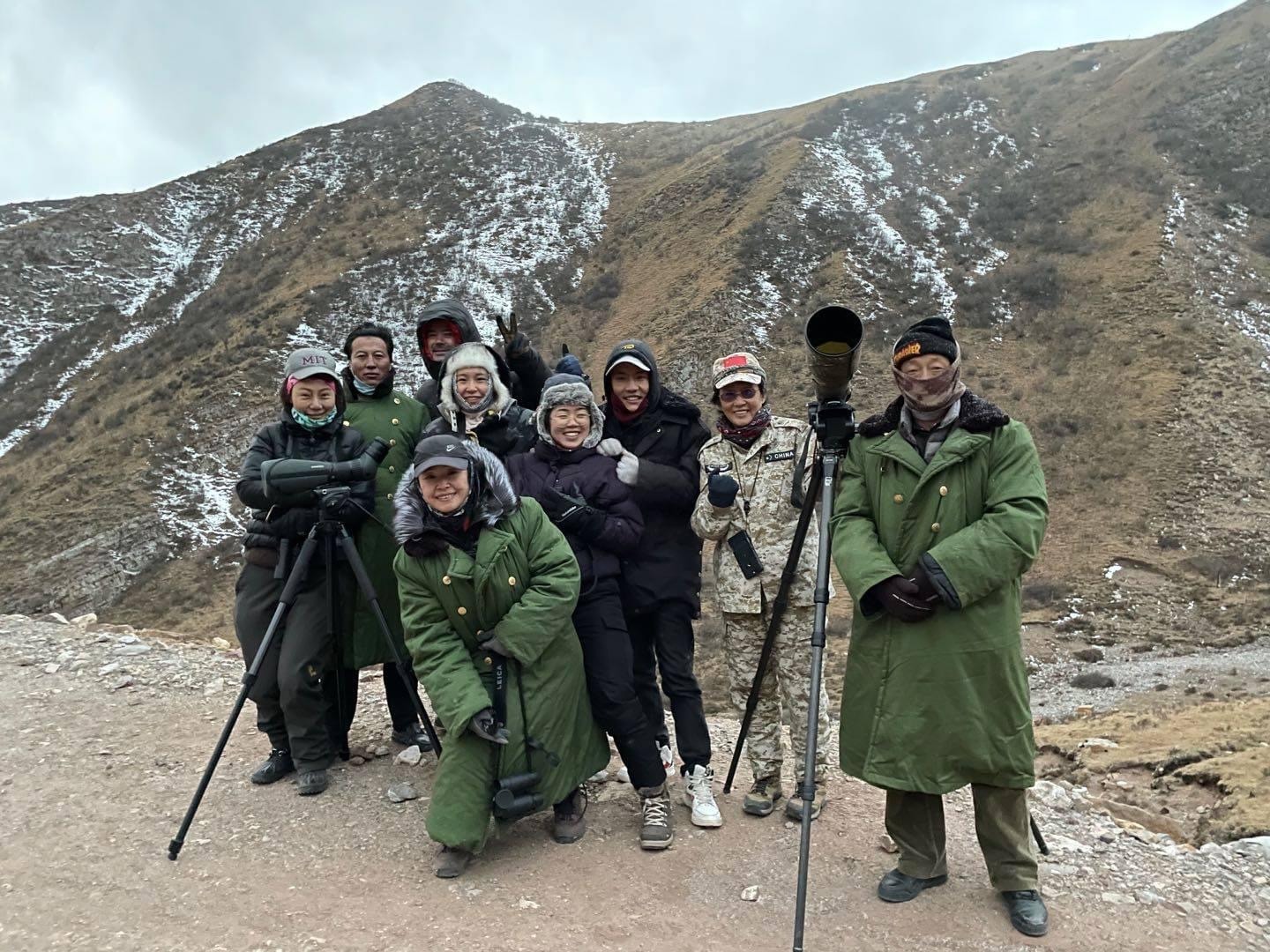
Special thanks to Shi Xiangying, Zhao Xiang, Yuqiu (Iris), Jun Yi (Audrey) and Qiuni for their hard work and for a wonderful trip in August.

Fifth, after my brush with TV in 2019 when I enjoyed the incredible experience of filming with Ray Mears as part of his Wild China series, I seem to have somehow become a (somewhat reluctant!) TV presenter in China. In April I spent a week at Tiaozini, Dongtan, Jiangsu Province, with CCTV4 making a documentary to highlight the importance of coastal wetlands and migratory birds.  Tiaozini is at the heart of the East Asian-Australasian Flyway and is a vital stopover for millions of migratory shorebirds – natural heritage that is shared by 22 countries from New Zealand in the south to Arctic Russia and Alaska in the north.  The programme aired in June on prime time TV. And September saw the launch of National Geographic/CICC’s “Road to Carbon Neutrality”, a two-part documentary series.  The two episodes, hosted by China-based photojournalist Sean Gallagher and me respectively, focus on nationwide efforts to reduce China’s carbon emissions in order to meet the twin goals of peaking emissions by 2030 and achieving net zero by 2060.  Filmed in 2022, navigating all manner of pandemic-related restrictions, the documentary has been shown in more than 50 countries worldwide.  And in November I appeared in an episode of UK explorer, Ash Dykes’ series “The Great Wall with Ash Dykes”, speaking with Ash about the wildlife of the Great Wall around Beijing.  Later that month I was invited to the studio of CCTV’s international channel, CGTN, to film a talk on the importance of biodiversity and what people can do to help.  That aired in early December.  It is encouraging to see the growing media interest in biodiversity in China and, although I am not a natural in front of the camera, I am happy to do anything that will help to advance the interests of nature.

Filming in Tiaozini about the importance of coastal wetlands and migratory birds, April 2023

Finally, at the end of the year, I was able to spend Christmas with my family in Norfolk for the first time since 2019.  It was a wonderful chance to spend time with my elderly parents and to catch up on some of the incredible wildlife experiences in north Norfolk, especially the spectacular flights of Pink-footed Geese at Holkham.

This year, I was keen to record the awesome sound of the geese and the 22-min soundscape below starts with the wakening of the local Eurasian Wrens and Blackbirds before the Pink-footed Geese begin to lift, passing over in groups, their calls slowly growing in intensity.  At 07m50s the local Jackdaws leave their roost and, towards the end, the calls and song of Goldfinches tinkle as the last of the geese leave the roost.  Best enjoyed with headphones!  Thanks to Holkham Nature Reserve manager, Jake Fiennes, for tips on where best to record the geese.

As if that experience wasn’t incredible enough, for a few days before Christmas, rare nacreous (“mother of pearl”) clouds were visible, providing a stunning backdrop as the geese returned to their roost at dusk… 

Pink-footed Geese returning to Holkham National Nature Reserve just after sunset against a backdrop of nacreous ‘mother of pearl’ clouds.

A lone Eurasian Curlew going to roost at dusk as nacreous clouds light up the evening sky.

It was a fitting end to 2023, a reminder of the breathtaking beauty of nature and why I do what I do.  

As we begin 2024, I would like to acknowledge the brilliant, and growing, group of conservationists in China who are doing wonderful work to celebrate and protect the special wildlife we have all around us, and the places it needs. It is an ongoing privilege to support what you do!

Finally finally, some of you may have noticed that Birding Beijing has evolved into Wild Beijing. This reflects the broadening interest and coverage of the website.  As well as the branding, the web address has also changed from birdingbeijing.com to wildbeijing.org.  There will be an automatic redirect for a few months but, in due course, only wildbeijing.org will be accessible, so please update any bookmarks.  Subscriptions for alerts about new posts have been automatically transferred to the new site.

Wishing everyone a happy, healthy and nature-filled 2024!

Watercolour of an (Amur) Leopard Cat (Prionailurus bengalensis, 豹猫, Bàomāo), January 2024.  This small cat (around 50% bigger than the average house cat) is native to Beijing and can be found in the mountains and in some wetlands where there is lots of cover.  As an ambush hunter it needs scrub and grassland, both habitats that have decreased significantly in lowland Beijing due to development and tree-planting.  Primarily nocturnal, sightings during daylight hours are rare. This small painting is in celebration of an incredible sighting in Tongzhou District in December 2023.  More details here.


Title image: a Beijing Swift (Apus apus pekinensis 北京雨燕 Běijīng yǔyàn) flying through a rainbow, Wenyu River, June 2023.

“Wild China with Ray Mears” to be broadcast on ITV this summer

Back in 2019, which almost seems a lifetime ago, I had the honour of working with a hero of mine – Ray Mears – and his team as part of a new series on China’s wild places.  Entitled “Wild China with Ray Mears”, the seven-episode ITV series chronicles his journey across this vast and diverse country, exploring some of its special wildernesses. 

The previous year, two of his researchers contacted me when they were scouting for locations.  They were keen to visit the Valley of the Cats, the location of the community-based wildlife watching tourism project.  I arranged for them to stay with a local family in one of the most spectacular locations and met them there on arrival.  The idea was that we would have two days to explore potential filming opportunities and locations.  The following morning, the local ShanShui staff and I drove to meet them at their homestay and there was quite a commotion.  Several members of the family were chatting loudly and gesturing towards one of the rooms of their house which looked as if a bomb had hit it.  The two researchers had been woken with a bang at 1am when the family started banging pots and pans, and were startled to learn that a brown bear had broken into the room adjacent to their sleeping quarters! Huge paw prints around the house and some muddy prints on the walls betrayed the bear’s shenanigans.

Inspecting the evidence of the bear’s visit in the Valley of the Cats.

Unfazed by their experience, the first thing the researchers said to me when I arrived was “ok, we know already this is a good place for Ray!”

I won’t reveal how Ray fared in the Valley, except to say that this episode is not to be missed.

The series will be broadcast on ITV in the UK this summer,  beginning with episode 1 from a very cold Beijing on Tuesday 13 July from 1930-2000.  With visits to the country’s tropical rainforest, the bamboo forest home of giant pandas, bat caves in karst landscapes as well as the Tibetan Plateau, this series is a must-watch for anyone with an interest in China and its wild places.  

Biodiversity rising up the agenda..

With biodiversity rising up the agenda due to the forthcoming UN negotiations due to take place in Kunming, China, in 2021, there is a lot happening here in Beijing and China.. on many fronts.  Here’s a quick summary of an eventful last few weeks.

At the end of October, I was honoured to be invited by my good friend, Shen Chu (Becky), of the Zoological Society of London (ZSL) to Kunming in Yunnan to deliver a public lecture at an event to celebrate International Snow Leopard Day.  With the exception of a couple of day trips into Hebei Province, this was my first trip out of Beijing this year.  The event was hosted by the Elephant Bookstore in Kunming and, as well as a live public audience, the event was streamed online to more than a hundred thousand people.  The organisers did a fantastic job, bringing together local artists, schools and musicians, and there was even a special Snow Leopard IPA produced by the local craft brewery which included a QR code with lots of facts about the Snow Leopard. 

Speaking about the Valley of the Cats community-based conservation and wildlife-watching project in Kunming.
Snow Leopard IPA. At 8% it’s a fitting strength for a beer celebrating the “King of the Mountains”!

With the city scheduled to host the 15th Conference of the Parties (COP15) to the UN Convention on Biological Diversity next year, it was wonderful to see such energy – and innovative ideas – among local people to engage the public about nature and wildlife.

Just a few days later, I set off to the Valley of the Cats with a subset of these brilliant young people from Kunming.  Having promised Becky several years ago to help her to see a Snow Leopard in the wild, there was an air of expectation as we landed in Yushu and made our way to the Valley.  It was my first visit of the year to this magical place and, as always, it did not disappoint.  We enjoyed a spectacular few days and treasured encounters with four Asian Brown Bears (an adult male and a separate mother with two cubs), a single Snow Leopard on a fresh kill of yak and a wonderful hike through some of the most stunning scenery I have seen. 

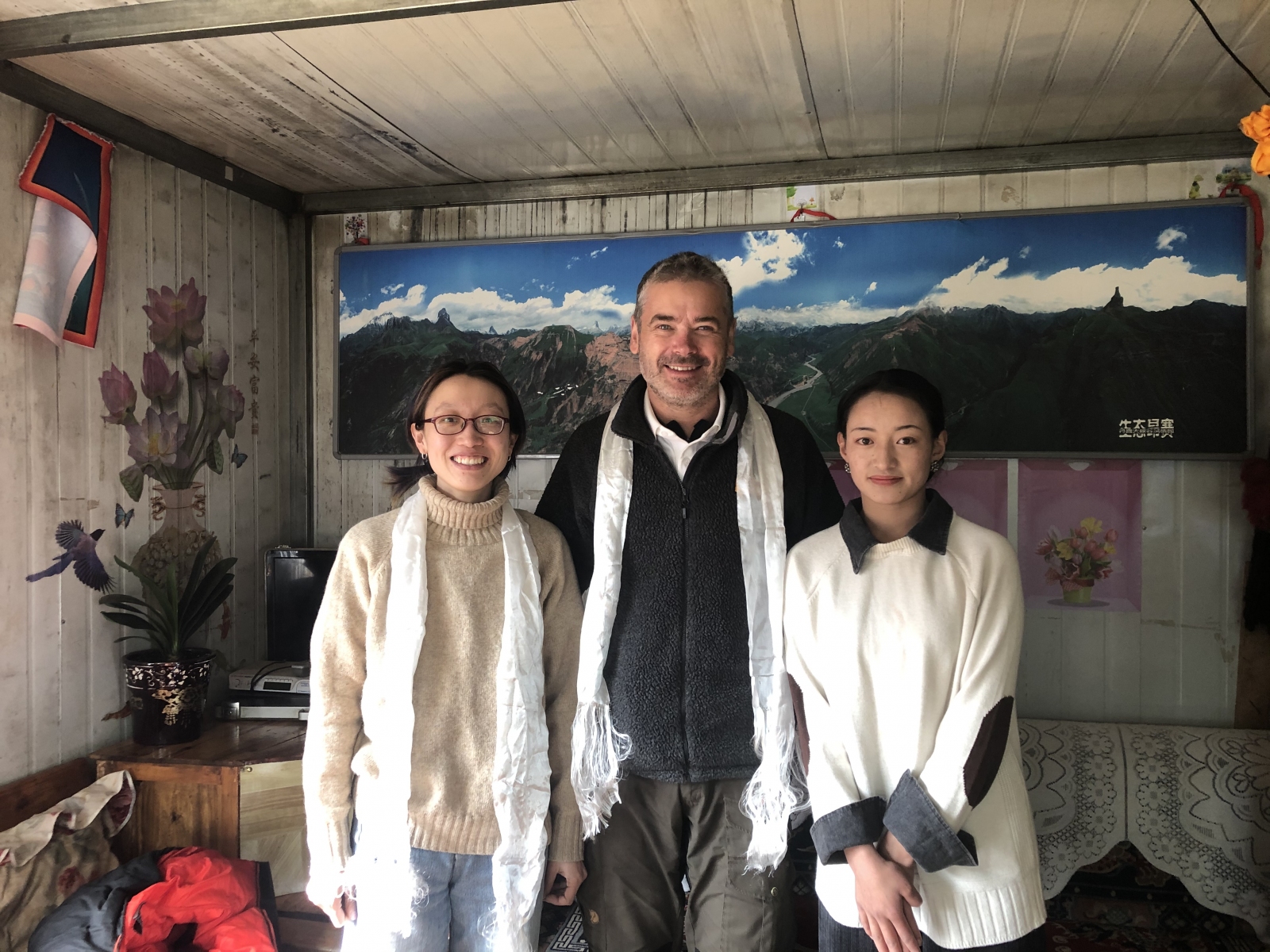
On our last morning we stopped by Yunta’s house for a cup of tea. Yunta is one of the village leaders and has been a strong supporter of the Valley of the Cats project since its inception.  It was early morning, around -10 degs C and I was shivering in four layers, yet Yunta was in a vest!

It was particularly encouraging to meet with a group of young local people who are keen to take on some of the running of the tourism project and to contribute to wildlife monitoring.  Seeing their enthusiasm and pride in their local environment was heartwarming.

Just a few days after returning from Qinghai, I was delighted to hear that the Valley of the Cats community-based wildlife-watching tourism project had been named as a runner-up and received a “recognition of excellence” under the Nature Stewardship category of the Paulson Prize for Sustainability.  Competing with more than a hundred projects across China, this was fantastic recognition for the local community.  You can read about the winning projects – on battery recycling in Wuhan and wetland restoration in Haikou – here.

Having been part of the team to produce the report entitled “Financing Nature: Closing The Global Biodiversity Financing Gap”, the authors have been busy reaching out to as many influential governments, ministers, organisations and individuals as possible to try to influence the debate on how countries finance the USD 700 billion per year needed to protect our most important biodiversity and ecosystem services.  That figure may sound like a lot of money – and it is – but to put it in context, it is less than the world spends each year on soft drinks.  Governments have a fundamental role to create the right regulation that generates funding for nature.  That means no longer allowing those that do harm to the environment to do so for free and rewarding those who protect and preserve.  Perhaps not surprisingly, the figure of USD 700 billion could be reduced by around half by reforming harmful subsidies (specifically on agriculture, fisheries and forestry).  It does seem out of step that, in the midst of a global biodiversity crisis, governments around the world are still paying people billions of dollars to employ practices that cause harm to our environment.  This week I was invited to brief senior staff at the Asian Infrastructure Investment Bank (AIIB) in Beijing.  As an organisation that funds many large infrastructure projects in developing countries, it was encouraging to hear about their enthusiasm for ensuring biodiversity and climate change criteria feature prominently in their lending criteria. 

Handing over a copy of the “Financing Nature” report to Sir Danny Alexander, Vice President of AIIB.

A second meeting has now been planned to examine how AIIB can become a leader amongst multilateral development banks on this issue.  There is a very long way to go to ensure that infrastructure projects are mandated to minimise harm to the environment and offset any unavoidable damage by investing in habitat protection and restoration elsewhere.. but that change is coming.. the only question is how fast?

Continuing the theme, last Saturday I participated in a discussion panel on biodiversity and climate change at the Caixin Global Summit in Beijing, an annual event that brings together an impressive line-up of people – from China and overseas – to discuss major global issues.  

And the following day I participated in the launch of the Beijing government’s “Urban Forestry Network”, a group of c30 people who will develop proposals for improving the quality of the capital’s tree planting and biodiversity-related projects in Beijing.  This network has the potential to make a big difference to how land is managed in Beijing, improving and restoring habitat for wildlife, and I look forward to playing an active role as the group develops its workplan.

Launch of the Beijing Urban Forestry Network on Sunday 15 November 2020.

You may be wondering if I have been able to do any birding recently and, sadly, the answer is no!  However, I am looking forward to this Sunday when I will be accompanying the new UK Ambassador to China, Caroline Wilson, on a birding trip to Yeyahu, during which we will be discussing biodiversity, China and the importance of the UK and China working closely together, as hosts of the UN climate change and biodiversity negotiations respectively, to ensure these processes are reinforcing and lead to a successful outcome.  It’s hugely encouraging to see the UK Ambassador taking a strong and early interest in these issues and I look forward to doing my bit to work for the strongest outcomes possible at both Kunming and Glasgow in 2021.

With Christmas in the UK out of the question this year due to the pandemic, I’m hoping for a few days of relaxation and birding around the capital.  With waxwings arriving and the first snow today, the excitement of what might turn up is palpable.  Will it be a Pallas’s Sandgrouse winter or could there be an influx of Asian Rosy Finches, or maybe even another of the special redstarts from the Tibetan Plateau.  Can’t wait to get out there and explore!


Ray Mears visits the Valley of the Cats

In late October, it was an honour to welcome Ray Mears to the Valley of the Cats. Ray is a world-renowned expert on “bushcraft” and a prominent TV personality in the UK. I grew up watching him in series such as “Tracks“, “Ray Mears’ World of Survival” and others, where he showed viewers how to discover and follow the tracks of wild animals and to survive in the wild, working with nature to make shelters from branches and leaves and finding all manner of edible plants and insects.

Ray visited the Valley of the Cats as part of a forthcoming ITV Series. It was a pleasure and an education to spend time with him – his knowledge is incredible – and there are so many stories to tell.. I won’t give anything anyway but suffice to say it’s a must-watch for anyone interested in China’s incredible wildlife. As always, a huge thanks to the local community and to ShanShui Conservation Center for their wonderful hospitality and to the Qinghai government and the Sanjiangyuan National Parks Office for allowing the crew to film. I am confident Ray’s visit will make a big difference to public awareness in the UK, and more widely, about China’s magnificent wild places.

Title image: Terry with Ray Mears in the Valley of the Cats.

National Parks are coming to China

A few weeks ago, I wrote about the community in the Valley of the Cats being awarded the first concession for community-based tourism in a Chinese (pilot) national park. In late August, I was invited to China’s first National Parks Forum in Xining, to see for myself how the community’s efforts are influencing national policy.

From the stunning mountain ecosystems of the Tibetan Plateau to the pristine forests of Heilongjiang there is no doubt that China has world-class natural heritage. Historically, China’s preserved land, covering one fifth of its land surface – an area the size of Mexico – has been protected by a complex patchwork of more than 12,000 protected areas made up of nature reserves, world natural and cultural heritage sites, scenic zones, wetland parks, forest parks, geological parks, and water conservancy scenic locations, each with varying levels of legal protection and opaque administrative procedures.

Back in 2015, the Chinese government announced plans to streamline the system of protected areas and pilot national parks in nine selected provinces (expanded to thirteen today). After much research, earlier this year the government announced an intention to rationalise the existing mosaic of protected areas into just three categories – national parks, nature reserves and natural parks.

Work to create national parks is now well advanced and, to take stock of progress and learn from international experience, China’s first national parks forum took place in Xining, Qinghai Province, on 19-20 August, bringing together over 400 participants from government, academia, international organisations and NGOs.

The high-level forum was opened by Liu Ning, the Governor of Qinghai Province, and began with a congratulatory letter from President Xi Jinping. The letter set out the importance of national parks in delivering the President’s vision of “eco-civilisation” and “Beautiful China”.

“China has adopted the vision that lucid waters and lush mountains are invaluable assets, pursued a holistic approach to conserving its mountains, rivers, forests, farmlands, lakes, and grasslands, and implemented a national park system. By implementing the system, China aims to maintain the primitiveness and integrity of natural ecology, protect biodiversity and ecological security, and preserve precious natural assets for future generations.”

President Xi Jinping

Jonathan Jarvis, former Director of the US’s National Parks Service and now Executive Director of the Institute for Parks, People and Biodiversity at the University of California, Berkeley, offered perspectives from his 40-year career in the National Parks Service and summarised the key findings from his recent visit to, and evaluation of, Sanjiangyuan pilot national park. This included recommendations relating to the legal framework, management policies, the role of science and Chinese universities, funding models, payment for ecosystem services, law enforcement, visitor facilities and branding and marketing.

“Through this new national park system, China has the opportunity to contribute to world biodiversity conservation and to show leadership in ecosystem services and the relationship between humans and environment.”

Jonathan Jarvis, former Director of the National Parks Service, USA
Liu Ning, Governor of Qinghai Province, opens the National Parks Forum

Sessions and sub-forums addressed issues as wide-ranging as biodiversity protection, community participation, climate change, environmental education and public access. Together with ShanShui Conservation Center, I was honoured to represent the community project in the Valley of the Cats and there was much interest in how the project, soon to pass the 1 million Chinese Yuan mark in terms of funds raised for the local community, is providing sustainable benefits to multiple stakeholders – government (informing policy on tourism for national parks, promoting national parks domestically and internationally and improving China’s image overseas), community, (financially and in terms of reducing the risk of human-wildlife conflict), visitors (a ‘once-in-a-lifetime’ authentic experience), research institutes (benefiting from the community’s involvement in collecting data) and conservation NGOs (financial contribution to conservation projects in the community). It was heartening to see how the community-based tourism project in the Valley of the Cats had caught the attention of policymakers and was in their thoughts as they developed plans for how to manage tourism in the new national parks.

Presenting the Valley of the Cats community-based wildlife watching tourism project to the forum.
The Valley of the Cats community-based wildlife-watching tourism project is helping to shape China’s policy on tourism for its National Parks.

Throughout the forum there was a palpable sense of excitement, pride and, with that, responsibility about the potential of China to develop a world-class system of national parks, not only in terms of their natural heritage but also in terms of how they are managed.

The participants learned about the importance of wild places for human well-being. For example, the rivers that originate in Sanjiangyuan pilot national park in Qinghai Province, provide fresh water for more than 900 million people. And how personal connections to wild places and wildlife can be inspiring and even life-changing. As if to illustrate this, at the opening dinner I was seated next to a representative of WWF China. He told me how, on a visit to an African national park, he was so moved by his encounter with elephants that, on learning how this species is threatened with extinction by illegal hunting for ivory, he quit his job with the government and joined an environmental NGO focusing on the illegal wildlife trade and has worked in that sector ever since.

With veteran conservationist George Schaller (left) and Jonathan Jarvis (right), former Director of the US National Parks Service at the opening of the forum.

I left Xining with a better understanding of the enormity and complexity of establishing national parks in China and some of the key issues being grappled with by policymakers. These include balancing protection and public access, the legal framework, including enforcement, clarity on land rights, long-term funding models and the role of local communities.

There is much still to do before China launches its first tranche of national parks in 2020. However, I am confident that, with the clear political will, the collective talents across China’s government, academic and NGO sectors, combined with international experience facilitated by partners such as the Paulson Institute, China is well on the way to developing a system of national parks that will provide robust protection for its most important natural heritage as well as being a major source of national pride, respected and enjoyed by people the world over for generations to come.

The outcome of the forum, the “Xining Declaration”, is available here (Chinese only).

Valley of the Cats awarded first franchise for wildlife tourism in China’s national parks

Some great news from the Tibetan Plateau. The community cooperative in The Valley of the Cats has been awarded the first ever franchise for community-based tourism inside a Chinese National Park.

The franchise was awarded at a special meeting in Xining, the capital of Qinghai Province, involving the central and local governments, representatives of the local community and ShanShui Conservation Center.

The franchise recognises the community-based wildlife watching project as a way to facilitate public access to a national park whilst respecting the local community and the fragile environment.

The local community participated in several training courses in 2017 before opening their homes to tourists.

This recognition comes at an important time for China’s National Parks. Currently there are 11 pilot National Parks across the country, including Sanjiangyuan (literal translation “three rivers park”, recognising it as the source of the three great rivers – the Mekong, Yangtze and Yellow), in which the Valley of the Cats resides. Next year, based on the experience of the pilots and ongoing research, including learning from overseas, the Chinese government is due to announce its first tranche of National Parks and how they will be managed. Tourism will be a major element of the policy and the Valley of the Cats community-based project is now formally recognised as a model for tourism that could be appropriate for environmentally sensitive areas.

Having received local government approval in 2017 and after intensive training with 22 families in the Valley, the community-based wildlife watching tourism project was open to visitors in 2018 and, in its first full year, received 61 groups of visitors raising 460,000 CNY for the local community. Demand is up in 2019 and we expect the revenue to pass 1 million CNY sometime this autumn. Importantly, 100% of the revenue stays in the community with 45% from each visit going directly to the host family, 45% to a community fund run by a locally-appointed committee and 10% to community-based conservation projects.

The project is still in its infancy and, not unexpectedly, challenges remain. For example:

i) The standard of accommodation, basic food and lack of dedicated toilets mean that this type of tourism is only for the adventurous traveller;

ii) Language can be a barrier for foreign visitors; with very few herder families having any english language capability, visitors with no Tibetan or Mandarin proficiency can struggle to communicate; and although much can be achieved with modern translation APPs, this is no substitute for direct communication;

iii) Illegal visitors – some households and visitors didn’t follow the rules and received tourists privately; this is against the regulations and can cause ill feeling in the community. With the Valley covering a large area, it is hard to police effectively. Any illegal visitors will be ejected and banned from re-entry and, from 2020, manned gates will be active at each entry point.

Other, more long-term risks to consider include:

Will the economic benefits of this kind of tourism break the balanced structure of the community and, if so, will it lead to negative behaviour?

Will the arrival of more visitors accelerate the change of traditional culture here? And will these changes affect the herders’ attitude towards wildlife? After all, it is their culture and harmonious attitude towards nature that has made it possible for this pristine environment to be preserved to this day.

Whilst recognising these risks, the experience so far has been overwhelmingly positive and invaluable knowledge is being gained that will have an influence on the way tourism is managed in China’s national parks from 2020. On behalf of the local community, a big thank you to everyone who has supported the project!

2019 began with several groups braving the cold and unusually heavy snow in February and March to experience the Valley in stunningly beautiful wintery conditions.

Carpeted with snow, the Valley takes on a new look.

I made my first visit of the year in early May, coinciding with the visit of a Scottish couple, Graeme and Moira Wallace, who had flown 10,000km to celebrate their 40th wedding anniversary in the Valley of the Cats. It was very special, and emotional, to see Graeme and Moira encountering their first Snow Leopard. They were extremely lucky, viewing a sleepy male just 160m from the vehicle!

A sleepy male Snow Leopard just 160m from the vehicle in the Valley of the Cats. A wonderful 40th wedding anniversary present for Graeme and Moira Wallace.

The next day they saw another Snow Leopard, probably a female, at a different location. The experience of seeing these wild cats on the stunning Tibetan Plateau, enjoying the incredible scenery and staying in the home of a local herder made their 40th wedding anniversary hard to beat. See you back here for your 50th?

Graeme and Moira Wallace on top of the world!
Graeme and Moira Wallace with Abao, their herder host and guide.

On their return to Scotland, Graeme and Moira kindly made a donation towards the community-based conservation project in the Valley of the Cats. Thank you, Graeme and Moira!

I was back in July, accompanying the visiting Panthera scientist, Imogene Cancellare, and helping a joint UK-China TV production company with a recce ahead of planned filming in October. Imogene was collecting Snow Leopard scat, in partnership with ShanShui Conservation Center, as part of her PhD studying Snow Leopard genetics.

Imogene Cancellare (left) with Emilie (Wang Yiliao) of ShanShui Conservation Center, collecting Snow Leopard scat at 4,500m

On their first night, the TV producers had some excitement when a Brown Bear broke into their family homestay. Fortunately, the bear didn’t get into their sleeping quarters and was scared off by the family banging pots and pans without any lasting damage but it was a stark reminder that living in this area is not without risk!

Inspecting the break-in by a Brown Bear. Can you see the paw prints?

The summer nights in the Valley of the Cats are perfect for viewing the core of the Milky Way and, for the first time, I attempted to photograph the night sky. I was pleased with the results but, given the elevation and light pollution-free skies, I am sure anyone with experience and a better camera would be able to capture some stunning images.

The Milky Way over the ShanShui workstation in the Valley of the Cats.

The Valley of the Cats community-based wildlife tourism project has been, without doubt, the most rewarding project with which I have been involved. Together, we are learning by doing. A big thank you to the local government, the herder families and to the brilliant ShanShui Conservation Center for making it possible. And a special thank you to everyone who has supported the project by visiting.

If you haven’t yet visited but are interested, check out the website to learn more and make an inquiry!

Valley of the Cats profiled in Beijing

It’s been a busy week in Beijing for the Valley of the Cats.  First, last Wednesday evening, I was invited by the Royal Asiatic Society to speak about the community-based wildlife watching tourism project during a special event held at The Bookworm.  I shared the platform with John MacKinnon, who has just returned from two weeks in the Valley having recorded a fantastic 20-minute film about this special place, its people and the wildlife, all taken against the stunning backdrop of some of the heaviest snow in living memory.  Once edited, we plan to to publish the film shortly.

IMG_8184

IMG_8186

IMG_8185

We were honoured to be joined by 12-year old Joyce Li whose dream of seeing a Snow Leopard came true during her visit to the Valley of the Cats last year.  Joyce’s enthusiastic account of her experience encapsulated the magic of the Valley and I know from speaking with her that she is now a committed wildlife champion!  This is her written account:

=====

The First Encounter

“In October 2018, I went to the Valley of the Cats along with my parents, to look for the elusive snow leopard. This is a simple recount of my first encounter with this mysterious big cat.

On the second day of our trip, we woke up at 6:00 am, washed, downed some porridge, and we were off. It was snowing outside, with hares popping up in front of our car lights. They froze whenever we passed, too terrified to move.

About an hour had passed, and the sky had lightened up, and rays of sunlight peeked through the mountains. The snow blanketed the slopes and we searched them for any sign of a big cat. We even asked a local if he’d spotted one. He said that he had seen a carcass of a dead sheep around here, killed by a predator, and we continued searching. We came across quite a few herds of blue sheep and white-lipped deer, but no snow leopard. We decided to move to a new location. Suddenly, Yixi, our guide, started running up the slopes, and we followed him, scrambling up the mountainside. When he stopped, we caught up to him, Yixi said that he thought he had spotted a large animal feeding off a dead sheep. We were buzzing with excitement. But it was only a large dog, picking off the scrap bits of meat.

With no more signs of anything interesting, we decided to stop by Yixi’s cousin’s and have a nice cup of tea. After resting up, we went looking for the snow leopard again, and asked Yixi’s cousin for some help on the walkie talkie. Yixi drove us along the dirt road again, and I fell asleep.

I was already awake when mom called, and still deciding whether to snooze for a few minutes more, but when I heard the words “snow leopard”, all thought of another nap disappeared. Yixi came rushing back to us (he was out searching for snow leopards while we rested in the car) and told us that his cousin had spotted one across the valley. We sped along the small dirt road to the spot where the snow leopard was last found. We raced up the mountain, panting and out of breath, and threw our equipment down. It took a LOT of searching for us to spot the snow leopard, it was so well camouflaged on the rocks, with its grey and white pelt.

The snow leopard seemed quite lazy and full, because when a herd of blue sheep came by, it made no move to hunt, instead lounging on a rock. A few minutes later of cameras clicking and admiring the big cat, the King of the Snow Mountains decided to take a little nap, and disappeared behind the rocks. We waited for another hour, and the sky had turned dark. It didn’t reappear, so we went home too, to a warm dinner.”

The Second Encounter

“It was our third day, and we were up in the mountains, searching again for the mysterious snow leopard. We parked outside Yixi’s cousin’s house, watching them milk their yak and collecting their dung for fueling fires. Someone had spotted a red fox up the mountain, and we rushed to see. We were snapping away at the little creature, until Yixi yelled “Sa!” which means snow leopard in Tibetan. The poor fox was suddenly not the center of attention anymore. We scrambled to follow Yixi, and set up our equipment. There were two of them! They were a little far away, but we could see their big furry heads poking up. Sometimes a fluffy tail would appear and wave around. An hour later, they went down the mountain to somewhere we couldn’t see. We tried searching for them again, but with no success.

We moved to a new part of the valley, and waited an entire four hours for a snow leopard to appear. No luck. Not even when we spotted three herds of blue sheep, the snow leopard’s favorite snack. So after a while, we just started to eat snacks and not really bother looking. About twenty minutes later of infinite boredom and listening to dad’s observations of blue sheep and their horns and markings, Mr. Puma, a local guide for another group (we call him because he was wearing a puma jacket), drove up the little dirt road (you could hardly call it a road, path more like it), and shouted that the two snow leopard siblings we saw in the morning were spotted again, on the same mountain, but this time closer.

We descended the slopes as fast as we could, trying not to let large piles of yak manure get in our way, and scrambled in to our car.

When we arrived, there seemed to be nothing in sight, but two little ears gave the snow leopards’ hiding place away. The two siblings were having a very nice afternoon snooze. We waited, and waited, and waited for them to stir. A while later, a big furry paw raised, and playfully cuffed it’s sibling on the head. A few seconds later, the paw disappeared. When it reappeared again, this time a paw and one of the snow leopard’s heads, it was to very excited rapid clicking from our cameras. Soon after they’d woken up, the snow leopards were play fighting. They also sprayed and rubbed rocks to make what we guessed were border marks. We captured photos and videos of them digging holes, then pooping in them, which was also a form of marking their territory, as we later learned.

It was getting dark, and all too soon, we had to go. Apparently the snow leopards agreed, because they climbed back to their hiding spot. It had been an amazing day, and I was literally dancing on the rocks.

After dinner, we visited the Research Station to meet a volunteer who’s coming here today, who has lived in Qinghai for a year, studying wildlife and their behavior. When we told the researchers we had seen two young snow leopards, they wowed and congratulated us. I asked the volunteer some questions on snow leopard behavior, and she confirmed that the snow leopards were indeed marking their territory by pooping and spraying. We also learned that young snow leopard siblings, no matter what gender they are, can stay together for a few months after becoming independent from their mother. I had once thought that only females will stay together, because males will be aggressive towards each other, as adult males often are.

Another amazing and fruitful day in the Valley of Cats!”

Joyce Li
Beijing
March 10th, 2019

Snow Leopard, Valley of the Cats. Photo by Joyce Li

=====

It was a thoroughly enjoyable evening with some great questions and conversation after the presentations.  I am confident many of the participants will be booking their trips to the Valley very soon!  A big thanks to Alan and Melinda of the Royal Asiatic Society for inviting us and to The Bookworm for hosting us for this special event.

I arrived at The Bookworm directly from the studios of Radio Beijing International who had invited me for an interview about the Valley of the Cats project.  The interview was broadcast in two segments over the weekend and can be heard here.

2019-03-13 Radio Beijing International

Big thanks to Christine from Radio Beijing International for the opportunity!

With several bookings already for 2019, we are hoping that we’ll be able to build on the success of 2018 during which 61 groups of guests visited, raising CNY 460,000 for the local community and snow leopard conservation.


Valley of the Cats 2018

As the sun will soon set on 2018, it’s a good time to review the results of the community-based wildlife watching tourism project in the Valley of the Cats.

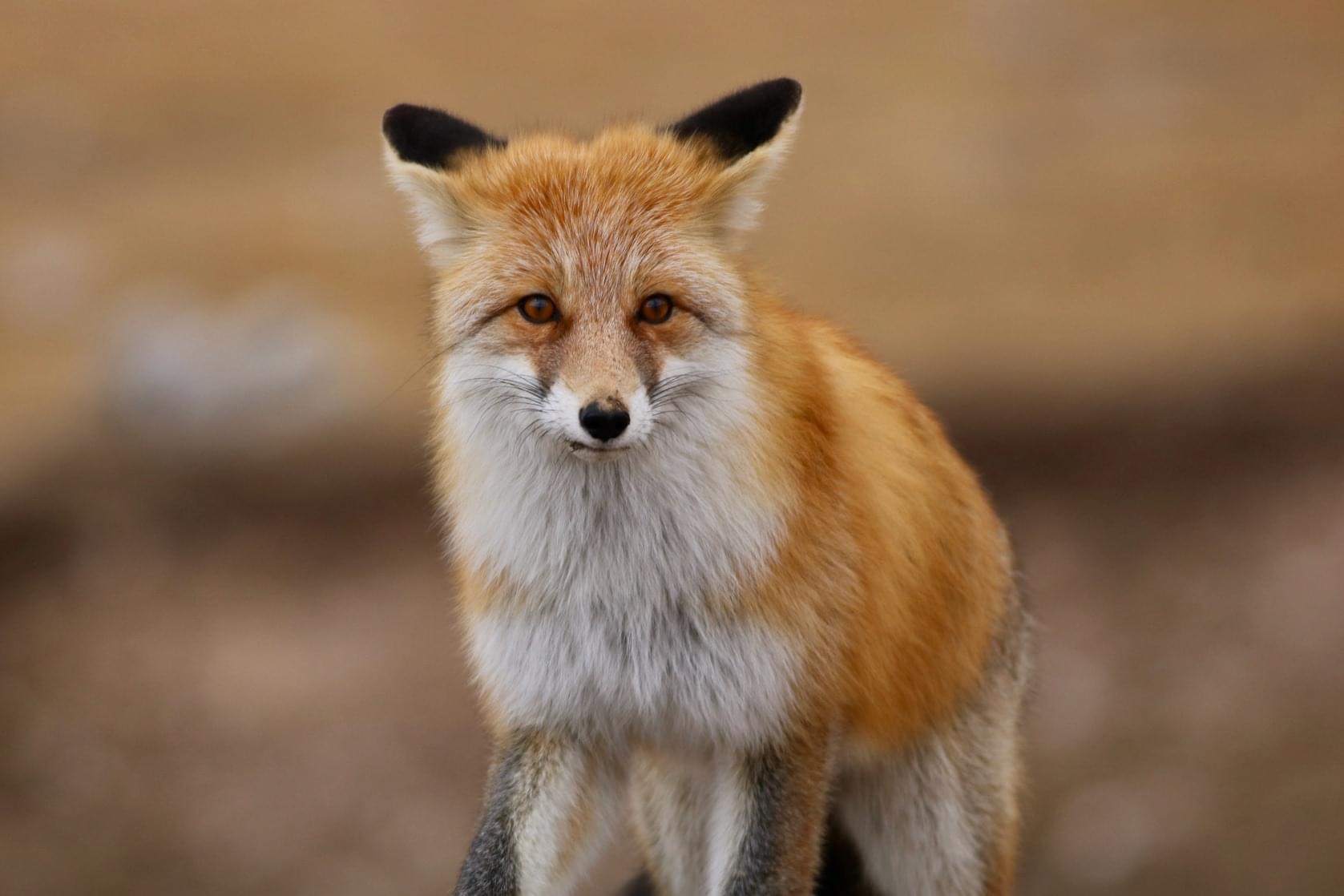
I am delighted to announce that, in 2018, 61 groups of visitors stayed in the Valley of the Cats as part of the community-based wildlife tourism project (with the last visitors of 2018 arriving today!).  These trips have generated revenue of CNY 432,400 (almost GBP 50,000) for the community.  That’s just under CNY 20,000 (GBP 2,200) of benefit for each of the 22 families involved in the project.  At the same time, many visitors have enjoyed the trip of a lifetime, including special encounters with some of the resident wildlife such as Snow Leopard, Common Leopard, Wolf, Asian Brown Bear, Lynx, Tibetan and Red Fox and much more.

One of the year’s more high-profile visitors was Professor Per Alström. His 30+ year quest to record Snow Leopard on camera was finally rewarded in the Valley of the Cats with the video below.


We’ve received some excellent – and importantly, honest – feedback from visitors to the Valley this year and from the host families. This feedback will be instrumental in guiding a meeting with the local community in January to review progress and discuss plans for 2019.

We can expect a few minor changes to the way the project operates, based on the experience of 2018, but we will ensure the project retains its strong sense of authenticity.

On behalf of the local community, I’d like to say a big THANK YOU to everyone who has supported the project in 2018 either by visiting or helping to promote the Valley of the Cats and, if you haven’t yet visited, please take a look at the website and consider a trip in 2019!

Schools for Snow Leopards

This week will see the start of an exciting new initiative involving schools and scientists from the ShanShui Conservation Center at Peking University with the aim of supporting Snow Leopard conservation.

In recent years, ShanShui Conservation Center has been running a community-based conservation project in the Valley of the Cats, whereby local yak herder families are involved in collecting data for the scientists based at Peking University in Beijing.  The local people set up, and monitor, a series of camera traps, the data from which is contributing a huge amount of knowledge about the distribution, population and ecology of apex predators including Snow Leopard, Common Leopard, Asian Brown Bear, Wolf and Lynx.

Here is a short video showing some of the local people setting up a camera trap.

Earlier this year, two teachers from the International School of Beijing (ISB) – Wayne and Jenny Winkelman – visited the Valley of the Cats, experiencing the local culture, hearing about the conservation project and even enjoying their very own Snow Leopard sighting.  We discussed how schools might be able to contribute and quickly came up with the idea of schools ‘sponsoring’ camera traps.  The idea was that schools would raise money for ShanShui Conservation Center to pay for camera traps.  The schools would then receive the photos from ‘their’ cameras and learn about the wildlife and people of the Tibetan Plateau.

Fast forward a few months and the students at ISB, inspired by Wayne and Jenny, have been raising money by selling cuddly Snow Leopards and thanks to their efforts they now have enough to purchase their first camera trap!

On Friday this week, a scientist from ShanShui Conservation Center will visit ISB to explain about the project, show some pictures and videos, answer questions from the students and take receipt of the donation from ISB.  A camera, allocated to ISB, will then be placed on the Tibetan Plateau as part of the ongoing conservation programme.  A local family will be responsible for deciding the location and for monitoring the camera.  Every two to three months the school will receive the photos from ‘their’ camera, which will form the basis for learning about the Tibetan Plateau ecosystem.

Schools will thus be contributing to community-based scientific and conservation projects whilst gaining great material to support learning about the Tibetan Plateau and the animals and people that live there.

If successful, we hope this programme can be expanded with other schools sponsoring their own cameras.

Huge thanks to Wayne and Jenny Winkelman for their initiative in starting this exciting new programme, to ShanShui Conservation Center for engaging schools and especially to the students at ISB for so enthusiastically raising money to support Snow Leopard conservation.  I can’t wait to see the first photos from their camera and to see how this initiative develops.

If you are a teacher at a school in Beijing interested in sponsoring a camera trap or two, please get in touch!

Snow Leopard Caught on Camera

Six weeks ago, working with ShanShui Conservation Center, I finished the latest round of training for the host families in the Valley of the Cats in Qinghai Province as part of the community-based wildlife tourism project.  Before leaving, I spent an afternoon high up in the mountains, where I set up a camera trap along the edge of a crag.  Two days ago, I retrieved it.  The memory card was full and included more than 1,800 images.  I was excited but at the same time wary that I may have 1,800 photos of a blade of grass waving in the wind, triggering the camera trap’s motion sensor!

As I looked through the images, I was not prepared for what I was about to see.  Many of the photos were of a cute GLOVER’S PIKA, busily preparing for winter by gathering vegetation and placing it in its den.

A TIBETAN SNOWCOCK was a joy to see, strutting along the rocks..

This was shortly followed by a group of BLUE SHEEP, a wonderful ungulate that roams these mountains in large groups, often 100+ strong.

Then, after checking around 500 photos, suddenly I had a surprise..  a SNOW LEOPARD!  The spectacular series of five photos show what I believe to be a fresh-faced young animal walking closer and closer to the camera before appearing to look right into the lens…  spectacular!

I could not have wished for a better result!

This Snow Leopard was caught on camera in a part of the valley previously not known to hold this species, so it’s helpful information to the ShanShui scientists working in the area.

The last two weeks have been a busy time for the Valley of the Cats with five groups of visitors staying with local families as part of the community-based tourism project. The groups included Professor Per Alström and his brother Klas, Beijing-based Ben Wielstra and Jan-Erik Nilsen, Alan Babington-Smith and Melinda Liu from the Royal Asiatic Society, as well as James Eaton and Rob Hutchinson from BirdTour Asia who visited with Dan Brown and his wife Rachael Iveson-Brown.  Roland Zeidler visited with Fiona Fyfe and John MacKinnon accompanied us for a few days before heading to a birding festival in Yushu.  Finally, the day before I left, Yann Muzika, Abdelhamid Bizid, Yong Ding Li, Irene Dy and Summer Wong began their 4-day visit.

I’m delighted to say that, thanks to their supreme efforts in scanning endless ridges and crags, Per’s, James’s and Roland’s groups were successful in seeing, and recording video, of Snow Leopard in two different places, as well as spotting Wolf, Lynx, White-lipped and Alpine Musk Deer, Woolly Hare and Himalayan Marmot.  As I write this, I have just heard that Yann’s group has also been successful with two separate sightings of Snow Leopard.

To give you a sense of the place, here’s a selection of photos from last week.

This slideshow requires JavaScript.

Huge thanks to all the visitors for being such great company last week and for supporting this fledgling community-based tourism project.

Reading this, you may think that seeing Snow Leopards in the Valley of the Cats is easy.  I can assure you it’s not.  Really not.  Unless one is supremely lucky to encounter one close to the road (which is possible), it can take many many hours of scanning rocks and ridges in the seemingly endless suitable habitat to find one.  But that elusiveness is surely part of the charm of the Snow Leopard.  However, even if you don’t see a Snow Leopard, the spectacular scenery, wonderful local culture and the array of other special mammals and birds make any visit an unforgettable experience.

If you’re interested in visiting the Valley of the Cats and supporting the community-based tourism project, please check out the website.  Please be warned – conditions are basic: no toilets, no running water and no heating – so the Valley is not for the faint-hearted.  However, if you are prepared to live like a yak herder for a few days, you will have a truly authentic experience.  100% of the revenue stays in the community, so visitors can be confident they are supporting the local people and conservation while enjoying the trip of a lifetime.