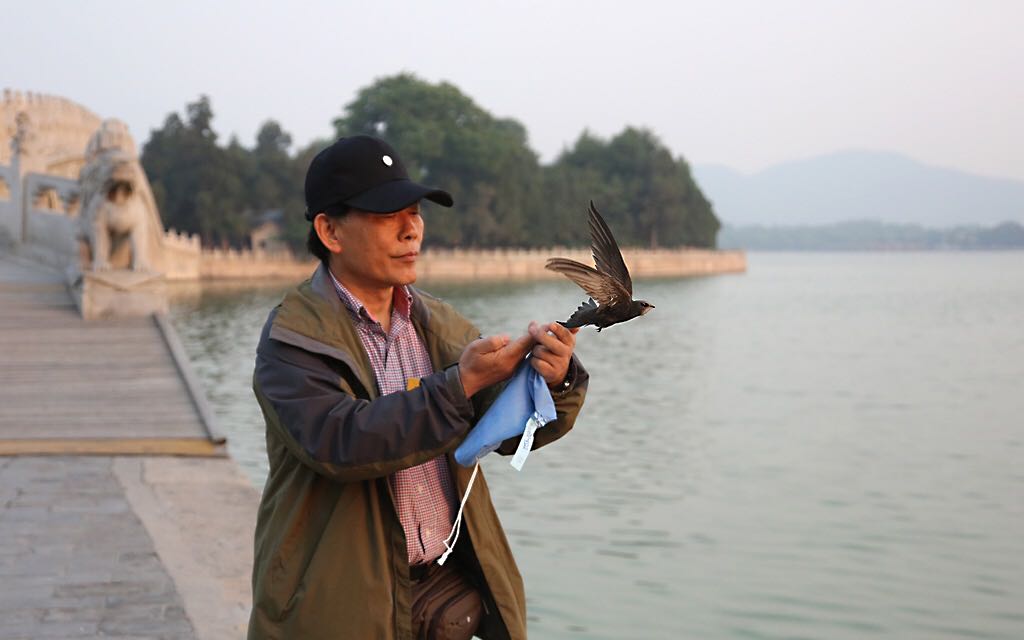
A few months ago I was invited to deliver a lecture to students at the International School of Beijing (ISB) about ‘Wild Beijing”. The story of the Beijing Swift always features strongly in my lectures and never fails to ‘wow’ the students when they hear about its incredible migration to southern Africa and back and how this special bird spends almost all of its life airborne – eating, drinking and even sleeping in the air.
After the lecture, one of the students – Francesca – approached me and said that she wanted her school to make and put up some nest boxes to try to attract swifts to the ISB campus. We discussed where to find the designs to make the boxes, tips for the best locations and how to increase the chances of swifts finding the boxes by using attraction calls.
A few weeks later, Francesca contacted me to say that her school, ISB, was planning an “ICON” (Inspire, Passion, Open, Nurture) summit to which students from other schools would be invited. At the summit, various workshops would be held on issues relating to sustainability. Francesca wanted to organise one focusing on the Beijing Swift to share what she and her fellow students were planning at ISB and to encourage students from other schools to follow.
After a short meeting to discuss ideas, Francesca and her friends developed a framework for the workshop that included background about the Beijing Swift, why it was important, and how to build a ‘pitch’ to their school principal. The ISB team also created a ‘starter pack’ for students to take away that would include some ready-made swift boxes, guidance on where to place them, and a speaker loaded with the calls of the swift to help increase the chances of successfully attracting swifts to their campus.
To help inspire the students at the beginning of the workshop, Francesca invited the famous reporter from Beijing TV, Zu Chong (known as “Swift Sister”) to open the event. Zu Chong has a strong affinity with the Beijing Swift, recording a series of video stories about this incredible bird and was even following the swift’s migration from Beijing to southern Africa and back, with plans for a documentary about the places they pass through on their journey.
I am delighted to say that the workshop took place last weekend and was a big success. Students from five schools have committed to making and erecting swift boxes on their campuses and are using their ‘starter packs’ to get cracking!
The timing is perfect. Beijing Swifts will begin to arrive in mid-April, so there are 2-3 weeks to prepare for the forthcoming season. And the next banding session at the Summer Palace is due to take place in June, involving the international team led by the Belgian Ambassador and the Beijing Academy of Forestry and Landscape Architecture. The Ambassador is planning a workshop at his embassy to present the results of the international cooperation and is planning to invite Francesca to present the results of her work at ISB as part of the agenda. What an opportunity for Francesca – a fitting reward for her work to celebrate and protect the Beijing Swift!
Huge thanks to Dick Newell, Lyndon Kearsley, Martine Wauters, Zhang Xiaochuan, Bruno Angelet and Nelson Castiaux for the support.
Title image: Zu Chong of Beijing TV opens the Beijing Swift workshop at ISB (Photo via Zu Chong).
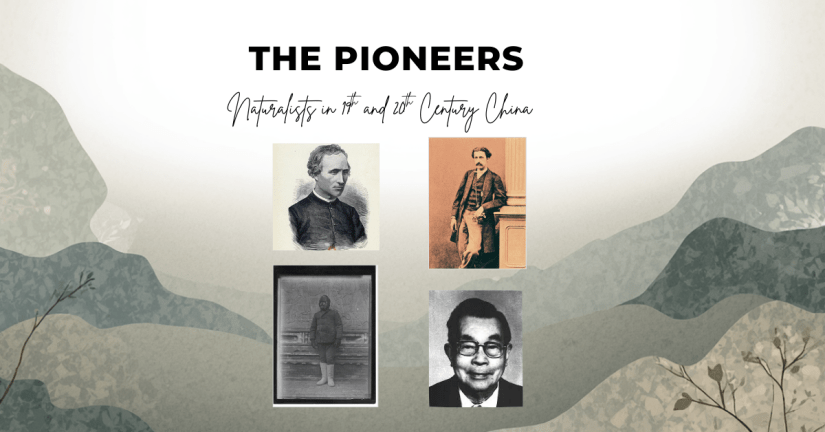
This article is the first in a planned series about the 19th and early 20th Century ‘Pioneers’ who laid the foundation for modern Chinese natural sciences, particularly ornithology. Others will appear on this page shortly.
=====
Anyone familiar with birding in the Far East will certainly have come across the name “Swinhoe”.Several frequently encountered species in the region bear his name, either in the English common name or the scientific name.
So who was this Swinhoe chap?
In the annals of natural history, some of the most profound discoveries were made not by professional, full-time scientists, but by passionate observers who found themselves in the right place at the right time. This was the case for Robert Swinhoe (1836–1877), a British diplomat whose consular postings in 19th-century China became the vehicle for scientific discovery. Though officially Her Majesty’s Consul in Treaty Port China from 1854 to 1873, his true legacy lies in his pioneering work as a field naturalist. As scholar Philip B. Hall noted in a biography for The Geographical Journal, Swinhoe used his unique access to “fill a gaping void” in Western knowledge, systematically documenting the rich fauna of coastal China, including Taiwan, for the first time and laying the foundations of zoogeography in East Asia.
Born in Calcutta, India on 1 September 1836 to a family with a history of several generations serving British interests in India, his parents sent him to England for schooling ‘at an early age’.He was enrolled at King’s College School, London in 1852, and the University of London in 1853.The first evidence of his interest in ornithology exists from 1854 when he is recorded to have presented a small collection of British birds, nests, and eggs to the British Museum. In that same year the Foreign Office held a competitive examination for university entrants to the consular service. Swinhoe was one of four successful candidates. He withdrew from university, and arrived in Hong Kong on 13 April 1854 to begin a probationary year as supernumerary interpreter (Foreign Office List, Statement of Services, 1877).
Swinhoe arrived in Hong Kong at a time when China’s wildlife was a profound mystery to Western science. Many European zoologists speculated that the country’s vast human population had extirpated its native species. Early collectors had provided only haphazard data, often lacking critical field observations. Swinhoe, with his sharp eye and relentless curiosity, would prove them wrong. His approach was methodical and meticulous, emphasising the importance of observing living animals in their habitats—noting details like the true colour of a bird’s iris, which mere so-called “cabinet men” studying skins in museums often missed.
His passion found fertile ground, particularly on the island of Formosa, modern-day Taiwan. His first “rather venturesome” visit in 1856 ignited a lifelong fascination. Later, as the island’s first British Vice-Consul (1861-1866), he conducted extensive surveys, defying dangers from head-hunting tribes and political instability. His work there was extraordinary. He not only catalogued species but also proposed the then-radical theory that Taiwan was a continental island, once connected to the mainland by a land bridge—a hypothesis later confirmed by modern archaeology. Beyond science, he played a key role in commerce, notably advocating for the Taiwan tea industry by promoting its Oolong tea to global markets.
Swinhoe published over 120 scientific articles and produced seminal works like the “Catalogue of the Birds of China” (1871), which listed 675 species. His peers held him in the highest esteem. Alfred Wallace, co-discoverer of natural selection, later asserted that thanks to Swinhoe’s efforts, the coastal districts of China were better known zoologically than almost any other non-Western region in the world.
Swinhoe was one of a group of so-called ‘Pioneers’ who were cataloguing China’s flora and fauna for western science in the 19th century.This group included the likes of Père Armand David (often referred to as Père David), the French Lazarist missionary and naturalist.
Swinhoe’s and David’s roles were somewhat complementary. Swinhoe was the pioneering systematist and zoogeographer for coastal China, Taiwan, and Hainan. He focused on comprehensive surveys, meticulous description, and understanding the regional patterns of fauna. Père David was the great explorer of the interior, penetrating regions Swinhoe could not access due to his diplomatic postings and travel restrictions.
Swinhoe’s circle of ornithological correspondence was extensive and included the leading taxonomic authorities of the day:
John Gould (England): The premier bird artist and describer. Gould officially named and illustrated many of Swinhoe’s bird discoveries, most famously Swinhoe’s Pheasant (Lophura swinhoii), based on the specimens Swinhoe sent back to London.
Philip Lutley Sclater (England): Secretary of the Zoological Society of London and founder/editor of the journal Ibis. He was Swinhoe’s greatest champion and publisher in the scientific establishment, calling him “one of the most industrious and successful exploring naturalists that have ever lived.”
Edward Blyth (India): The curator of the Royal Asiatic Society of Bengal museum in Calcutta. Blyth was a critical correspondent and mentor for Swinhoe in his early years, helping him identify “non-European forms.” Swinhoe credited him in his first major paper, “The Ornithology of Amoy” (1860).
Joseph Hooker & Asa Gray (Botanists): He collected plant specimens for them, showing his work extended beyond zoology.
John Reeves & Customs Officers: He worked with the sons of John Reeves (of Reeves’s Pheasant fame) and other British officials in the Chinese Maritime Customs service, who acted as collectors across the treaty port network.
A Legacy in Names: Species Discovered and Honoured
Swinhoe’s direct contributions are immortalised in the many species he discovered and those named in his honour. He is credited with naming or discovering at least 93 birds and 17 mammals, plus fish, reptiles, plants and molluscs that stand as legitimate species. Furthermore, his name lives on in the scientific and common names of several other taxa.
BIRDS – Discovered/Described by Swinhoe:
Swinhoe’s Pheasant (Lophura swinhoii)
Swinhoe’s Snipe (Gallinago megala)
Formosan Rufous-capped Babbler (Stachyris praecognitus – now Cyanoderma ruficeps praecognitum)
Chinese Ringless Pheasant (Phasianus decollatus, now Phasianus colchicus decollatus)
Taiwan Blue Magpie (Urocissa caerulea)
Hainan Partridge (Arborophila ardens)
Grey-faced Buzzard (Butastur indicus)
Swinhoe’s (Chinese) Egret (Egretta eulophotes) – first serious description.
Beijing Swift (Apus apus pekinensis) – the subspecies he described in 1870.
MAMMALS – Discovered/Described by Swinhoe:
Formosan Sika Deer (Cervus nippon taiouanus) – described the distinctive Taiwanese subspecies.
Formosan Serow (Capricornis swinhoei) – a goat-antelope endemic to Taiwan.
Swinhoe’s Striped Squirrel (Tamiops swinhoei)
Himalayan Water Shrew (Chimarrogale himalayica) – confirmed its presence in Taiwan.
Several species of bats, including the Formosan Woolly Horseshoe Bat (Rhinolophus formosae).
OTHER GROUPS:
Fish: He described several new fish from Chinese rivers, including the Chinese Sturgeon (Acipenser sinensis), though its taxonomy was later refined.
Reptiles: He documented and provided early descriptions of species like the Taiwan Beauty Snake (Orthriophis taeniurus friesei) and the Chinese Softshell Turtle (Pelodiscus sinensis).
Molluscs: An avid conchologist, Swinhoe collected and described numerous land snails from Taiwan and Hainan, with genera like Swinhoea (later synonomized) named for him.
One of Swinhoe’s most notable discoveries is the Beijing Swift (Apus apus pekinensis). In 1870, during his time in the capital, Swinhoe was the first to scientifically describe and name this subspecies of the Common Swift, noting its distinctive features and its remarkable habit of nesting in the eaves and roof spaces of Beijing’s ancient gates and temples, including the Forbidden City. Their annual arrival in April marks the beginning of spring for many Beijing residents. Tracking studies using modern technology – including the Beijing Swift Project –have revealed the astonishing migration route Swinhoe could only have guessed at: a round-trip of over 30,000 kilometres annually between Beijing and southern Africa.
Robert Swinhoe’s legacy extends beyond lists. He was a bridge between field and museum, championing rigorous on-the-spot observation. He facilitated the first live transfer of Père David’s Deer (Milu) to Europe and his collections enriched institutions worldwide. Elected a Fellow of the Royal Society, the Royal Geographical Society, and the Zoological Society, he earned recognition as, in the words of zoologist P.L. Sclater, “one of the most industrious and successful exploring naturalists that have ever lived.”
Stricken by a paralytic illness, Swinhoe retired in 1875 and died two years later at the age of just 41. While his diplomatic career was that of a typical Victorian imperialist, his scientific work transcended his era. He replaced myth and misconception with rigorous data, transforming the mysterious zoology of East Asia into a mapped and catalogued scientific field.
The statue of Robert Swinhoe close to the former site of the British Consulate in Taipei. Photo by Huang Chih-yuan for the Taipei Times.
So today, if you see a Swinhoe’s Snipe or a screaming flock of Beijing Swifts wheeling over Beijing, spare a thought for the diplomat whose official duties were merely a passport to discovery, and whose real office was the wild itself.And if you are in or visit Taiwan, why not pay a visit to a statue erected in his honour on a path near today’s Former British Consulate in Kaoshiung.
References:
British Museum 1906 History of the Collections in the Natural History Departments, 495-96.
Cassin, John 1856 ‘Birds Collected In China’. In Narrative of the Expedition of an American squadron to the China Seas and Japan. Washington: United States Senate (33rd Congress 2nd Session; Executive Document No. 79).
Davidson, James W. 1903 The Island of Formosa Past and Present. New York: Macmillan (Reprint 1972 Taipei: Ch’eng Wen).
Fox, H. 1949 Abbe David’s Diary. Cambridge (Massachusetts): Harvard.
Gittings, J. 1973 A Chinese View of China. New York: Pantheon.
Gould, J. 1862 Descriptions of Sixteen New Species of Birds From the Island of Formosa Collected by Robert Swinhoe, Esq., HM Vice-Consul at Formosa. Proceedings of the Zoological Society of London 3: 280-85.
Hall, P. 1987 Robert Swinhoe (1836-1877), FRS, FZS, FRGS: A Victorian Naturalist in Treaty Port China, The Geographical Journal, Vol. 153, No. 1, pp. 37-47
Michie, A. 1900 The Englishman in China. Blackwood & Son. Nature 8 November 1877. 17: 35.
Palmer, A. H. 1895 The Life of Joseph Wolf. Longman, Green.
Sclater, P. L. On the Present State of Our Knowledge of Geographical Zoology. Nature 2 September 1875 15: 37^82.
Severinghaus, S. R. 1977 Recommendations for the Conservation of the Swinhoe’s and Mikado Pheasants in Taiwan. World Pheasant Association Journal 3: 79-89.
Swinhoe, R. 1858a A Few Remarks on the Fauna of Amoy. Zoologist 16: 6222-231.
Swinhoe, R. 1858b The Small Chinese Lark. Journal of the North China Branch of the Royal Asiatic Society 1: 287-92.
Swinhoe, R. 1858c Narrative of a Visit to the Island of Formosa, Journal of the North China Branch of the Royal Asiatic Society.
Swinhoe, R. 1860a The Ornithology of Amoy. Ibis 2: 45-68; 130-33.
Swinhoe, R. 1860b Further Corrections and Additions to ‘The ornithology of Amoy’ with some Remarks on the Island of Formosa. Ibis 2: 357-61.
Swinhoe, R. 1861 The North China Campaign of 1860. Smith Elder & Co.
Swinhoe, R. 1862a Letter (dated Tamsui, 17 January 1862). Ibis 4: 304-7.
Swinhoe, R. 1862b Letter Concerning a New Formosan Oriole. Ibis 4: 363-65.
Swinhoe, R. 1864a Notes on the Island of Formosa. Proc. RGS 8: 23-8
Swinhoe, R. 1864b-1865a General Description of the Island of Formosa. Chinese and Japanese Repository 2: 159-66; 191-98; 3: 161-76; 217-23.
Swinhoe, R. 1865b Letters (dated Tamsui, 27 February and 1 April 1865). Ibis 7: 346-359.
Swinhoe, R. 1865c Neau-show; Birds and Beasts of Formosa. Journal of the North China Branch of the Royal Asiatic Society 2: 39-52.
Swinhoe, R. 1866a A Voice on the Ornithology of Formosa. Ibis 8: 292-16; 392-406.
Swinhoe, R. 1866b Additional Notes on Formosa. Proc. RGS 10: 122-128.
Swinhoe, R. 1869 Letter (dated London, 27 September 1869). Ibis 11: 463.
Swinhoe, R. 1870a A Trip to Kalgan in the Autumn of 1868. Proc. RGS 14: 83-85.
Swinhoe, R. 1870b Special Mission up the Yangtze-kiang. Proc. RGS 14: 235-43.
Swinhoe, R. 1870c On the Ornithology of Hainan. Ibis 12: 77-97; 230-56; 342-67.
Swinhoe, R. 1870d Descriptions of Seven New Birds Procured During a Cruise up the River
Yangtze (China). Proceedings of the Zoological Society of London 11: 131-36.
Swinhoe, R. 1870e Zoological Notes of a Journey from Canton to Peking and Kalgan.
Proceedings of the Zoological Society of London 11: 427-51.
Swinhoe, R. 1872 Descriptions of Two New Pheasants and a New Garrulax from Ningpo, China. Proceedings of the Zoological Society of London 13: 550-54.
Swinhoe, R. 1874 and 1875 Ornithological Notes Made at Chefoo, China. Ibis 16: 422-47; 17:114-40.
Wallace, A. R. 1895 Island life. London: Macmillan.
Yen, Sophia Su-fei 1965 Taiwan in China’s Foreign Relations 1836-1874. Hamden, Connecticut: The Shoestring Press.
The Beijing Swift (Apus apus pekinensis) is a special bird. I remember Australian evolutionary biologist, Tim Flannery, saying that the swift is at the vanguard of evolution, the species that is closest to conquering the air. There are species that have their whole life cycle in the ocean and on land but no species, yet, has its whole life cycle in the air. The swift, landing only to lay its eggs and feed its young, is pushing the boundaries and it is possible to envisage a world in which, eventually, the swift will evolve to give birth to live young on the wing that can immediately fly and support themselves.
On 7 June, appropriately World Swift Day, international cooperation on the Beijing Swift formally resumed, with the fitting of 41 new, state of the art, loggers to birds at the Summer Palace involving a team from China and Belgium. These loggers will provide rich data about the migration and foraging patterns of these unique birds that spend only three months on the breeding grounds in Beijing, before heading on a c30,000km round trip to southern Africa. Some of the new loggers include accelerometers that will tell us whether these birds – that eat, drink and sleep in the air – make that journey to Africa and back without landing, as many suspect.
The KuoRu Pavilian at the Summer Palace at 2am, as preparations began for the day’s banding.
The catch at the Summer Palace, coordinated by the China Birdwatching Society, the Beijing Wildlife Rescue and Rehabilitation Center and the Beijing Municipal Academy of Forestry and Landscaping, was joined by UK-Belgian swift expert and veteran bird bander, Lyndon Kearsley.
Lyndon retrieving a swift from the special net, assisted by one of the young volunteers.
The banding at the Summer Palace was the culmination of a week-long programme of engagement by a visiting Belgian delegation involving Lyndon and Martine Wauters, founder of Swifts Without Frontiers and creator of World Swift Day. The project, spearheaded by the Belgian Ambassador to China (and lifelong swift fan), Bruno Angelet, will run for three years with the aim of discovering more about the ecology of the Beijing Swift, including both during the breeding season in Beijing and during the non-breeding season in Africa. After the initial fitting of the loggers at the Summer Palace, the plan is to return next year to retrieve the data and, at the same time, involve African scientists from Botswana, Namibia and South Africa (the core wintering range). The scientific knowledge gained from the new loggers will not only help to inform actions to support swift conservation across its range but will also create the foundation for greater people to people connections, including schools and conservation organisations, in Beijing and southwest Africa.
Belgian Swift fanatic and founder of World Swift Day, Martine Wauters, with Jane Goodall.
Lyndon and Martine began their week in Beijing with a visit to the Beijing Wildlife Rescue and Rehabilitation Center (the bird banding authority), after which a day-long symposium on the Beijing Swift was held, involving senior government officials, scientists and civil society organisations.
The International Symposium on the Beijing Swift, involving government, schools, NGOs and scientists, heard a dedicated message from Jane Goodall about the Beijing Swift project.
Field visits to Yeyahu and Miyun Reservoir were followed by a training session for volunteers from the China Birdwatching Society, hosted by the Belgian Embassy, on how to fit the loggers.
Lyndon Kearsley explaining to volunteers how to fit the loggers, using a life size model of a Beijing Swift, at a special training session at the Belgian Embassy. Photo by Zhao Xinru.
The Belgium-China cooperation on this project is being implemented under the auspices of the Ambassadors for Nature initiative. It is a wonderful example of how countries can work together to support biodiversity conservation. It recognises that to conserve migratory species, there is a need to understand the ecology and to protect habitats not only on the breeding grounds, but also at the non-breeding grounds and important stopover habitats along the way. And, at the same time, involve more people to raise awareness of the incredible wildlife we have all around us, even in major cities, thus building support for policies and measures to protect it.
This project builds on the international cooperation on the Beijing Swift that took place from 2014-2017 which, thanks to new technology, discovered for the first time the incredible migration route from Beijing to southern Africa.
Huge kudos to H.E. Bruno Angelet, the Belgian Ambassador to China, for his enthusiasm, determination and leadership to make this happen. It is exceptional for a senior diplomat to put such energy into a project about nature, and I am sure that it will inspire others to follow. He was supported by a wonderful team at the embassy that crossed political, communications and logistics teams.
H.E. Bruno Angelet, Belgian Ambassador to China, with Professor Zhao Xinru at the Summer Palace. Photo by Gao Jingxin.
Huge thanks also to the Beijing Forest and Parks Bureau, the Beijing Municipal Academy for Forestry and Landscape, the Beijing Wildlife Rescue and Rehabilitation Center and, of course, the China Birdwatching Society, including the legendary Professor Zhao Xinru and his team of volunteers.
You can hear Jane Goodall’s special message for the Beijing Swift Project below:
“We have designed and built buildings for over 20 years. Our focus has always been on humans and how to make our lives better. In the future, we need to consider biodiversity and to create a better living environment for both citizens and wildlife, such as the Beijing Swift.”
– Pan Shiyi, Chairman of SOHO China
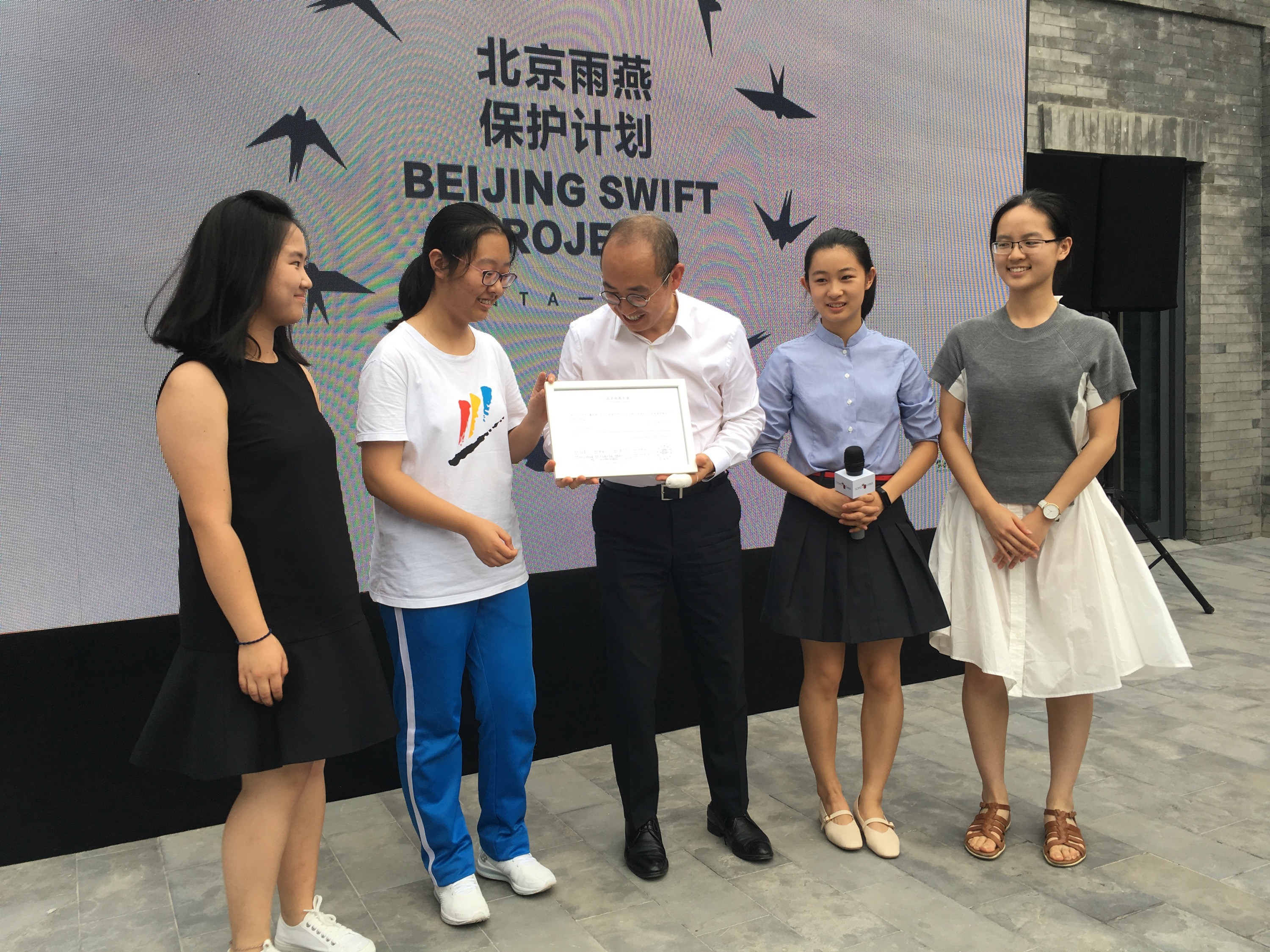
On Thursday 27 June 2019, Mr Pan Shiyi, Chairman of SOHO China, the leading property development and management company in China, met with four student “Beijing Swift Ambassadors” from Beijing schools. In response to their presentations about the Beijing Swift – its lifestyle, its migration, the falling population and what schools were doing to help – and a video message of support from Hank Paulson, former Treasury Secretary and Chairman of the Paulson Institute, Mr Pan made three major commitments:
First, to trial the retrofitting of swift boxes on two of its buildings in Beijing
Second, to consider incorporating of biodiversity criteria into new building design
And third, to promote biodiversity among the building sector in China.
That’s quite a statement. And, as a prominent figure in Chinese industry and a national celebrity with more than 19 million followers on Weibo (China’s version of Twitter), this big announcement by Mr Pan will reach far and wide and, we hope, influence the business community not only in China but overseas.
BEI Zhilei explaining the difference between Swallows and SwiftsCHEN Yanzhi explaining the incredible migration of the Beijing SwiftJING Sicheng spoke about how the number of nest sites had fallen in the city due to the loss of traditional buildingsGAO Chuxuan briefing about school’s efforts to make and erect nest boxes for the Beijing Swift.Hank Paulson, former US Treasury Secretary and Chairman of the Paulson Institute, recorded a special message of support for the SOHO China Beijing Swift ProjectPan Shiyi setting out SOHO China’s commitments following the Beijing Swift Ambassadors’ presentation and the message from Hank Paulson.
The roots of this initiative go back to December 2013 when, by chance, I had a conversation with Dick Newell at a BirdLife International reception in London about the potential to track the Beijing Swift’s migration, until then a mystery. Back in Beijing, after a few conversations, a project was born and, in May 2014, a team of volunteers from the China Birdwatching Society, the Beijing Wildlife Rescue and Rehabilitation Center and the Summer Palace joined Dick, Lyndon Kearsley and I to fit geolocators to 31 Beijing Swifts. A year later, after re-trapping 13 of the original 31 birds, we were able to prove for the first time that these special birds migrated to southern Africa for the northern winter.
Since then, I have visited more than 20 schools to tell the story of the Beijing Swift and, invariably, when the students hear about the population decline caused by the loss of nest sites due to the demolition of traditional style buildings, they want to help. Many schools have set up projects to make and erect artificial nest boxes on their school campuses (just this spring, we received exciting news from ISB – the International School of Beijing – that they had been successful in attracting swifts). Then, at one school, a young girl put up her hand and asked if we could write to the bosses of the building companies to ask them to make new buildings friendlier for swifts.
What a fabulous idea!
And so, student “Beijing Swift Ambassadors” wrote a letter to Mr Pan Shiyi, Chairman of SOHO China, asking him to help and yesterday they were invited to meet him to make the case.
After a scene-setting clip from the BBC Natural History Unit about the Beijing Swift, recorded in the capital last year as part of the “Wild Metropolis” series, the meeting began with a short introduction by Terry, followed by a video message of support from Hank Paulson, former US Treasury Secretary and Chairman of the Paulson Institute. The floor was then given to the student Beijing Swift Ambassadors to set out their case. They were eloquent, passionate and very persuasive.
The Beijing Swift Ambassadors (from left to right): Chen Yanzhi, Keystone Academy, GAO Chuxuan, No.13 Middle School, BEI Zhilei, The High School Affiliated to Renmin University of China and JING Sicheng, No.2 Middle School Affiliated to Beijing Normal University.
Mr Pan listened carefully and responded with his groundbreaking commitments, including presenting the students with signed, handmade swift boxes made by Mr Pan personally from recycled wood reclaimed from SOHO China’s building sites. In return, the students presented Mr Pan with a signed certificate, awarding him the title “Beijing Swift Ambassador”.
Mr Pan signed a handmade box for each Swift AmbassadorMr Pan receiving his “Beijing Swift Ambassador” certificate from his fellow Ambassadors
After the presentations, guests were invited to the roof to watch the Beijing Swifts wheeling around Zhengyangmen Gate at the southern end of Tiananmen Square. This must be one of the best places in the world to view the Beijing Swift!
The SOHO China Beijing Swift Project logoThe view across Tiananmen Square is made even more impressive by the sight and sound of screaming Beijing Swifts Mr Pan pointing out Beijing Swifts from the rooftop overlooking Tiananmen Square
This initiative could not be better timed. Next year, governments will meet in Kunming, China, to agree new targets to slow and stop the decline in wildlife at the United Nations Convention on Biological Diversity. This meeting happens in the context of a biodiversity crisis – according to best estimates, we have lost around 60% of wildlife on Earth in the last 50 years. But whilst the governmental meeting is crucial, it is clear that governments alone cannot tackle the biodiversity crisis. All sectors of society including cities, regions, communities, NGOs and business must find ways to incorporate biodiversity criteria into their daily activities.
That is why this initiative by SOHO China and Mr Pan is so important. It shows that we can develop, we can have cutting-edge design and functionality and, at the same time, make a positive contribution to biodiversity. It is leadership of the highest order and will send a strong signal to business in China and overseas.
With the world’s spotlight on biodiversity next October, if you were a CEO, wouldn’t you want your company to have a good story to tell about how its supporting wildlife?
Huge thanks to the Beijing Swift Ambassadors, without whom this project would not have been possible. Their professional and slick presentation was exceptional. And a big thank you to Hank Paulson for his strong message of support; it was very special for the Swift Ambassadors and for SOHO China to hear these words of encouragement from a person of his stature. We are, of course, indebted to SOHO China, especially Pan Shiyi and Charlie (Tang Yin), who not only put on a special event but ensured it was backed up by lasting, meaningful commitments. Thank you to Dick Newell for providing technical advice to SOHO China about swift boxes and for being so encouraging. We are grateful to the BBC Natural History Unit for providing the clip of the Beijing Swift and to my colleague, Luo Peng, at EcoAction who worked hard to help prepare the students and to the SEE Foundation for their support for the project.Finally, I’d like to say a huge thank you to Wendy Paulson for initially connecting me to Pan Shiyi and Zhang Xin and for her unstinting support.
In the last few days, birders from across the capital have been reporting the return of the Beijing Swift (Apus apus pekinensis). The first record seems to have been one at the TongHuiHe by 岳小鸮 (Yuè xiǎo xiāo) on 1st April. This was followed by another single at Peking University on 9th April (Yang Hua) and then nine at Baiwangshan, a traditional migration watchpoint in the northwest of the city (小隼仙人) on 10th. Yesterday, 11th April, the staff at ZhengYangMen (正阳门), a traditional breeding site at the southern end of Tiananmen Square, reported sightings, too.
It is only a few weeks ago that these birds could have been circling over Table Mountain in Cape Town in South Africa having almost certainly spent the entire northern winter on the wing – an incredible feat of endurance and stamina that is hard to comprehend.
With several Beijing schools having built and erected nest boxes for the Beijing Swift over the last few months, we are keeping everything crossed that some of the birds arriving in the capital will find and choose to breed in these newly-built homes. We’re hopeful, too, that students from these schools will be able to meet with the CEOs of some of China’s largest building companies to tell the story of the Beijing Swift, outline what their schools are doing to help and to ask the CEOs to trial ‘swift-friendly’ buildings in Beijing. Watch this space!
Title image showing the autumn migration route of the Beijing Swift to southern Africa courtesy of Lyndon Kearsley.
A few weeks ago I wrote about the Beijing Swifts being filmed by the BBC Natural History Unit for a new series about urban wildlife. “Cities: Nature’s New Wild”, a three-part series, was shown on BBC2 in late December and early January. Unfortunately, at the last minute, the UK version was stripped of the Beijing Swift clip, which was replaced with a piece on Indonesian Swiftlets. The Beijing Swifts will be part of the international version of the series that will be shown overseas.
I am pleased to say the full three-minute clip, including subtitles in Mandarin, can be seen here:
It’s great to see so many familiar local faces, many of whom were involved in the Beijing Swift Project to track these iconic birds from the Summer Palace to their wintering grounds in southern Africa and back, an astonishing 26,000km round-trip!
About a year ago, the BBC Natural History Unit was in contact about the feasibility of filming the Beijing Swift for a forthcoming series on urban wildlife. After introducing them to local experts, including Professors Gao and Zhao, the China Birdwatching Society and the Beijing Wildlife Rescue and Rehabilitation Center, the BBC applied for permission to visit and film the Swifts in the Chinese capital. One of the locations was the Summer Palace, where the China Birdwatching Society has been studying the colony of 200+ birds for more than 10 years. It was here that, in 2014, the Society collaborated with experts from Europe on the Beijing Swift Project, tracking the migration of these avian wonders and discovering for the first time their migration route and wintering grounds in southern Africa.
The new series – “Cities: Nature’s New Wild” – is being shown on BBC2 and the Beijing Swifts are due to appear in episode three on Sunday 13 January (2000-2100). For those who can’t wait that long, a trailer about the Beijing Swift is available on the BBC website.
It’s fantastic exposure for Beijing’s Swifts and the people working to support them.
If you’re in the UK on the evening of Sunday 13th January, put the kettle on, settle into your favourite armchair and enjoy….
UPDATE 9 January: The BBC Natural History Unit has informed me that the Beijing Swifts will now NOT be shown in episode 3 of “Cities: Nature’s New Wild” on BBC2 on 13 January. Instead, episode 3 of the UK version of the series will include a segment on Indonesian Swiftlets. The Beijing Swifts will feature in the international version of the series. I’m awaiting broadcast details. Updates will appear here as more information is available.
When you think of Beijing, what image comes into your head? The Great Wall? Maybe Tiananmen Square? Or maybe air pollution? For those of a more mature generation, maybe even the picture of a city full of bicycles..? Whatever the image, I suspect that for most people, birds or wildlife might not be front and centre.
That could be about to change.
In 2020, Beijing will host the Conference of the Parties to the UN Convention on Biological Diversity (CBD). This clumsily-named UN convention meets every two years and I suspect most people not directly involved with the process would be hard pressed to say much about any of the previous meetings or what has been achieved. However, the 2020 meeting promises to be different. It is the time when governments are due to conclude an agreement on targets and measures to slow, stop and eventually reverse the loss of wildlife on Earth.
The meeting will take place in the context of the most recent Living Planet index showing that, since 1970, we have lost more than 60% of the animals on our planet. That is a shocking statistic and should be a wake-up call for governments and the public everywhere.
As host of the CBD, the Chinese government will want a successful outcome and, with recent progress towards President Xi Jinping’s vision of ‘ecological civilisation’ including a ban on further reclamation of intertidal mudflats and nomination of key coastal wetland sites for World Heritage status, the creation of a national park system, species-specific conservation work, e.g. on Baer’s Pochard and Scaly-sided Merganser, the country is creating the foundation for a positive story to tell.
But what about the host city? Could hosting the CBD be an opportunity to change the global image of Beijing from one of a crowded, polluted, grid-locked city to one of the world’s best capital cities for wildlife?
Beijing is already one of the best major capital cities in the world for birds, with around 500 species recorded. And in case the Mayor of Beijing is reading, here are some ideas that would require very limited resources but which could have a major impact on Beijing’s image:
Idea 1: A world-class wetland reserve in Beijing
Wouldn’t it be wonderful if Beijing had a large waterbody that could be an important stopover site for migratory birds, including cranes, geese, ducks, shorebirds and others? Well, just 75km from Tiananmen Square lies Miyun Reservoir. It is Beijing’s largest drinking water reservoir and, until public access was prohibited in April 2016, it was the best birding site in the capital attracting flocks of cranes, bustards and large numbers of waterfowl, not to mention huge numbers of buntings in winter. However, after a large fire in the area and concerns about water quality, much of the land around the reservoir – ideal habitat for shorebirds, cranes, bustards, birds of prey, buntings and pipits – has been cleared and planted with mostly non-native trees in monocultures. This policy has undoubtedly had a negative impact on birds. Whilst it is understandable to prioritise water quality, this need not be at the expense of wildlife. Internationally, there are examples of reservoirs being managed for both water quality and wildlife. One example is Rutland Water, England’s largest drinking water reservoir. In fact, Rutland Water is managed for three objectives – water quality, birds and recreation. If we can share this experience and demonstrate that a large water body can be managed as a place for wildlife as well as water quality, there would be an opportunity to develop a management plan for Miyun Reservoir that maintained a high standard of water quality whilst attracting world-class numbers of cranes and other waterbirds and providing limited public access, attracting millions of visitors each year and an associated boost to the local economy. Given the CBD conference will likely be in the last quarter of the year, the Beijing government could even invite international media to see the large flocks of cranes that would almost certainly be present if the area was managed sympathetically.
Potential benefits:
– High standard of water quality
– Providing a refuge for thousands of waterbirds, including threatened and endangered species such as cranes and bustards
– Providing opportunities for the urban population to connect with nature
– Through the visiting public staying in local hotels and eating in local restaurants, bringing income to the local people in relatively poor Miyun county
Idea 2: 10% Wild
The Summer Palace, Beijing..
Beijing enjoys some large and expansive green spaces. Parks such as the Temple of Heaven, Summer Palace, Yuanmingyuan (Old Summer Palace) and the Olympic Forest Park are all hugely popular places providing urban Beijingers with opportunities to enjoy the outdoors. Anyone who has visited these parks will know that they are heavily manicured with an army of staff ready to collect any leaf that falls or any blade of grass that grows in one of the cultivated flower beds. These parks are over-managed to the extent that they are not as friendly for wildlife as they could be. One idea is for the management of these spaces to leave “10% wild”. This would mean no significant active management of an allocated part of the park – no use of insecticides, no removal of native plants and no cutting of grass or removal of fallen leaves. Each park could partner with a local school, the students of which would be invited to undertake surveys of biodiversity – insects, birds and plants – and compare the “10% wild” with other managed parts of the park. Interpretation signs around the allocated area could promote this experiment to visitors, publishing the results of the student surveys and helping to engage the public about wildlife. After two years there could be a review to assess the results and to explore whether the experiment should be expanded.
Potential benefits:
– More and better habitat for wildlife in urban Beijing
– Students at local schools become citizen scientists
– Public engagement on the role of parks in providing homes for wildlife in cities
– Fewer resources needed for park management
Idea 3: Urban wildlife oases
An urban oasis in Shunyi District
Beijing lies on the East Asian-Australasian Flyway and, every spring and autumn, millions of birds pass the Chinese capital on their way to and from breeding grounds to the north and wintering grounds to the south. To make these remarkable journeys, birds require places to rest and refuel along the way. The trans-continental journeys, such as those of the Beijing Swift and Beijing Cuckoo, are challenging for the hardiest of birds, and the challenges are only increased as vast areas of natural habitat along migration pathways are altered or eliminated, making it difficult for exhausted birds to find suitable places to rest and refuel.
“Urban wildlife oases” could provide ‘stepping stones’ for migrating birds to cross urban areas where there is limited quality habitat. Each community has the potential to provide important habitat for native birds – and a richer, more beautiful place to live for people.
To illustrate the potential, I’d like to convey my experience with a patch of land close to my apartment in Shunyi District. Surrounded by new developments, including apartments and shopping malls, this 1km x 1km patch of land, very close to the airport, has yet to be developed and, in the two years since I moved to the area and in almost 100 visits, I have recorded 156 species of bird, five species of mammal and nine species of butterfly. Highlights have included Band-bellied Crake, Pallas’s Rosefinch, Siberian Thrush and Rough-legged Buzzard, demonstrating the importance of the site to migratory birds.
The Shunyi patch is a small area (1km x 1km) of undisturbed land close to Beijing Capital International Airport. The 156 bird species recorded (of which at least 140 are migrants) in just over 2 years shows how important such areas are for migratory birds.
Maintaining a patchwork of urban oases across the city, potentially with some limited public access, would cost little – beyond the opportunity cost of the land – and provide significant benefits to both wildlife and people.
Potential benefits:
– providing shelter and food for some of the millions of migratory birds that pass through the capital each spring and autumn; plus important areas for breeding and wintering species
– with limited public access, these sites could provide the public with access to wild spaces and places for students from local schools to become citizen scientists
– interpretation would mean that these urban oases could act as outdoor classrooms for Beijing’s urban population
Idea 4: Adopting the Beijing Swift
A typical track of a Beijing Swift.
In 2015, a project involving Beijing Birdwatching Society and international experts discovered, for the first time, the migration route and wintering grounds of the Beijing Swift (Apus apus pekinensis). It was a hugely popular story, covered by mainstream media – both print and broadcast – and engaged millions of people, most of whom would never ordinarily take an interest in birds. The Beijing Swift is the perfect symbol for modern Beijing. One of the old names for Beijing is Yanjing, which, in Chinese, breaks down to “燕” (Yan) and “京” (Jing). The first character, “燕” means “swift” or “swallow”, so the name Yanjing could be interpreted as “Swift capital”. This bird also links China with Central Asia, the Gulf and Africa, aligned with the much-touted “One Belt, One Road” initiative to revive old trade routes. Why not formally adopt the Beijing Swift as the official bird of the Chinese capital? There can be no more appropriate candidate.
Potential benefits:
– Associating Beijing with a bird of endurance, elegance and global reach
– Greater public awareness about the wildlife of Beijing
– Encouragement to businesses and communities to help stem the decline of the Beijing Swift – caused by the demolition of traditional buildings – by erecting artificial nest boxes at suitable sites and encouraging the inclusion of Swift-friendly designs in new buildings
Idea 5: Removing the invisible killer: mist nets at China’s airports
When thousands of environmentally-minded people arrive in Beijing for the UN Conference on Biological Diversity, the first thing they will see is lines and lines of mist nets alongside the runway at Beijing Capital International Airport, many of which will hold bird corpses dangling in the wind. China’s policy to address the (serious) risk of bird strikes is to line each runway with several kilometres of mist nets. This method is only effective against small birds which, unless in large flocks, represent almost no risk to aircraft. Nets at ground level are ineffective against the more significant risks associated with flocks of large birds such as geese, swans or herons. In fact, guidance by the International Civil Aviation Organisation (ICAO) makes no mention of mist nets as a way to mitigate the risk of bird strikes. Recommended good practice is to undertake a risk assessment at each airport to identify the unique risks from wildlife and take appropriate measures to address these specific risks. Non-lethal methods such as managing habitat, playing distress calls, using birds of prey etc are the most effective methods. China, with more than 300 airports, takes a general approach of simply erecting lines of mist nets. It’s lazy and ineffective. Could CBD be the catalyst for a review of this policy?
Potential benefits:
– stopping the unnecessary killing of millions of birds each year
– more effective management of the risk of bird strikes
– a better international image for China and Beijing
===
With two years to go until Beijing hosts what will probably be the world’s largest governmental conference on biodiversity, there is ample time to develop a strategic plan that would make Beijing one of the world’s most wildlife-friendly cities. Instead of “smoggy Beijing”, wouldn’t it be wonderful to be able to label Beijing as the capital of ecological civilisation? These are just five ideas. If you have more, please comment and let us know.. you never know who might be reading.
For a helpful general overview of the CBD process and the current status, read this article by Jonathan Watts.
Last week I was excited to receive an invitation to meet with Mr Guan Zhanxiu, the Director of Zhengyangmen Gate (the southern gate of Tiananmen Square) and to view the exhibition about the Beijing Swift currently on show to the public. Mr Guan made arrangements for me to visit on Tuesday afternoon and so, at around 1400 I made my way to Zhengyangmen via Qianmen, at the southern end of Tiananmen Square.
A panorama of Zhengyangmen (left) with Mao’s mausoleum on the right.
Zhengyangmen gate, right at the heart of Beijing, is certainly one of the best places in the capital to view the Beijing Swift with several hundred pairs breeding amongst the beams of this historic building. On warm summer evenings from mid-April until late July, the Beijing Swifts’ spectacular sociable and noisy flights, wheeling around the rafters, are a sight to behold and an example of how wildlife can thrive even in the heart of our capital cities. From now until September this historic venue is hosting a stunning public exhibition dedicated to the Beijing Swift.
The exhibition is a wonderful mix of science, culture and history. There is a 25-minute video, including the history of the Beijing Swift in China, spectacular footage of the birds in flight and at their nests, and an animation of their migration.
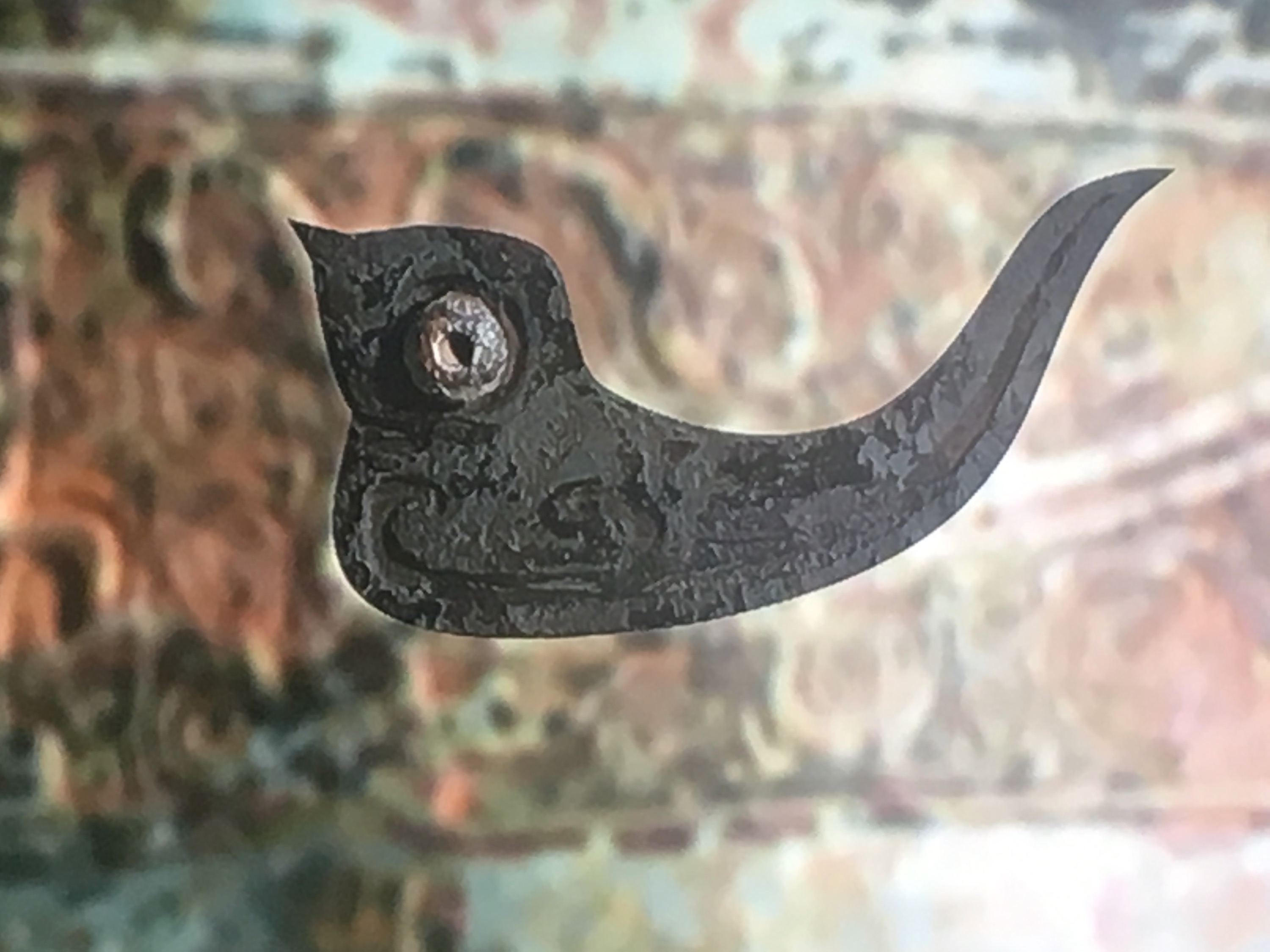
Did you know, for example, that the first known visual representation of the Beijing Swift (see below) dates back more than 3,000 years to artefacts found in an ancient royal tomb? At that time, Chinese people believed their ancestors were transformed into Swifts after death, and these birds have had a special place in their culture ever since.
The video follows a pair of Beijing Swifts being studied by local academics. Incredibly, and shockingly, one of the nests contains a significant amount of plastic, a reflection of the omnipresence of this manmade material in our environment today.
Of course, the story of the Beijing Swift would not be complete without showcasing the Beijing Swift Project and the tracking of birds from the Summer Palace. Their incredible migration to southern Africa for the northern winter is depicted by a magnificent map showing the countries through which they pass on their way to and from southern Africa.
The exhibition will run until September and is open daily from 1000 to 1600. If you’re going to be in Beijing during this time, don’t miss it!
We’re hopeful that, after September, the exhibition will be available to schools and public spaces around the capital and beyond.
A big thanks to Director Guan Zhanxiu and his wonderful staff – Yuan Xuejun, Zhao Penghua, Li Lianshun, Jiang Junyi and Wang Jichao – for showing me around and explaining their personal connections with, and commitment to protecting, the Beijing Swift.
The old and the new. This young couple takes a ‘selfie’ with Beijing Swifts at the Summer Palace.
Last Friday I visited the International School of Beijing (ISB). On the back of their involvement with the Beijing Cuckoo Project, the three students elected as “Cuckoo Ambassadors” have set up a birding club. Meeting on Friday afternoons, the group is planning to invite external speakers to talk about various aspects of birds and to arrange field trips to birding sites in Beijing. I was invited to speak about the Beijing Swift. After a short talk about the Beijing Swift Project and a great Q&A session, we discussed how ISB could help the declining population of Swifts, caused by the demolition of traditional buildings, many of which host Swift nests, and their replacement with new, shiny buildings with no nooks and crannies for Swifts. Including ‘swift bricks’ in the designs of new buildings is one way to help and, for existing buildings, retrofitting nest boxes is another. The students were keen to explore the idea of making nest boxes in their woodwork classes and erecting them on campus with a view to trying to attract a colony to their school and they will be discussing with their teachers this week. If they go ahead, they’ll be the second school to commit to building and erecting swift boxes in Beijing after Harrow International School.
The first field trip, to Yeyahu, was scheduled for the following weekend.
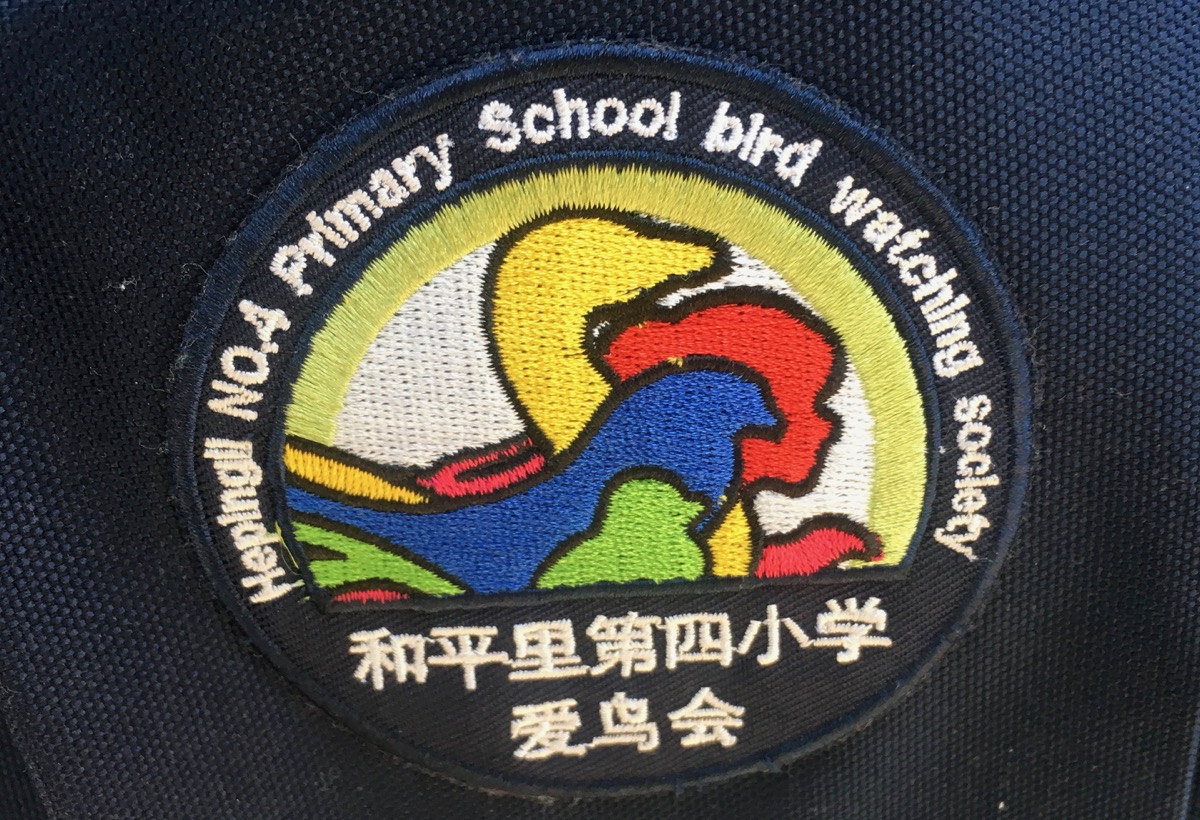
Just two days later I was at the Olympic Forest Park helping to lead a group of students from Hepingli No4 Primary School. This school, too, has its own birding club and even has its own badge, proudly displayed on their backpacks! On a beautiful, but cold, morning we enjoyed good views of some of the park’s residents including Grey Herons, Little Grebes and Light-vented Bulbuls.
Watching Little Grebes in the Olympic Forest Park with students from the Hepingli No4 Primary School Birdwatching Club
This group of Grey Herons was a major hit….
….as were the autumn leaves!
Li Xiaoyang was my chief apprentice!
It’s heartening to see Beijing’s schools setting up birding clubs and hopefully these two leading lights represent just the beginning of a new trend.
Update: On Monday 6 November I was informed that Kevin O’Shea, one of the teachers at the Canadian International School of Beijing (CISB), has just set up a wildlife club for students, meeting every Wednesday. Congratulations, CISB!
Title image: the badge of Hepingli No4 Primary School’s Birdwatching Society.
I spent Saturday morning with Belgium-based Lyndon Kearsley and the Beijing team at the Summer Palace for the annual Swift banding project. Led by Professor Zhao Xinru of the China Birdwatching Society, in collaboration with scientists from the UK, including the BTO, Sweden and Belgium, the project has recently been responsible for discovering the Beijing Swift’s wintering grounds and migration route, proving for the first time that these incredible aviators travel to southern Africa and back every year.
This year, we are hoping to prove an even more incredible aspect of the Beijing Swift’s lifestyle. In 2016 selected birds were fitted with a new type of technology – accelerometers – which can, in short, establish whether the birds are moving or stationary. Having this morning recaptured seven birds fitted with accelerometers in 2016, and provided the data are good, we should be able to show whether these birds have spent the nine months away from Beijing in continuous flight, just as Susanne Åkesson and her team have recently proved with Swifts from Sweden. Wouldn’t that be something?
The analysis of the data will take some weeks and months to complete, so we don’t expect to have an answer quickly. In the meantime, here is a short video of the Beijing Swifts in slow motion, taken this morning at the Summer Palace. One striking aspect is the sound of the calls when slowed down… my advice is don’t play this video if alone at night or at Halloween – it’s almost creepy!
Huge credit to our Chinese colleagues, especially Professor Zhao Xinru, Wu Lan, Liu Yang and the army of volunteers who work so hard to make the project a success. And big thanks to Dick Newell, Chris Hewson, Lyndon Kearsley, Susanne Åkesson, Rob Jolliffe, Geert De Smet and Gie Goris who have all played a key role in the Beijing Swift Project over the last few years.
This is a very cool animation showing the locations of the Beijing Swifts fitted with loggers during 2014-2015. Each coloured dot is an individual Swift from the Summer Palace. The gaps in coverage are due to “noisy” data during the spring and autumn equinoxes. Credit to Lyndon Kearsley.
On Saturday “Team Swift” undertook the next stage of the Beijing Swift Project at the Summer Palace, here in Beijing. The Chinese “catching team”, led by Professor Zhao Xinru, was on site at the inhuman hour of 0230 to set up the nets and, by the time I arrived at 0400 with the Europeans, there were already a couple of birds waiting to be tagged.
Setting up the nets at 0230 at The Summer Palace. All photos by Zhang Weimin.
This year was another hugely successful operation involving more than 60 people, all volunteers, organised into highly efficient teams by the China Birdwatching Society. From Europe there was Chris Hewson (BTO), Dick Newell and Rob Jolliffe (Action For Swifts), Lyndon Kearsley, Geert De Smet and Gie Goris (Belgium) and Susanne Åkesson and Aron Hejdstrom from Lund University.
Ms Fu Jianping, President of the China Birdwatching Society retrieves a Swift from the net.
The “management” team, logging and distributing the Swifts to the various banding teams
Susanne and her team of Chinese volunteers fitted an incredible 25 loggers to Swifts.
The BTO’s Chris Hewson preparing the harnesses for the Swifts’ “backpacks”
The “biometrics team” weighed and measured the Swifts.
Professor Liu Yang oversaw the blood sampling, which will enable analysis of DNA.
Wu Lan (left) led the “data downloading team”, capturing the data from birds fitted with loggers in previous years.
Fu Jianping releases a swift fitted with a data logger.
It was brilliant to see so many young volunteers involved..
Action For Swift’s Dick Newell, whose generosity enabled the project to get off the ground, releases one of the Swifts.
A great moment. Leighton (right) was recently engaged to his partner and, together, they released two of the Swifts..
We succeeded in catching 10 birds with geolocators fitted in the previous 2 years. Nine of these had good data, six from birds tagged in 2015 and three from birds tagged in 2014. Two of these we had caught in 2015, but one was a new bird carrying 2 years worth of data. So we now have 23 complete tracks, 14 of the 2014/15 migration and 9 of the 2015/16 migration.
Preliminary analysis shows the birds doing similar things in the 2 migrations – ie migrating to and from southern Africa using a route north of the Himalayas. It’s one of the most incredible migrations of any bird and to think they do it without landing is awe-inspiring…
A typical track of a Beijing Swift.
We also succeeded in fitting 46 new loggers of various types: GPS loggers, loggers with accelerometers and pressure sensors, as well as some more light level geolocators. These should give us more valuable information in 2017.
Once again, it was a real privilege to be part of this incredible project… a project that is not only contributing to scientific discovery and facilitating superb collaboration between scientists and volunteers from China and Europe but also engaging the public about these amazing birds and their incredible migrations.
Huge thanks to Wu Lan for, again, being the spider at the centre of the web, to Dick, Lyndon, Chris, Rob, Geert, Gie, Susanne and Aron for their valuable contributions to this project and, most of all, to the many young Chinese volunteers who worked so well together to make this year’s catching such a success.