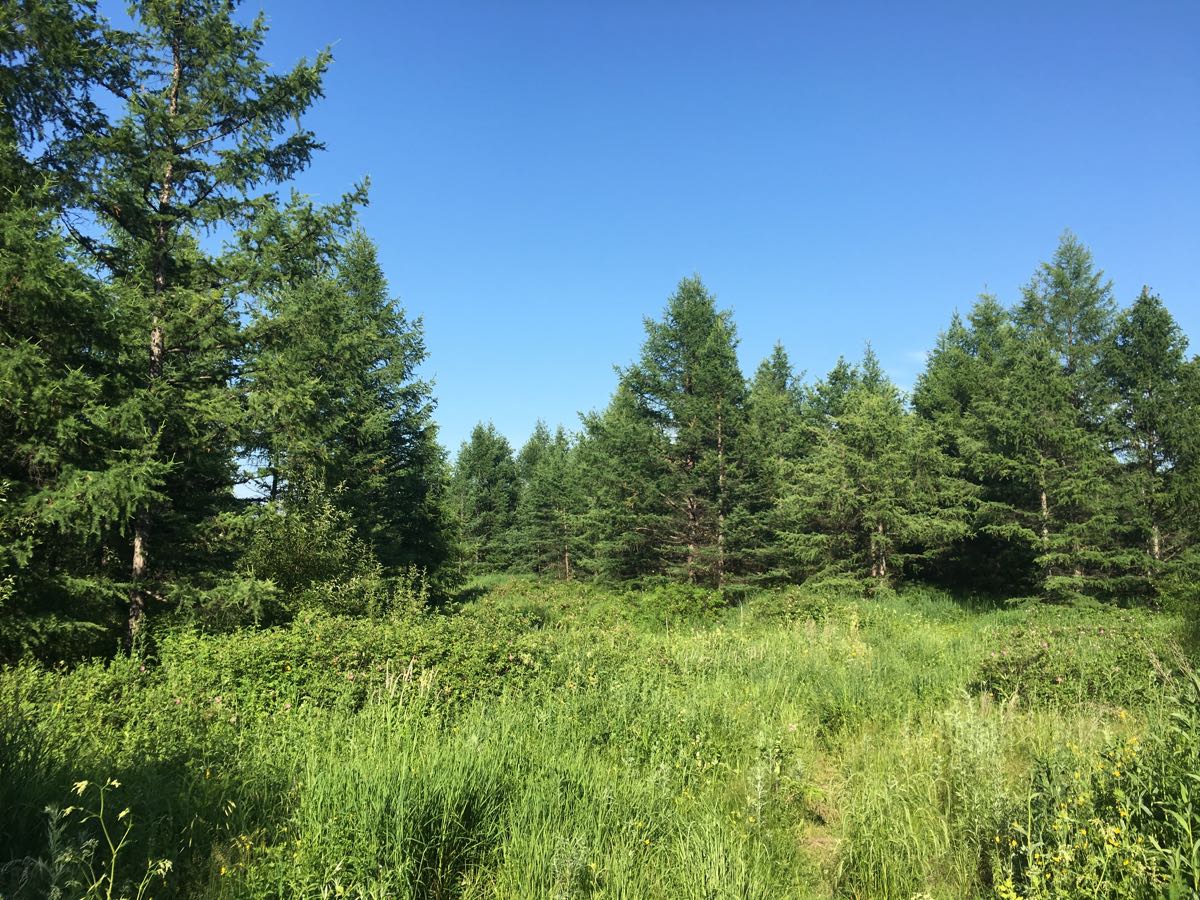
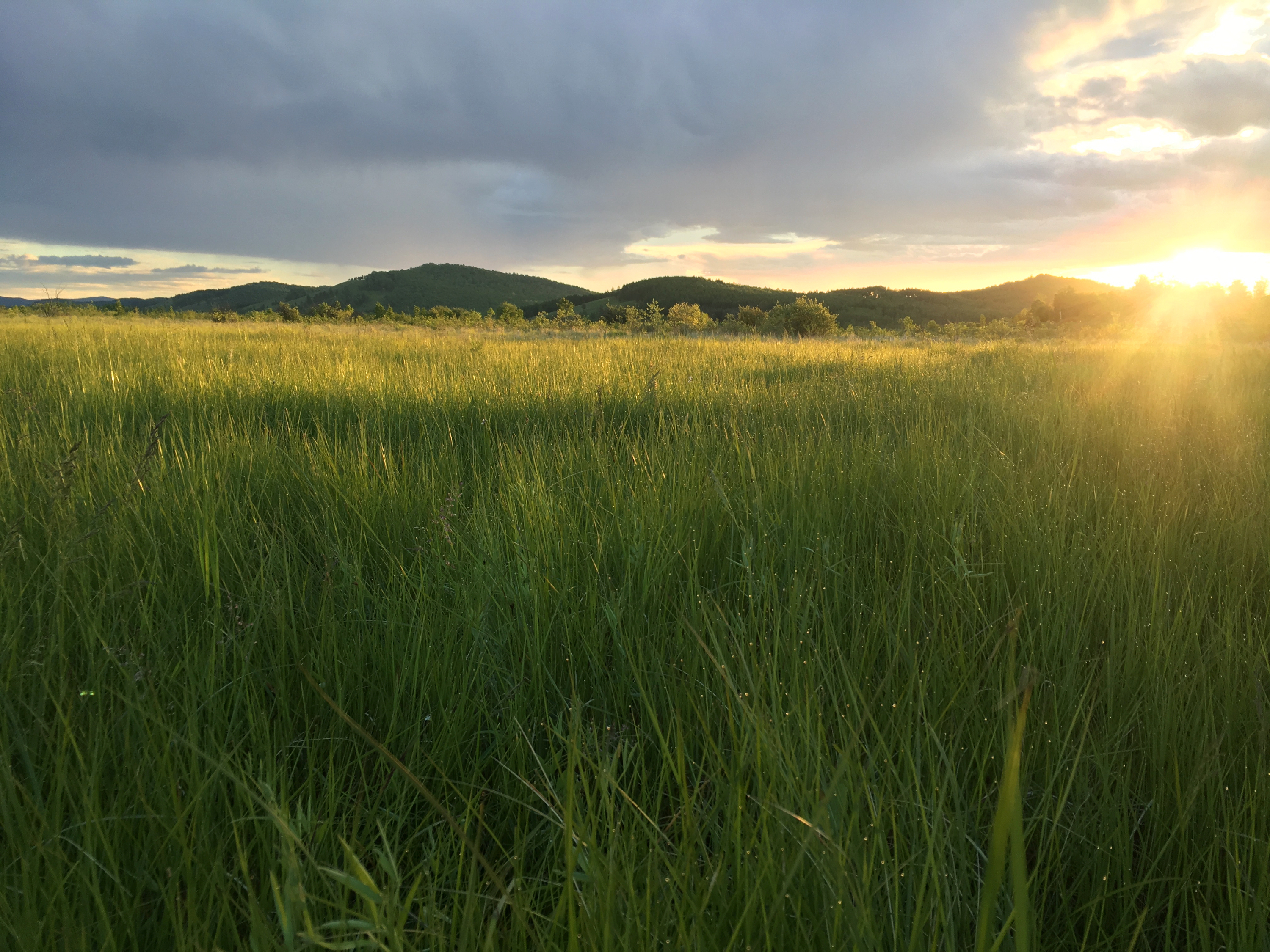
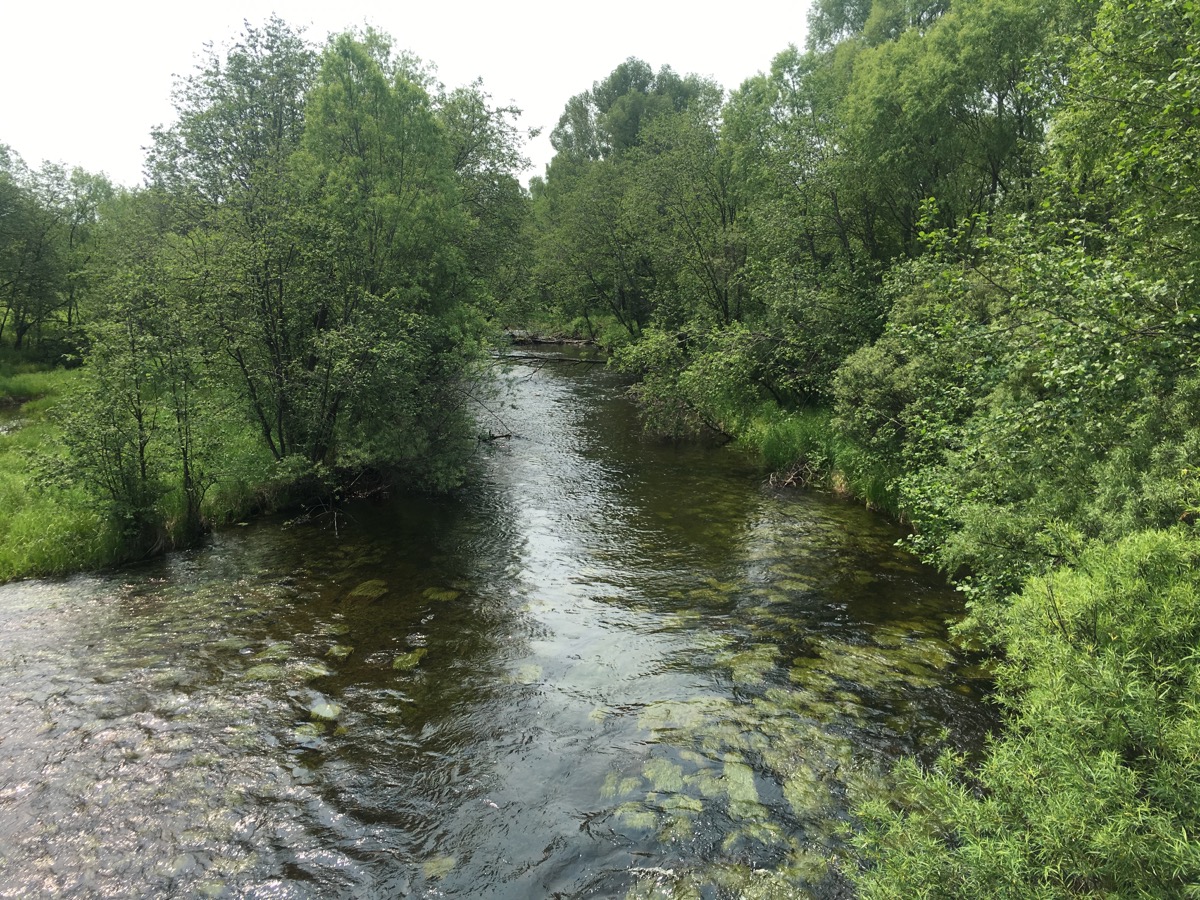
On the way to Mongolia for the Cuckoo Project, I spent three days with Josh Jones, Ben Wielstra, Jocko Hammar and Chris Campion in Wuerqihan. This small logging town is situated in northern Inner Mongolia on the edge of the taiga forest. It is a wonderful place to spend a few days in summer as it’s a breeding area for many Siberian birds including Japanese Quail, Great Grey Owl, Siberian Rubythroat, Radde’s, Dusky, Thick-billed Warblers, Lanceolated, Pallas’s Grasshopper, Gray’s Grasshopper and Pale-legged Leaf Warblers, Siberian and Eyebrowed Thrushes, Pacific Swift, Common, Indian and Oriental Cuckoos, Common Rosefinch, Yellow-breasted Bunting and many more. Swinhoe’s Rail was recently discovered here and Far Eastern Curlew and Black-tailed Godwit breed in the wet meadows.
Early morning and evening, a cacophony of bird sound fills the air and the beautifully still mornings enabled me to capture a sample, recorded from three different locations around the town. One of the first things to strike me was the abundance of Common Cuckoos; it was impossible to make a recording without hearing the wonderful “cuck-oo” call, as if it was ‘on repeat’.
Listen carefully and a rich array of species can be heard including flycatchers, thrushes, warblers and rosefinches.
How many species can you hear? I believe there are at least 17 species vocalising in this clip.. but there are probably more!
Please leave a comment with any species you can name…
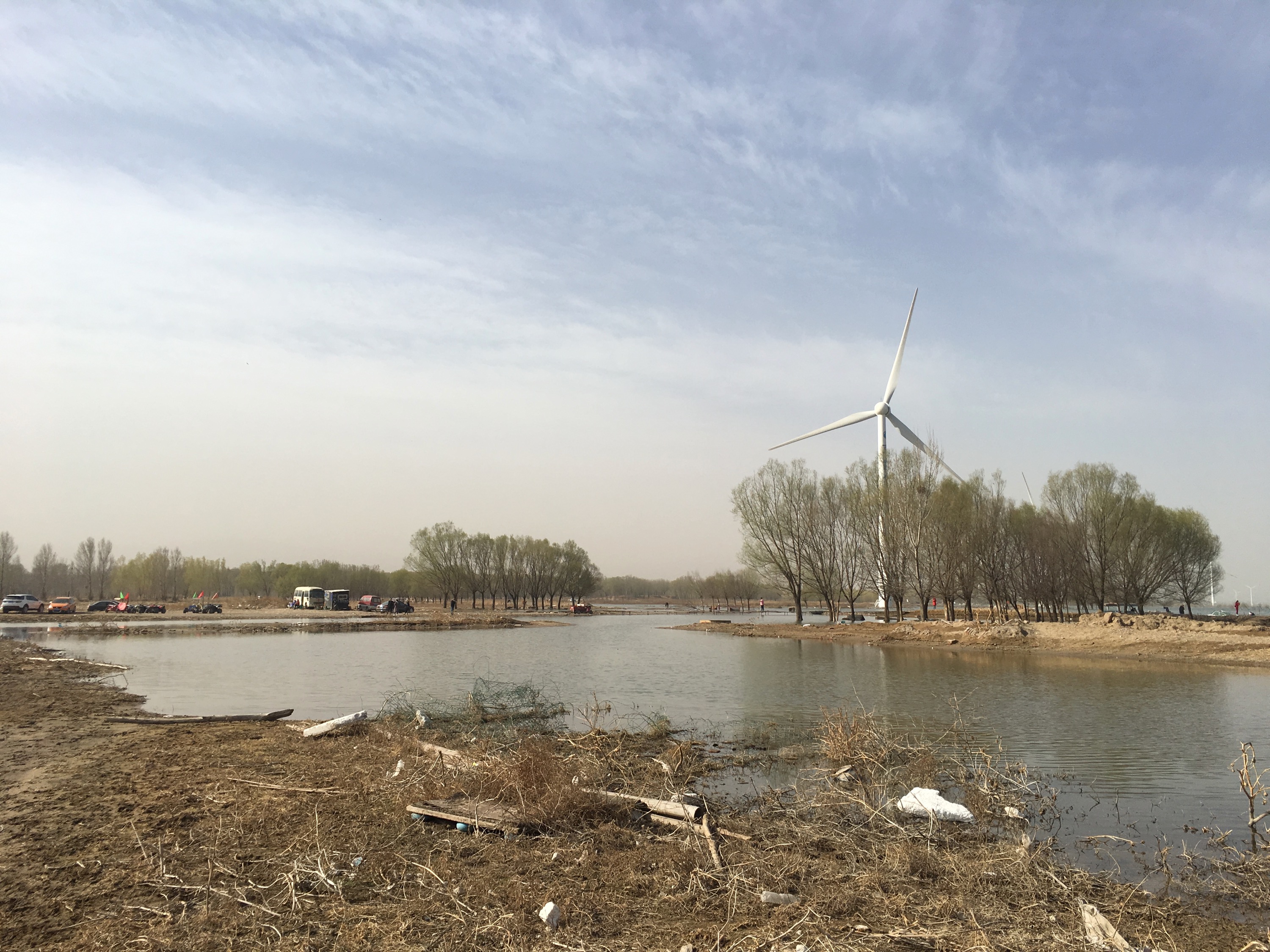
Ma Chang, in Yanqing County, northwest Beijing, is my absolute favourite birding site in April. Although not particularly glamourous with a series of wind turbines, small-scale agriculture and lots of litter left by the tourists who visit to ride horses or drive beach buggies, its geography – on the southeastern shore of Guanting Reservoir – makes it a wonderful place for migration. Early in the month there is a good chance of spotting the spectacular ORIENTAL PLOVER on its way from wintering grounds in Australia to breeding grounds in Inner and Outer Mongolia, and it’s a brilliant place to experience good numbers of pipits and wagtails as they make their way north. WHITE WAGTAILS lead the charge and five of the six subspecies recorded in Beijing have been seen here – leucopsis, ocularis, baicalensis, ‘eastern alba‘ and personata. I am sure it is only a matter of time before the sixth subspecies – lugens – is recorded at this site.
Oriental Plover at Ma Chang, 7 April 2019 (Zhang Weimin)
White Wagtail ssp baicalensis, Ma Chang (Terry Townshend)
White Wagtail ssp ocularis (Terry Townshend)
Groups of Citrine Wagtails pass through and it’s not uncommon to see flocks of 20+. Water Pipits are gradually eclipsed by Buff-bellied Pipits as the month progresses and several hundred of the latter can be seen in the middle of the month, with Red-throated, Richard’s and Blyth’s joining the fray a little later. The vagrant Meadow Pipit has also been recorded here several times in early April.
Citrine Wagtail (Terry Townshend)
Buff-bellied Pipit (Terry Townshend)
Last Monday I spent a few hours at Ma Chang at the end of the day. There were some tourists riding horses, a few buggies being driven around, it was windy and my expectations were not high. Nevertheless, I found a lovely mixed group of White and Citrine Wagtails on the foreshore and was enjoying watching them feed on the flying insects close to the water.
The White Wagtails were dominated by ocularis (“Siberian Wagtail”) with a few leucopsis (“Chinese Wagtail”) and a couple of baicalensis (“Baikal Wagtail”). As I was observing these birds, I heard a faint sound that reminded me of SWINHOE’S RAIL. It was a vocalisation I had first heard at Wuerqihan in Inner Mongolia in June 2018. I immediately dismissed the thought – a singing SWINHOE’S RAIL in Beijing would be ridiculous, surely! But as soon as I had re-trained my concentration on the wagtails, I heard it again… and again. The sound was faint, coming towards me from a small inaccessible island of grass and a few small trees, against the wind, and was competing to be heard amongst the din of revolving wind turbines, the wind itself and calling Black-headed Gulls and Black-winged Stilts.
The SWINHOE’S RAIL was singing from the island with dry vegetation and a handful of trees.
I moved as close to the sound as I could and listened, intently. There it was again, this time a fraction clearer. Fortunately I had my sound recording kit with me and I scrambled to retrieve it from my backpack whilst hoping that the vocalisations would continue.
They did, and I managed to record a few snippets before the source fell silent, coinciding with a low pass by a hunting Eurasian Sparrowhawk.
A few minutes later I heard the sound again, three maybe four times before again it fell silent.
I was fairly sure the sound was of a SWINHOE’S RAIL but given the magnitude of the record, I had to consider the possibility of it being a frog or a cricket.
I was planning to stay overnight close by and hoped that, in the early morning with less wind and much reduced background noise, I may be able to hear the vocalisation more clearly if the bird was still there. At the guest house, I looked at the sonogram of the sound I had recorded and compared it with that from my recordings of Swinhoe’s Rail from Inner Mongolia last June. The sonogram of the sound from Ma Chang looked good on the screen – 6 or 7 notes in each vocalisation at a frequency of 2kHz. Wow.
A sonogram of Swinhoe’s Rail recorded at very close distance in Inner Mongolia, June 2018.
A sonogram of the Swinhoe’s Rail at Ma Chang, Beijing, on 15 April 2019. Much fainter, due to the distance, but the same 6-7 notes at 2kHz, with similar spacing.
The following morning I was on site before dawn and it was wonderfully still – perfect conditions to listen and record sounds. Sadly, I never heard it again. Despite the sonogram looking very good for SWINHOE’S RAIL, I was keen on a second opinion. I sent the recording to a few local birders and most thought it sounded good but cautioned about their lack of experience with the species. Then Paul Holt replied, agreeing that it was indeed a SWINHOE’S RAIL. That gave me the confidence to put out the news – thanks Paul!
Swinhoe’s Rail (Coturnicops exquisitus) is one of east Asia’s least known birds. Traditionally, the most reliable place to encounter it was in the wet grass around Poyang Lake, Jiangxi Province, in winter but sightings from there have become increasingly scarce.. and due to its secretive behaviour, it is encountered only infrequently on migration, even in relatively well-watched areas such as Happy Island and Beidaihe in coastal China.
It was only three years ago that Wieland Heim, Tom Wulf and Alex Thomas (of the Amur Birding Project) first recorded the ‘song’ of this secretive bird at Muraviovka Park in southeastern Russia. And in July 2017, armed with this new knowledge, Paul Holt was the first to discover singing birds in China at Wuerqihan in northern Inner Mongolia. I was fortunate to visit Wuerqihan in June 2018 and recorded its song and trill.
Situated on the border of the provinces of Ningxia and Inner Mongolia is the small, isolated HeLanShan (Alashan) range of mountains. The semi-desert area immediately to the west is one of few places to see one of Asia’s least-known birds – the Mongolian or Kozlov’s Accentor (Prunella kozlowi, 贺兰山岩鹨) . Not much to look at, the Mongolian Accentor is unlikely to win any beauty contests and its low density in the vast habitat makes it a challenge to find. However, when one combines the Accentor with another of the area’s specialities, the stunning Alashan (Przevalski’s) Redstart (Phoenicurus alaschanicus, 贺兰山红尾鸲), a winter visit HeLanShan can be very rewarding.
Alashan Redstart breeds in the He Lan Shan Mountains and, in winter, most of them descend to the foothills and even the local town parks, making this species more accessible. Of course, it was only five years ago that a pair of these beautiful redstarts made it to Beijing. Our hopes of them being annual visitors to the capital so far remain unfulfilled. Hence the lure of the small town of Alxa in sub-zero temperatures.
We hired local guide, 王志芳 (Wang Zhifang) who was the first to ‘rediscover’ the wintering grounds of Mongolian Accentor back in 2009, many years after specimens were taken from the area.
Ms Wang first took us to a private site where we enjoyed two male Alashan Redstarts alongside Red-billed Chough, Plain Laughingthrush, Chinese Beautiful Rosefinch, Brown and Siberian Accentors, Red-throated Thrush, Beijing Babbler, Hawfinch and Godlewski’s Bunting. The redstarts appeared to have a routine involving eating, drinking and singing (not dissimilar to many Beijingers on a Saturday night). In the arid semi-desert habitat, the berries they were feeding on were very dry, hence the need for regular forays to the edge of the stream, where the direct sun caused small amounts of ice to melt. Often, the redstarts would pause above the stream, calling frequently, before dropping down to drink. After drinking, they would often fly up to a perch and begin a weak, barely audible, song (subsong?), sometimes for several minutes at a time.
It was a joy to spend time with these birds and I recorded as much video and audio as I could.
Here is an audio recording of the calls and (sub) song:
In the afternoon we headed to a town park where we enjoyed another male Alashan Redstart as well as 85+ Red-throated Thrushes with just 2 Naumann’s Thrushes and 3 Black-throated Thrushes mixed in. A male Chaffinch was a nice addition the day.
One of the thrushes appeared to be an intergrade between Red-throated and Black-throated, sporting reddish feather around the face and throat and much darker, blackish feathering around the mid- to lower chest. This bird also had less rufous in the tail compared with a typical Red-throated. Comments welcome!
On day two we focused on Mongolian Accentor and it wasn’t long before we saw our first one at a site close to the town.
This bird is poorly known with a limited distribution in Mongolia and, in winter, it’s regular in small numbers in Inner Mongolia near the HeLanShan mountains. This individual spent most of its time feeding on the ground close to thick cover.. and its favourite food appeared to be the seeds of this thistle-like plant. I’d love to identify the plant so if anyone knows the name, please let me know!
The Mongolian Accentor seemed to enjoy the seeds of this plant, commonly found in the semi-desert area around Alxa.
After enjoying prolonged views of the Accentor, we spent the remainder of the time checking out nearby sites for Mongolian Ground Jay. We were fortunate to find two within a few kilometres of the town and found another site holding at least six more Mongolian Accentors before heading back to the airport for the return to Beijing, passing an original mud section of the Great Wall on the way.
The Great Wall on the Inner Mongolia/Ningxia border.
All in all, an enjoyable weekend in a fascinating part of China.
For anyone interested in visiting, the local guide, Ms Wang Zhifang, can be contacted on WeChat (“alscw2016”) or on +86 18604836422.
Swinhoe’s Rail (Coturnicops exquisitus) must be one of east Asia’s least known birds. Traditionally, the most reliable place to encounter it was in the wet grass around Poyang Lake in winter but sightings from there have become increasingly scarce.. and due to its secretive behaviour, it is encountered only very infrequently on migration, even in relatively well-watched areas such as Happy Island and Beidaihe in coastal China.
It was only two years ago that Wieland Heim, Tom Wulf and Alex Thomas (of the Amur Birding Project) first recorded the ‘song’ of this secretive bird at Muraviovka Park in southeastern Russia. And in July 2017, armed with this new knowledge, Paul Holt was the first to discover singing birds in China at Wuerqihan in northern Inner Mongolia.
Wuerqihan is a wonderful place… it is very popular with bird photographers in winter when, despite the bitter temperatures (as low as -35 degrees Celsius), it’s possible to see very well species such as Great Grey, Hawk, Ural, Tengmalm’s, Eagle and Little Owls plus other photogenic birds such as Hazel Grouse, Black Grouse, Siberian Jay, Pine Grosbeak, Pallas’s Rosefinch and, if you are lucky, Black-billed Capercaillie, . It is less well-known that summer is also pretty special. In addition to the recently-discovered Swinhoe’s Rail, it is a brilliant site to see Pallas’s and Gray’s Grasshopper Warblers, Lanceolated Warbler, Band-bellied Crake, Pale-legged, Two-barred Greenish, Dusky and Radde’s Warblers, Eyebrowed Thrush, Oriental Cuckoo and many more species. It is also just wonderful to spend time in pristine lush wet meadows, mixed deciduous forest and grassland that are all teeming with life.
One of the wet clearings in the forest at Wuerqihan.
The stunning birch forest at Wuerqihan is home to owls, warblers, thrushes and buntings.
The open wet grasslands of Wuerqihan are full of Pallas’s Grasshopper Warblers!
I had already made two short summer trips to Wuerqihan, in 2016 with Nick Green and in 2017 with Derrick Wilby and I was keen to return. So, with Marie, we set aside a few days to fly to Hailar, rent a car and drive the 2.5 hours east to Wuerqihan.
We were keen just to enjoy the break and some good birding but of course we were also hoping to encounter the Swinhoe’s Rail.
Our first day would coincide with the last day of the visit by British birder, Jon Holmes, for whom I had arranged local guide Zhang Wu and his 4×4 to take him around. And on day two we bumped into another Brit, Dave Woodford, accompanied by Chinese bird guide, Steven An.
The call of Swinhoe’s Rail is reasonably loud and carries for quite a distance… and during our first evening on site, we had no difficulty in hearing the Swinhoe’s Rails from the track, calling from the wet grass. Being poorly prepared (no wellies or torch), we decided to call it a night, do a spot of shopping in the town the following day and return the next evening.
After each picking up a pair of wellies for CNY 40 (about GBP5) we arrived on site, with Steven and Dave, around 6pm, about 2.5 hours before dusk. Already, one bird was calling intermittently and, before long, two or three began calling. We donned our wellies and headed along the edge of the meadow, stopping regularly to listen to the birds as they began calling more frequently as dusk approached. You can hear a bit about our first encounter here:
Suddenly, a dark shape flew up in front of Dave and dropped into the grass about 15m away. It was tiny and dark with obvious white secondaries – Swinhoes’ Rail! Almost immediately it began to call and, having my sound recording gear with me, I was fortunate to capture this seldom heard, and rarely recorded, sound.
We were stunned and stood still, just soaking up the moment. The wonderful rich colours of the meadow at sunset, not a breath of wind and Swinhoe’s Rails calling amongst the Pallas’s Grasshopper Warblers, Common Rosefinches, Japanese Quails and Common Cuckoos. Simply mesmerising.
Swinhoe’s Rail habitat in Inner Mongolia.
The grass was around 30cm high with c15cm of water.. Wellies definitely required.
Swinhoe’s Rail in flight, Wuerqihan. Photo by Steven An.
That moment will stay with us for a very long time. And as we made our way back to the vehicles, we were accompanied by a cacophony of birdsong with Common Cuckoos seemingly all around, Pallas’s Grasshopper Warblers reeling away and Japanese Quails uttering their squelchy call. Magical.
The Chinese name for Swinhoe’s Rail is 花田鸡 (Huātián jī). Literally translated it means “flower frog”, a fantastically descriptive and apt name.
Over the next few days, we enjoyed some pretty special encounters with some wonderful birds including a stunning Great Grey Owl in the evening light.
Pacific Swifts were common in the town, breeding in many of the buildings, particularly the older properties.
And the omnipresent Pallas’s Grasshopper Warbler occasionally showed well, belying its reputation as an extreme skulker.
We recorded 98 species during our visit and had a fantastic time. Wuerqihan is a brilliant birding destination and thoroughly recommended in summer or winter. It is probably also extremely good in spring and autumn but, as far as I know, no birders have visited in that season.
Local guide, Zhang Wu, with his trusty 4×4.
Anyone wanting to visit should contact local guide, Zhang Wu, who can arrange pick-up and drop-off from Hailar airport, accommodation and food, and, with his unbreakable 4×4 and local knowledge, he will ensure any visiting birder gets to the right places and has a superb time. Although he speaks no English, it’s possible to communicate the basics using a combination of sign language and the impressive translation APP on his smartphone, and you can guarantee he will work hard to try to connect you with any target species. He can be contacted directly on +86 13614709187 and, for any non-Chinese speakers, I’d be happy to help make arrangements if required.
Big thanks to Marie, Jon, Dave, Steven and Zhang Wu for being great company during the trip. And a big hat-tip to the Amur Bird Project team and Paul Holt for their discoveries in 2016 and 2017 which enabled us to connect with the enigmatic Swinhoe’s Rail.
When South African world-lister, Derrick Wilby, invited me to accompany him to Inner Mongolia in search of some skulking grasshopper warblers, I was delighted to accept.
Wuerqihan, in the far north of the province, east of Hailar, is well-known as a special winter birding destination. With up to 8 species of owl (Eagle, Great Grey, Little, Northern Hawk, Eurasian Pygmy, Tengmalm’s, Ural and Snowy) possible in that season, not to mention special birds such as Siberian Jay, Black-billed Capercaillie, Black Grouse, Hazel Grouse, Pine Grosbeak, Pallas’s and Long-tailed Rosefinch, it’s a must-visit for any China-based birders.
Black-billed Capercaillie is one of the sought-after species at Wuerqihan. Late autumn is the best time. This one from October 2015.
What’s much less well-known is that Wuerqihan is also a brilliant birding destination in summer. On the edge of the magnificent, and vast, taiga forest, the habitat is a mixture of deciduous forest, wet meadows and damp scrub. This was only my second visit during this season but already it’s becoming clear that it’s a reliable place to see some of China’s most-wanted species such as GRAY’S GRASSHOPPER WARBLER, BAND-BELLIED CRAKE and CHINESE BUSH WARBLER as well as providing a fantastic opportunity to get to grips with some breeding birds that are much sought-after vagrants back in the UK, such as PALLAS’S GRASSHOPPER WARBLER, LANCEOLATED WARBLER, THICK-BILLED WARBLER, BROWN SHRIKE, SIBERIAN THRUSH, WHITE-THROATED NEEDLETAIL and many more.
Derrick had a list of warblers he wanted to see – Chinese Bush, Pallas’s Grasshopper, Gray’s Grasshopper and Lanceolated – as well as two owls – Great Grey and Ural – plus Japanese Quail and Band-bellied Crake. I was reasonably confident about all except the crake, which I had heard once last year but not yet seen.
Local guide, Zhang Wu, with his trusty 4wd.
On arrival in Wuerqihan in the afternoon, we met local guide, Zhang Wu, checked into the hotel and immediately headed out east from the town along the old logging road. We started well with good views of several singing Pallas’s Grasshopper Warblers along the first few kms of the road, singing Japanese Quail in the meadows, watchful Brown Shrikes seemingly atop every bush and Common Rosefinches whistling from their songposts before a superb encounter with a stunning GREAT GREY OWL just a few metres from the road. As we enjoyed more than 30 minutes with this most magnificent owl, a Gray’s Grasshopper Warbler sang from deep in the forest.
As we headed back to town for dinner, a spectacular thunderstorm swept past to the west..
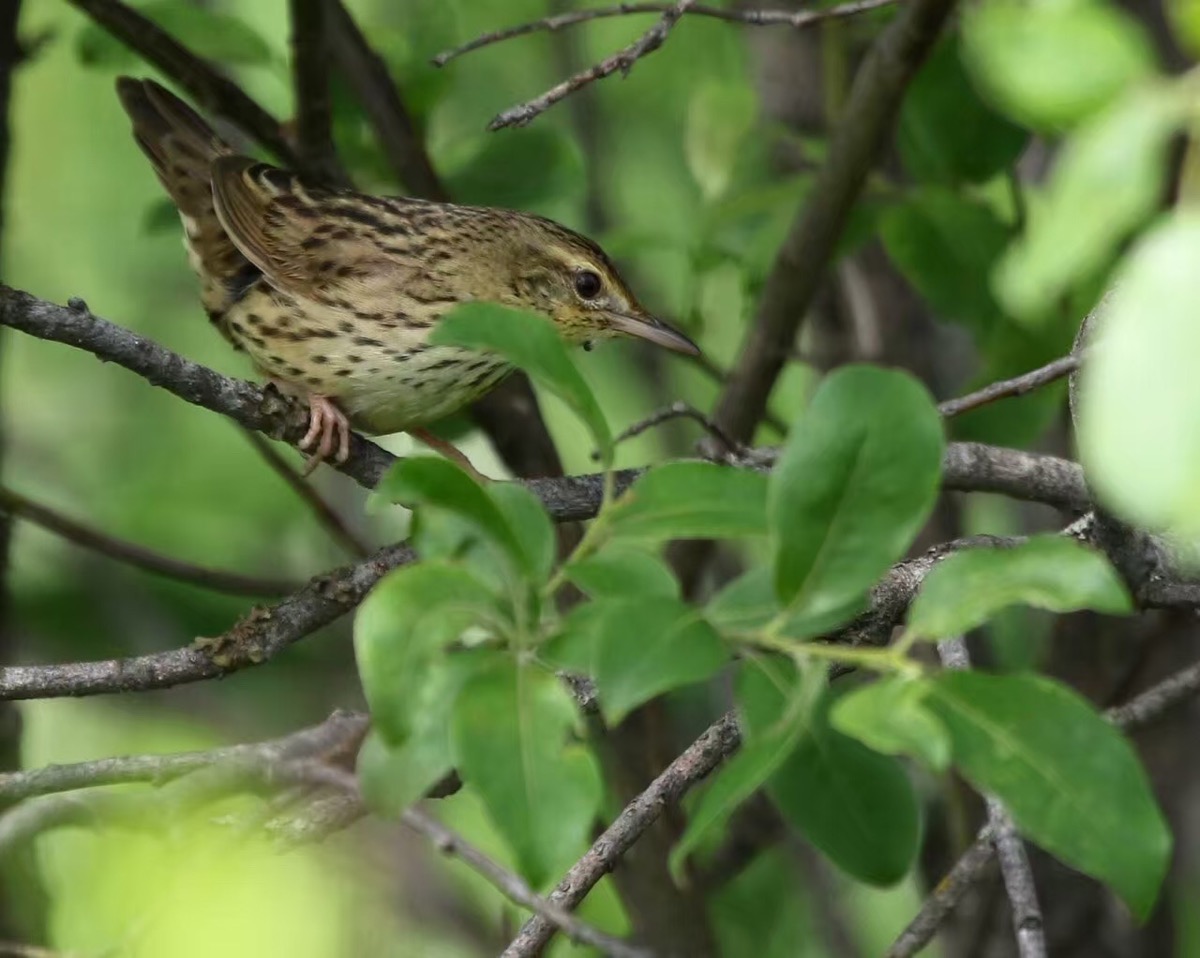
The morning of day two added singing Lanceolated Warbler (see header image by Nick Green), a handful of White-throated Needletails, Azure Tit, singing Pale-legged Leaf Warbler, Red-flanked Bluetail, Siberian Rubythroat, Siberian Thrush, Chestnut and Black-faced Buntings.
We decided to rest in the afternoon and head back out in the evening for a night drive in the hope of finding Ural Owl and, perhaps, Band-bellied Crake. The evening shift started well when we heard the latter calling briefly at dusk from the edge of a small pool. However, despite waiting patiently for more than 30 minutes, frustratingly there was no further sign. We headed into the forest to look for owls and, after only a few minutes, had a sighting of an owl by the side of the track.. it was large and pale. We turned around and approached slowly. We could see large orange eyes staring back at us and it was obvious this was an Eagle Owl, not the hoped-for Ural.
Heading east along the main track, we drove slowly with the windows down, listening. We stopped at several promising-looking areas, turned off the engine and waited for something to penetrate the silence. A few Pallas’s Grasshopper Warblers and a Gray’s Grasshopper Warbler chuntered away in the darkness.. and then a Chinese Bush Warbler sang from some scrub. Driving further, we picked out a Band-bellied Crake and, once we had stopped, it was clear that several were singing in the wet scrub alongside the road. One, two, three.. at least four birds competing for attention. In the darkness, there was no chance of seeing them, so we took a note of the location and would return in the morning.
By now it was after midnight and our hopes for a Ural Owl were fading. Zhang Wu turned off the main track onto a rutted, obviously rarely travelled track into the forest. After around 100m, he stopped. He had heard something. Cutting the engine, we listened intently. And there it was – a deep, low ‘hoot’. Zhang Wu smiled. It was a Ural Owl. Our guide played the call of Ural Owl in answer to the bird. Immediately it responded and flew in to a tree right above us to check us out.
Ural Owl is a scarce resident at Wuerqihan.
We returned to the hotel at around 0130, the adrenaline still rushing after a special encounter.
A tougher than usual early start the next morning saw us at the site where we had heard Band-bellied Crake during the previous night. Even in the early morning, the birds were not singing.. suggesting they might be predominantly nocturnal vocalisers. We carefully walked into the marsh, trying to avoid the deep pools of water in between the grassy tufts. We heard a short call and froze. It was a crake. As we stood motionless, as if to “warm up”, the short note gradually morphed into a full song.. and before long, we could see the grass ‘twitching’ as the crake made its way through the bog.
Band-bellied Crake, Wuerqihan (Derrick Wilby)
Band-bellied Crake, Wuerqihan (Derrick Wilby)
All that was left was to try to secure a decent view of Chinese Bush Warbler. Thanks to Zhang Wu’s local knowledge, we were able to find a spot with one singing and, with patience, we were able to secure a “jigsaw” of views.. at first the bill, then the tail, then the legs… then the supercilium.. and piecing them together we were able to get a good impression of this skulker.
We headed back to the hotel in the late morning, packed our things and set off for the airport all too quickly. It had been a superb 3 days and, in total, we had recorded 102 species. I can’t wait to go back… with a bit more time, I think there could be some more special birds waiting to be discovered. It wouldn’t surprise me if Swinhoe’s Rail is there and, who knows, maybe the enigmatic Streaked Reed Warbler is lurking in the vicinity.
One thing to bear in mind if visiting in summer; the insects can be a nuisance, especially the horseflies. Most active in the heat of the day, the worst can be avoided by being out early and late in the day. This video gives a sense of their menace!
I have just spent three days in Wu’erqihan, Inner Mongolia, in the company of Shanghai-based British birder, Nick Green. It was my third visit to this stunning part of northeastern China and, after two previous trips in winter, it was a delight to see it so green and leafy, without needing to wear six layers in -30 degrees Celsius!
The Dayan River, a constant companion along the track northeast of Wu’erqihan.
Typical forest habitat at Wu’erqihan
Whilst in winter the main attractions here are undoubtedly the owls (Snowy, Great Grey, Ural, Hawk, Eagle, Boreal and Little) our main target during this visit was to try to see the three breeding locustella warblers – Lanceolated Warbler, Pallas’s Grasshopper Warbler and the sought-after Gray’s Grasshopper Warbler. I thought we wouldn’t have too much difficulty in finding all three but I hadn’t expected the numbers we encountered. Pallas’s were seemingly in every inch of suitable habitat and, particularly early morning and evening, were singing constantly, even though it was mid-July. We recorded 53 (surely a considerable under-count) on our first full day. Lanceolated were less common, but still frequent, with 22 recorded and, the following morning, we counted 17 singing Gray’s from the moving car during a 45-minute drive.
Renowned for their skulking habits, locustella warblers are usually tough to see. However, on the breeding grounds, despite most preferring to sing from deep cover, we were fortunate to see several examples of each species singing from exposed perches.
Lanceolated Warbler (Locustella lanceolata), Wu’erqihan, Inner Mongolia, 9 July 2016. Photo by Nick Green.
Pallas’s Grasshopper Warbler (Locustella certhia), Wu’erqihan, Inner Mongolia, 9 July 2016. Photo by Nick Green.
Gray’s Grasshopper Warbler (Locustella fasciolata), Wu’erqihan, Inner Mongolia, 10 July 2016. Photo by Nick Green.
Gray’s Grasshopper Warbler, Wu’erqihan, 9 July 2016. Photo by Nick Green.
Wu’erqihan in July isn’t only locustella heaven. The supporting cast includes White-throated Needletail, Great Grey, Ural and Eagle Owls, Siberian Rubythroat, Mugimaki Flycatcher, David’s and Chinese Bush Warblers, Pale-legged, Two-barred, Pallas’s, Thick-billed, Radde’s and Dusky Warblers and a host of other ‘sibes’.
David’s Bush Warbler (Bradypterus davidi), Wu’erqihan, Inner Mongolia, 9 July 2016. This species is common in the damp forest.
Azure Tit, a scarce breeder at Wu’erqihan.
Typical buildings in Wu’erqihan.. the town has a Russian feel about it, not surprising given the proximity of the Russian border.
Sunset in the boggy grassland, northeast of Wu’erqihan.
Nick Green (left) with local guide, Zhang Wu, just after seeing a Gray’s Grasshopper Warbler singing from an exposed perch!
It’s May and for ornithologists that means only one thing – field season! This year I was privileged to accompany the JANKOWSKI’S BUNTING (Emberiza jankowskii) survey team to Inner Mongolia alongside China Birdwatching Society’s Fu Jianping, Hong Kong Birdwatching Society’s Vivian Fu and a team of local researchers from Northeast Normal University in Jilin, led by Dr Wang Haitao.
I’ve just arrived back in Beijing and I’m thrilled to bits… Here’s why..
Under the guidance of Dr Wang, we visited some “new” sites in eastern Inner Mongolia and, although we were able to cover only a fraction of the total area of suitable habitat, we recorded more than 100 Jankowski’s Buntings. If the density of the buntings we encountered is typical of the whole area, there should be many hundreds of pairs at the largest of these new sites. Fantastic news!
The habitat at this major new site in Inner Mongolia is typical grassland dotted with Siberian Apricot shrubs. Here, the density of Jankowski’s Buntings was reassuringly high.
Encouragingly, we also found some Jankowski’s Buntings in an area of regenerated grassland, replanted only 3 years ago, suggesting that these birds can, and will, colonise areas where the grassland is allowed to recover.
However, amongst this heady cocktail of good news, there is a sobering thought – none of these sites has any form of official protection, meaning they are potentially vulnerable to the main threats to the species and its grassland habitat – overgrazing and the expansion of agriculture.
Nevertheless, it is uplifting to find out that there are, in the unique Inner Mongolian grassland, more of these beautiful “little brown jobs” than we had dared imagine.
The full results of the survey and the fascinating latest research from Dr Wang and his team will be published this summer. A link will be publicised on Birding Beijing when it is available. With the latest information, we are slowly developing a greater understanding of the range, and population, of this special bird, found nowhere else on the planet. This information will form the basis of the next engagement with the local government in Inner Mongolia, during which we will be pushing for official protection for as many of these sites as possible. And, in the meantime, Dr Wang and his team will be exploring new areas to further understand the boundaries of Jankowski’s Bunting’s range and considering the use of colour-ringing to better understand breeding ecology and seasonal movements. Could Jankowski’s be extant in northern Hebei? Or far southeastern Mongolia? Time will tell…
I was impressed with Dr Wang Haitao and his researchers. Dr Wang has been studying Jankowski’s Bunting since 1999 and has a wealth of knowledge about the species, built up by years of field observations. I learned so much from our conversations over the duration of the survey..
Dr Wang Haitao (centre) organising the survey team, including Vivian Fu from Hong Kong Birdwatching Society (left).
Despite the almost omnipresent gales that sweep across this vast landscape in spring, I was able to record some video of the buntings, a compilation of which is below. Such beautiful birds in their full breeding finery and they looked a real picture amongst the Siberian Apricot blossom.
We left Inner Mongolia encouraged and, at the same time, determined not to let this special bird slip away.
Big thanks to Vivian Fu, Fu Jianping and Dr Wang and his team for the faultless logistics, thorough field work and great company during the trip.
I have finally completed my report of our Christmas trip to northern Inner Mongolia, close to the Russian border. It covers our time in two locations – Wuerqihan and XiQi. There is a focus on owls but we were rewarded with a host of good birds including, among others, Arctic Redpoll, Siberian Jay, Pere David’s Snowfinch and Asian Rosy Finch. You can download the full report here.
Introducing the last of the “most-wanted 3” owls we saw in Inner Mongolia this Christmas. This is the unmistakeable HAWK OWL, a bird that blew me away when I first saw it in Sweden in the 1990s. It often sits, sentinel-like, on the top of a tree from where it monitors the surrounding activity with razor-sharp vision and incredibly sensitive hearing. Such a different character to the more deliberate and almost “royal” Great Grey Owl….
Wishing everyone a very happy, healthy and bird-filled 2015!
For interest, here are some pictures of the superb habitat in which we found two of these special owls.
To me, seeing a GREAT GREY OWL (Strix nebulosa) ranks as one of the most magical sights of the bird world. With its human-like face and haunting stare, any encounter with the “Phantom of the North” in a snow-blanketed spruce forest makes for an eerie experience. In China, this magnificent owl can be found in the forests of the northern Provinces of Heilongjiang, Jilin and Inner Mongolia and it was a much-wanted bird during our recent visit to Wuerqihan and XiQi. Fortunately, after a long search, we finally caught up with this silent assassin. We enjoyed a spectacular encounter with this bird, watching as it surveyed the immediate area with slow, deliberate turns of its head. Typically it was not unduly bothered by our presence and, with my iPhone and Swarovski ATX I was able to take this video which captures the spirit of this most majestic of owls.
I have just returned from a few days in northern Inner Mongolia, near the Russian border, where I spent Christmas with Marie and SoSo from Hong Kong looking for owls. Highlights were many, including 6 species of owl – Eagle, Great Grey, Hawk, Little, Ural and Snowy. Spending Christmas morning watching 6 of the latter on the sparkling snow-covered grassland, was an experience that will stay with me for a very long time….
Wishing everyone a belated Merry Christmas, here is a glimpse of one of the magnificent Snowy Owls that we were fortunate enough to encounter on our trip. More details on this adventure very soon!
Jankowski’s Bunting (Emberiza jankowskii), Inner Mongolia, 19 May 2013
This week I spent five days in Inner Mongolia and Jilin Province helping the team led by Beijing Birdwatching Society to survey known, and potential new, sites for Jankowski’s Bunting. The aim was to try to establish a better understanding of the existing population, to identify threats to its habitat and to study its behaviour. The survey is still ongoing as I write – and I will report the full results as soon as they are available – but the good news is that, so far, two new sites – holding at least 12 birds – have been found and, in addition, more than 30 individuals have been found at a single established site. However, to temper this positive news, it is also clear that almost all of the sites are under threat… predominantly from encroaching agriculture and/or over-grazing.
As well as searching for new sites (of which I suspect there are several more, albeit small and fragmented), there is an urgent need to establish protection for the remaining areas of habitat by erecting fencing and engaging with local farmers and landowners.
==
Here’s the story..
On Saturday morning I met up with Mrs Fu Jianping from the Beijing Birdwatching Society for the short flight from Beijing to Wulanhaote in Inner Mongolia. Here we met up with Zhu Bing Run, a student from Harbin University in Heilongjiang Province, and the three of us proceeded to our first destination – Tumuji National Nature Reserve. Tumuji is a known site for Jankowski’s Bunting and many visiting birders will probably have seen the bunting at this site. We were given a very warm welcome by the Reserve Director, Mr Han and his staff. After a convivial lunch we drove straight to the “core area”, an area of fenced off grassland with scattered Siberian Apricot bushes – just a few hundred metres square – surrounded by well-grazed land (supporting at least 6 pairs of Great Bustards).
The fenced off area at Tumuji NNR.
It was very windy on our first afternoon and, in a survey of the area we found only a Daurian Partridge, three Japanese Quails, a few Stonechats and several Richard’s Pipits. We would try again the next day and, sure enough, despite it still being fairly windy, we discovered two singing males and a female here – my first ever sighting of Jankowski’s Bunting!
The team: Fu Jianping and Zhu Bing Run at a windy Tumuji NNR.
We proceeded to check other areas of the reserve, in particular areas with similar habitat. However, despite searching thoroughly, we failed to see any more Jankowski’s Buntings at Tumuji. We did, however, come across this “chicken snake” which has a talent for doing a remarkable impression of a cobra!
The so-called “Chicken Snake”.. apparently venomous. Eek..
Mrs Fu photograping plants during the Jankowski’s Bunting survey at Tumuji NNR.
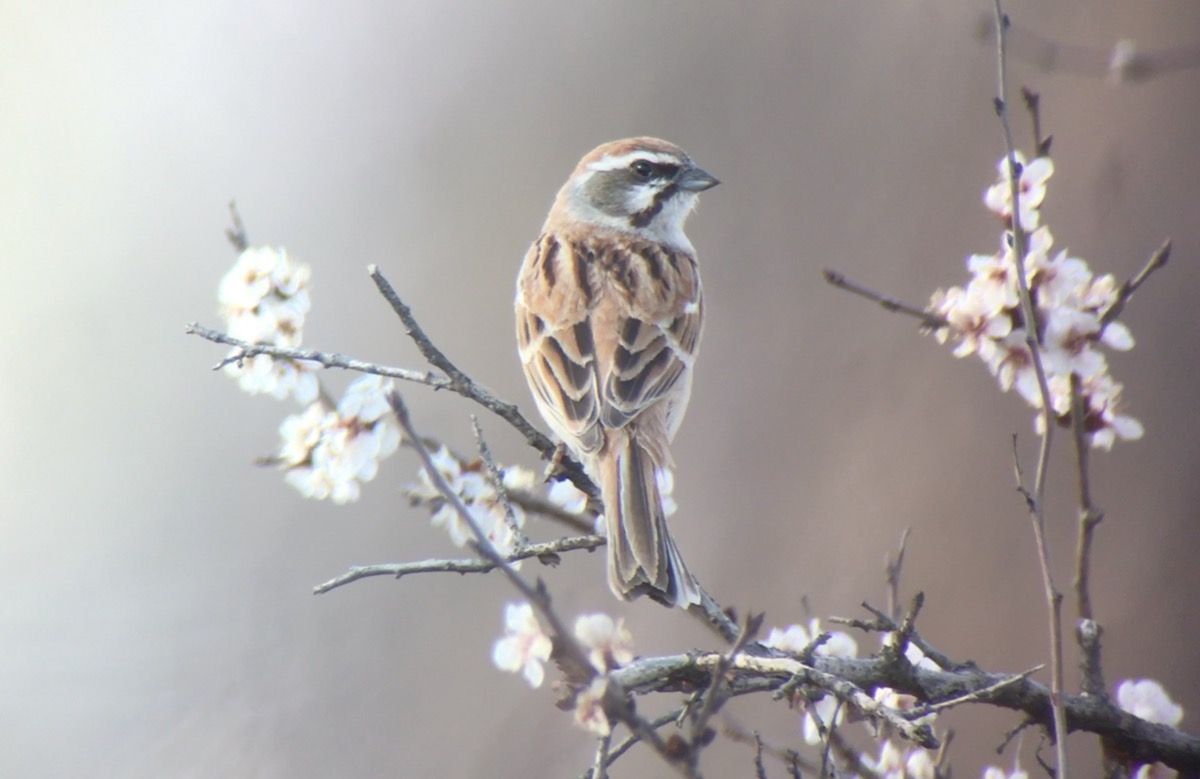
After two nights and two days at Tumuji we moved on to an area called Xi Er Gen. Here, the enlightened local landowner, Mr Wang Tie Jun, with the support of the nearby Xi Er Gen Nature Reserve, has fenced off an impressively large area of grassland specifically for the bunting. It’s proving to be a very successful initiative; the first visit by the survey team, just a few weeks ago, found more than 30 birds at this site. We didn’t survey the whole area during this visit but, just by walking the road through the area, we counted at least 5 males. It was interesting that, at this site, Jankowski’s Bunting was seen alongside Meadow Bunting – the only site where we saw both species together.
The fenced off area at Xi Er Gen. A great example of local landowners and nature reserve staff working together to protect an endangered species.
After breakfast with the Xi Er Gen Nature Reserve staff we moved on again to explore potential new sites around Wulanhaote. We stopped whenever we saw suitable habitat. Most of these interludes produced a blank but, during one fruitless stop, through my telescope I could see an area on the horizon that looked as if it had potential… and there appeared to be a track winding its way towards the area.. We made our way there and, sure enough, almost as soon as we stopped the car, we heard and saw a male Jankowski’s Bunting. Result! This sighting buoyed us considerably and we prepared to survey the area. Almost immediately we saw another male… then another.. wow, this was clearly a very good area.. And as we moved over the brow of the hill, it was clear that there were more areas of similar habitat. In the stunning late afternoon light we surveyed three of these ‘patches’ of habitat and found at least 6 singing males. There were several more ‘patches’ of habitat close by that could easily hold more birds and the whole area warrants a more thorough survey. The still conditions enabled me to make a recording of the Jankowski’s Bunting song using my Canon EOS 7D..
There were two obvious threats to the habitat at this new site. The first was encroaching agriculture. The grassland was not fenced off or protected in any way and it was clear that local farmers were gradually ploughing up more and more of this grassland to provide a greater area for their crops.
The second was the presence of Eurasian Cuckoos. We saw several cuckoos in this area perched on Siberian Apricot bushes and clearly watching the Jankowski’s Buntings. One was even seen to drop to the base of a Siberian Apricot bush for a few minutes before reappearing looking distinctly guilty.. Apparently cuckoos like Jankowski’s Buntings as hosts and our guide – Mr Zhao Zhun – told us a story about finding a Jankowski’s Bunting nest with two birds inside – a young cuckoo and a young Jankowski’s Bunting – face to face. He returned a day later with his camera but there was just a young cuckoo with the remains of a young Jankowski’s Bunting. Clearly, this is a natural occurrence and, of course, ordinarily with a strong population the losses would not be significant, but with such a small and declining population, predation by cuckoos is a worrying threat.
One of the new sites discovered near Wulanhaote with encroaching agriculture in the background.
Surveying the new site near Wulanhaote.
Singing male Jankowski’s Bunting at the newly discovered site. We counted at least 6 males here.
We left the site at sunset for the drive back to Wulanhaote. We were elated at finding a new breeding site and celebrated with a few bottles of the local beer over dinner. Unfortunately I had to return to Beijing the following morning and, after saying my goodbyes at the airport and wishing the team well for the remainder of the survey, I caught my return flight back to Beijing. During the journey, I reflected on my trip. What an experience. And a real privilege to be part of the team to discover a new site for this bird on the brink. However, the elation was tempered by the knowledge that almost all of the sites we visited were under threat in some way from the expansion of intensive agriculture. Fencing appears to be a very effective way to protect the remaining habitat. A priority – in addition to further survey work to identify new sites – must be to engage with local landowners and farmers to try to build support for more fenced off areas. Without this, I fear that almost all of the sites will disappear within a few years and the result will be the loss of this beautiful and unique bird.
I wanted to put on record my thanks to Mrs Fu from Beijing Birdwatching Society and Zhu Bing Run from Harbin University for their company and expertise during the survey and to Mr Zhao Zhun for his local knowledge about existing and potential new sites for Jankowski’s Bunting. I would like to thank all the reserve staff at Tumuji and Xi Er Gen for their generous hospitality and assistance during our visits to their reserves.
I would also like to thank the Hong Kong Birdwatching Society, in particular Vivian Fu, BirdLife International, the Oriental Bird Club and everyone else who has been working to conserve this species.
Finally, I wanted to thank everyone who has donated to the Jankowski’s Bunting JustGiving appeal. Although I – quite rightly – paid my own costs to participate in the survey, some of the money raised during the appeal went towards supporting the participation of the Chinese team in this survey. Without that support, this survey would not have been possible.
There is clearly a long way to go to secure the future survival of this species, and I await the full survey report and the resulting discussion about how to proceed, but I am optimistic that, with greater awareness and further financial support (please donate more if you can!), much can be done to slow and halt the decline in this species to ensure that future generations can enjoy this bird in its natural habitat in a special part of China. If we can achieve that, what a legacy it will be for everyone involved.