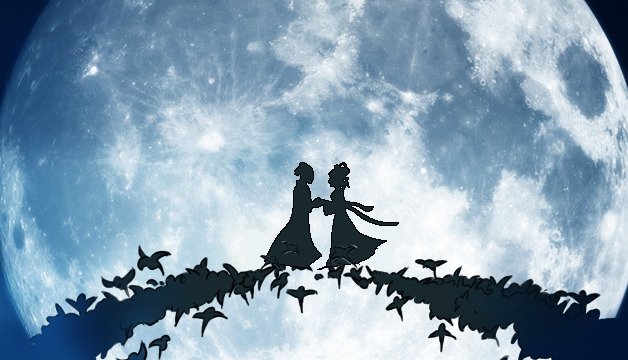
Over the last couple of weeks, we’ve been introducing the wonderful pupils at the International School of Beijing (ISB) to the birds of China’s capital city, including a field trip to Hanshiqiao (the wetland where Skybomb Bolt, the Beijing Cuckoo, was fitted with his tag). As part of the classroom based material, Annie He, who is responsible for integrating Chinese culture into the ISB curriculum, created a brilliant document outlining how birds feature in Chinese folklore. With Annie’s kind permission, “Beyond The Legend” is now available to download. I love the story about the magpie’s role in Chinese Valentine’s Day:
“On the evening of the seventh day of the seventh month on the Chinese lunar calendar, don’t forget to look carefully at the summer sky. You’ll find the Cowherd (a bright star in the constellation Aquila, west of the Milky Way) and the Weaving Maid (the star Vega, east of the Milky Way) appear closer together than at any other time of the year. Chinese believe the stars are lovers who are permitted to meet by the queen of Heaven once a year. That day falls on the double seventh (七⼣夕 in Chinese), which is China’s own Valentine’s Day. Most Chinese remember being told a romantic tragedy when they were children on the double seventh. In the legend, the cowherd and the Weaving Maid will meet on a bridge of magpies across the Milky Way once a year. Chinese grannies will remind children that they would not be able to see any magpies on that evening because all the magpies have left to form a bridge in the heavens with their wings.”
Leave a Reply