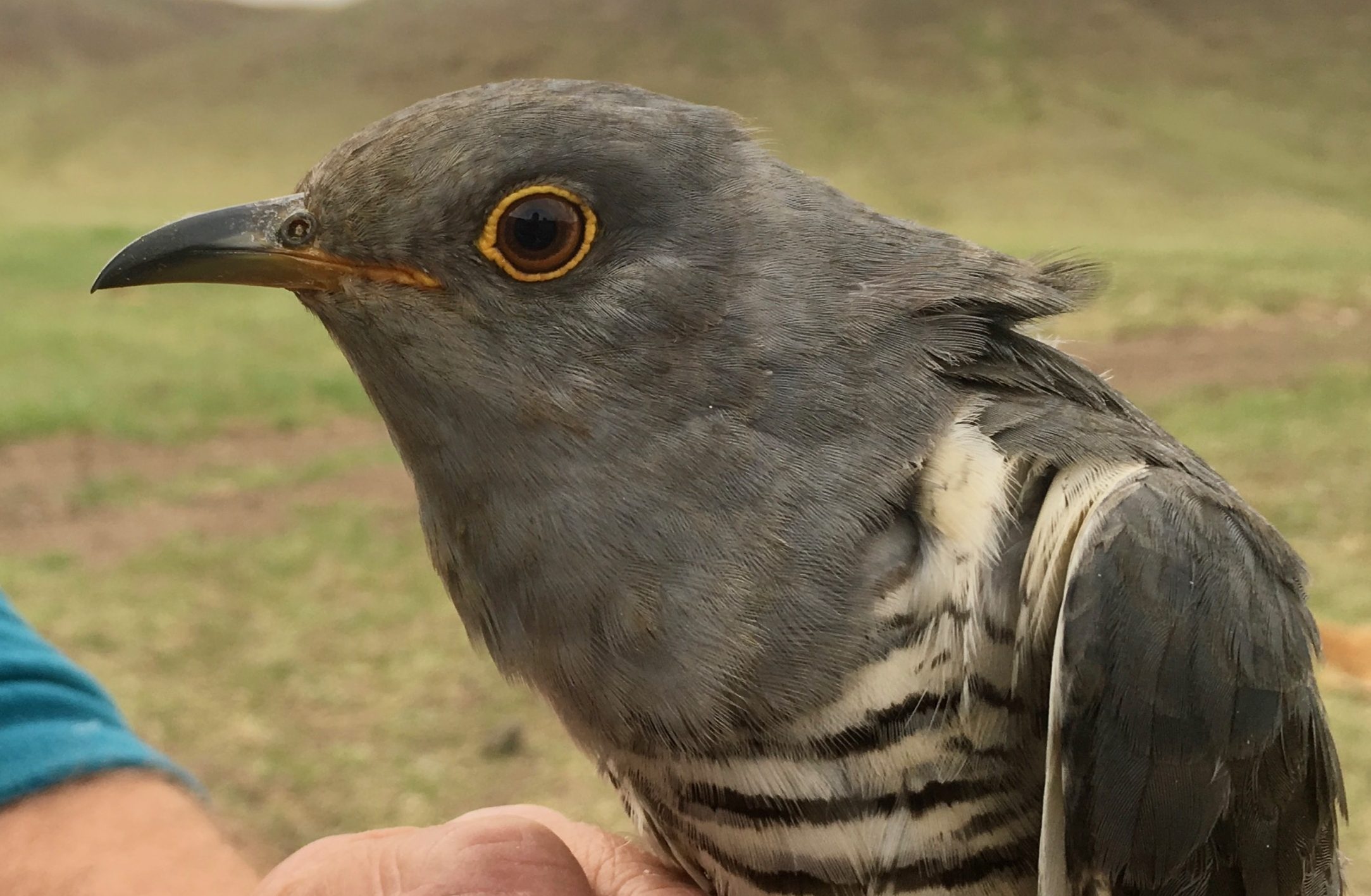
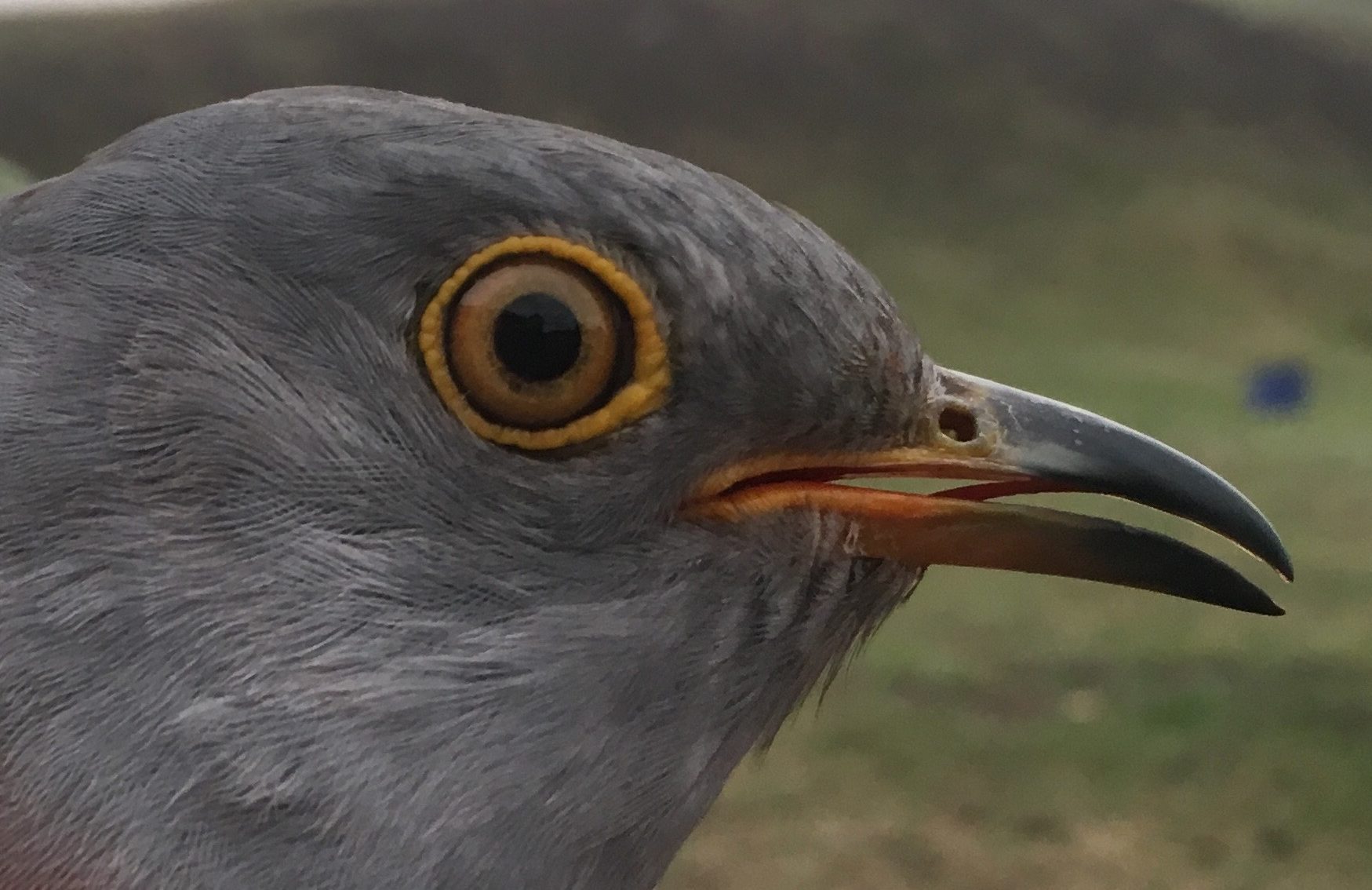
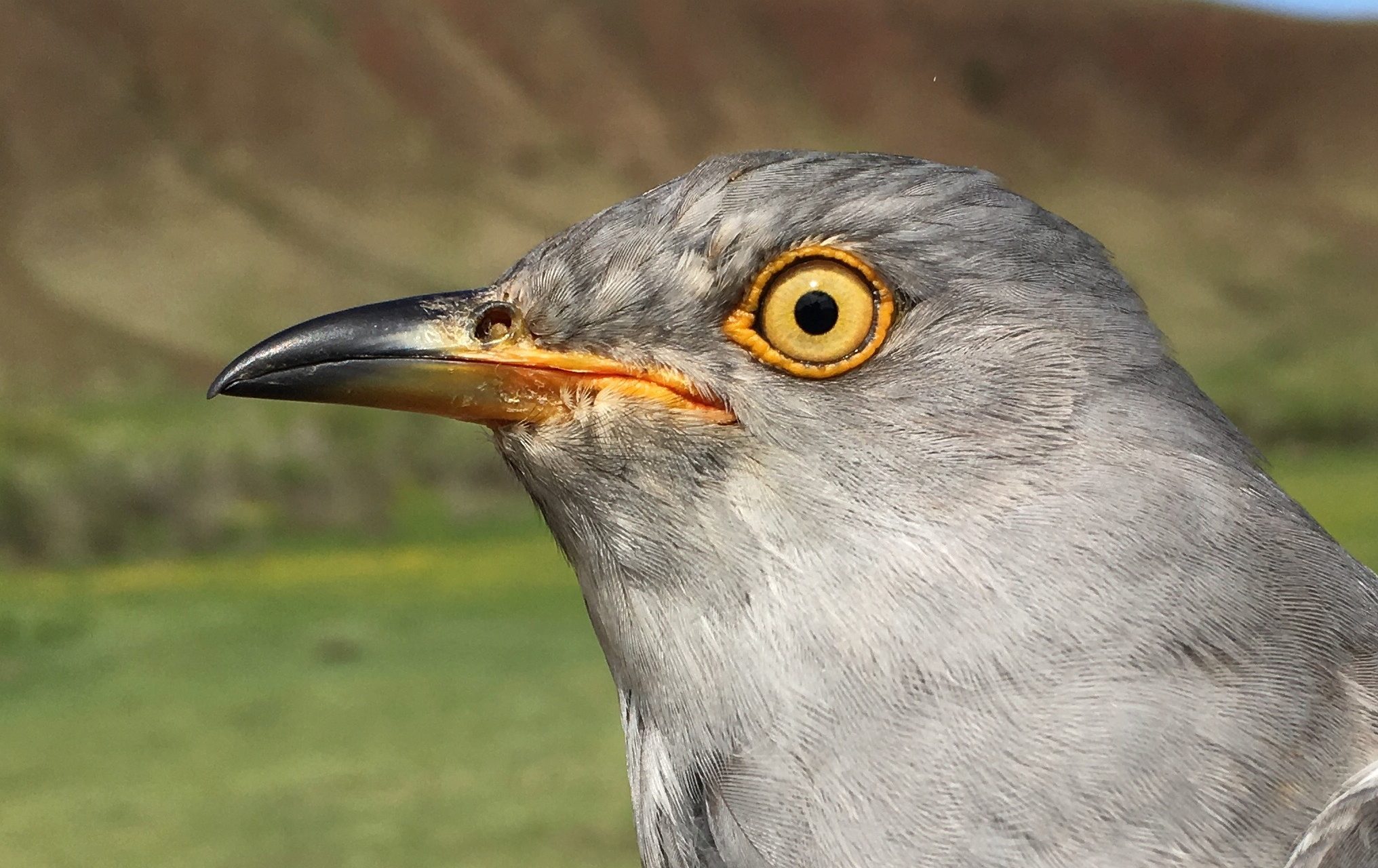
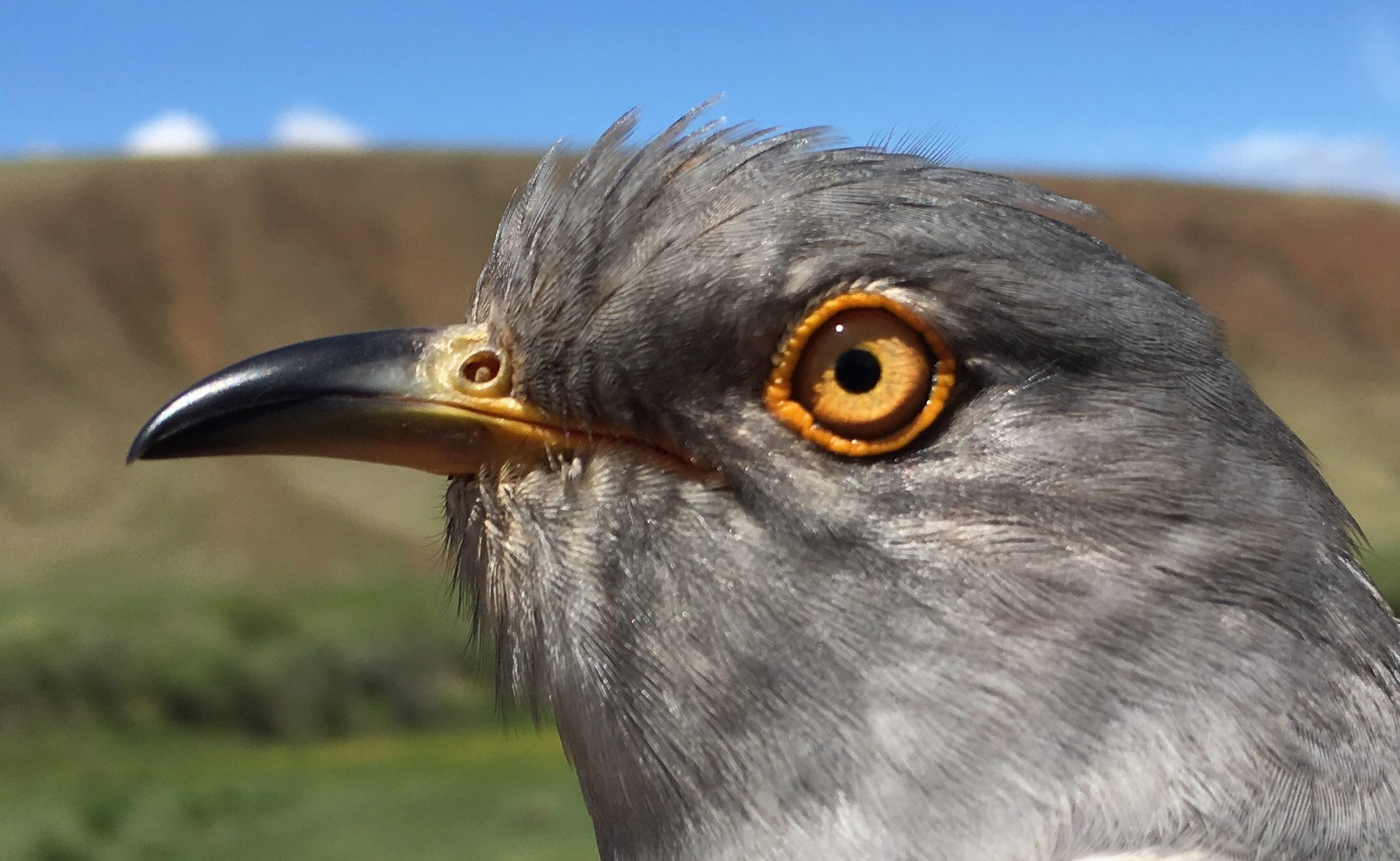
The Beijing Cuckoo Project had revealed that Beijing's cuckoos winter in Africa. But how far did that pattern reach? In June 2019, the team travelled to the Khurkh Bird Banding Center in northern Mongolia to find out — fitting satellite tags to five more cuckoos, including, for the first time anywhere, an Oriental Cuckoo.
From 4–8 June 2019, one Oriental Cuckoo and four Common Cuckoos were tagged around Khurkh. As in Beijing, local schoolchildren named the birds and followed "their" cuckoos through the seasons. What followed was another extraordinary demonstration of endurance — and, in ONON, one of the most complete migration journeys ever recorded for the species.
A new mystery: where does an Oriental Cuckoo go?
NOMAD was the first Oriental Cuckoo ever fitted with a satellite tag. Readers were polled on where he'd winter: SE Asia (Indonesia/Malaysia) led at 39%, ahead of Africa at 27%, with votes even for Australia and New Zealand. His destination remained one of the project's open questions.
The Cast
Five cuckoos, named by Mongolian schools
All five were tagged within a few kilometres of each other at Khurkh in June 2019 — yet within weeks they were scattered across thousands of kilometres of Asia, each following its own path south.
нүүдэлчин · NomadMale · Oriental Cuckoo
Cuculus optatus
The first Oriental Cuckoo ever tracked — a genuine step into the unknown. Last heard from in Yunnan, China, in October 2019, his wintering grounds still a mystery.
Хурх · Captain KhurkhMale · Common Cuckoo
Cuculus canorus
"Boldly going where no cuckoo has gone before." His tag fell silent in Yunnan in September 2019 — the mission, perhaps, beamed up by Scotty.
намжаа · NamjaaMale · Common Cuckoo
Cuculus canorus
Named for a storyteller in Mongolian folklore. He reached Kenya in late 2019, crossing the Arabian Sea from India to Somalia — 4,000 km in four days.
Баян · Bayan (Prosper)Male · Common Cuckoo
Cuculus canorus
A tireless traveller who wintered in Mozambique and flew some 24,000 km before his tag fell silent in China in May 2020, on the very last leg home.
Онон · OnonMale · Common Cuckoo
Cuculus canorus · named after the local river
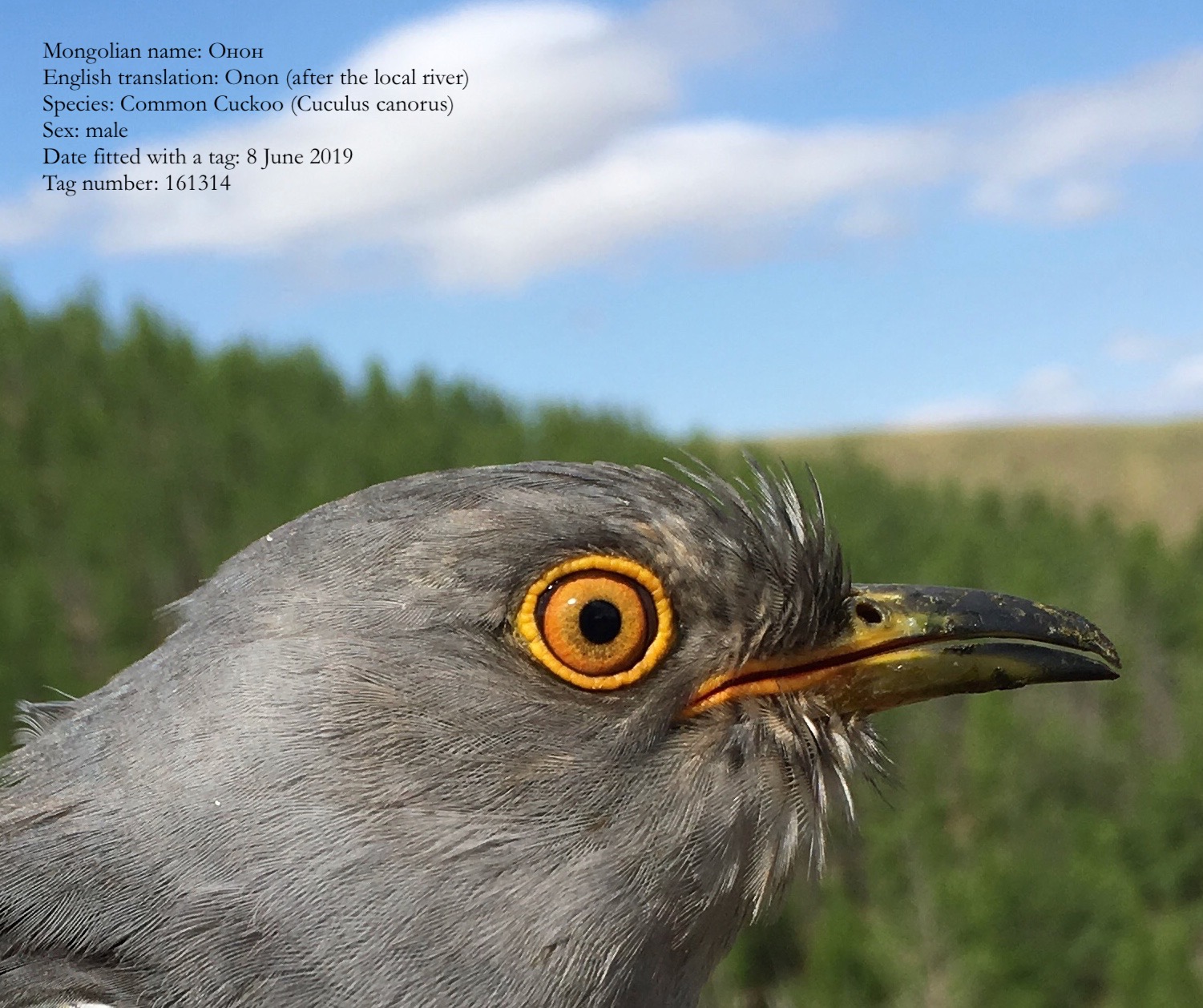
The star of the project — the one who completed the full round trip to Africa and back, twice crossing the Arabian Sea, and briefly became a media sensation.
The Journey
ONON: 26,000 km, and home again
Like the Beijing birds, the Mongolian cuckoos looped around the Gobi and the high mountains, crossed India, and struck out over the Arabian Sea to Africa — wintering in Tanzania, Zambia and Mozambique. But ONON did something few tracked cuckoos ever have: he completed the entire circuit and returned to the exact spot where he was tagged.
Setting out in late July 2020 across the Gobi, ONON crossed China, India and the Arabian Sea, wintered in East Africa, and on 27 May 2020 arrived back within sight of the Khurkh Bird Ringing Station — a round trip of around 26,000 km, 27 border crossings, 16 countries. Remarkably, one of his outbound signals over the Rub' al Khali Desert placed him just 15 km from Bayan's position 11 hours earlier — two birds, tagged side by side, still shadowing each other thousands of kilometres from home.
In just over 2.5 days, ONON flew more than 3,500 km non-stop across the Arabian Sea — roughly 50 km/h, without rest.
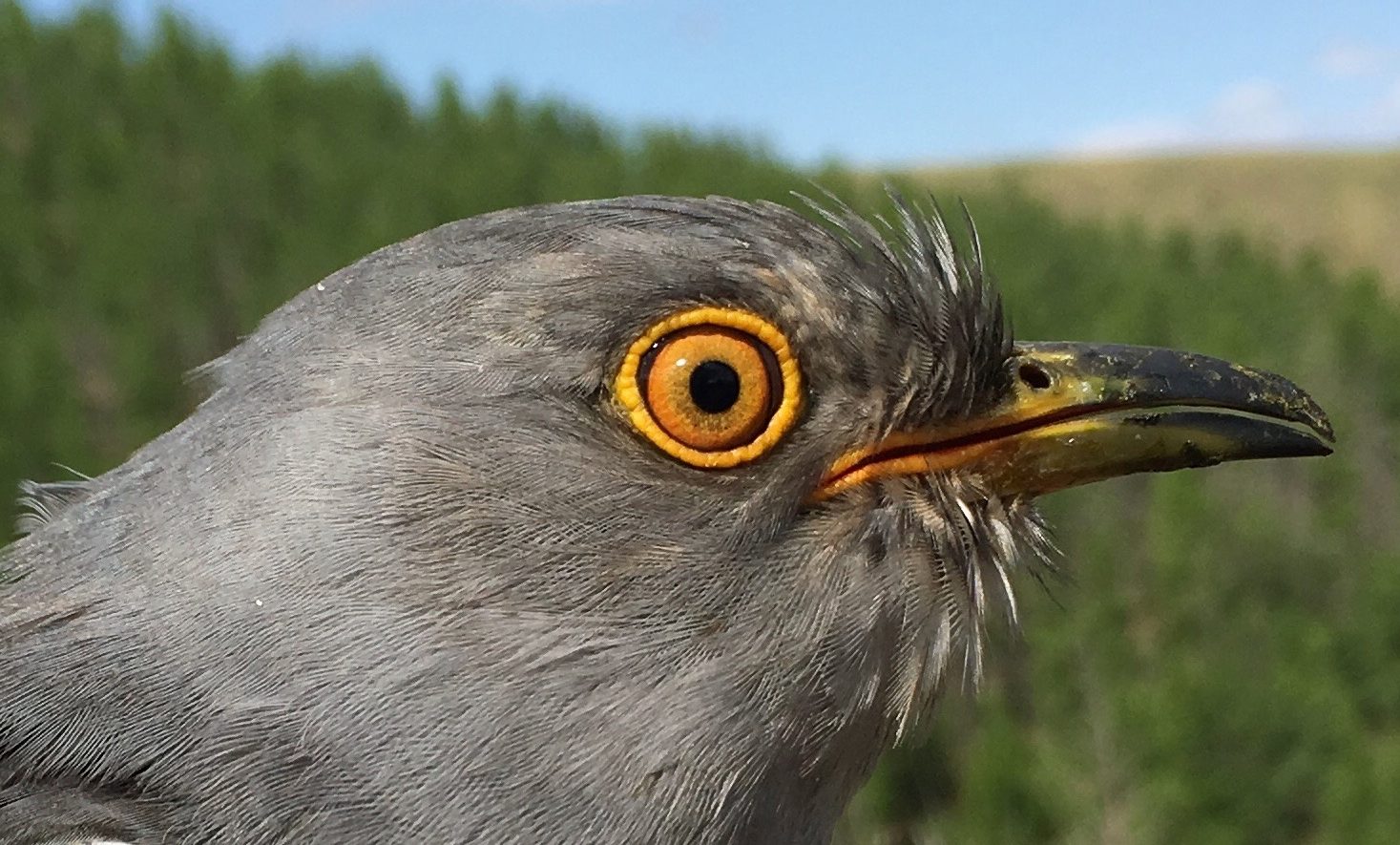
The tracks of the Mongolian Cuckoos as at 12 April 2020 — the great loop across Asia and the Arabian Sea to East and Southern Africa.ONON, photographed at Khurkh in June 2019 before release — the bird who would fly 26,000 km and return to this very place.
ONON crossed the Arabian Sea a final time in the autumn of 2020 — but this time the story did not end happily. His tag's last signals came from southern Yemen at the start of October 2020, showing a falling temperature and battery. He is presumed to have died there, having already given science one of the most complete cuckoo migration tracks ever recorded.
Milestones
The story, flight by flight
4–8 June 2019
Five cuckoos tagged at Khurkh
One Oriental Cuckoo (Nomad) and four Common Cuckoos (Captain Khurkh, Namjaa, Bayan, Onon) fitted with transmitters in northern Mongolia — the first time an Oriental Cuckoo had ever been satellite-tracked.
September 2019
The first Arabian Sea crossings
ONON and Bayan cross the Arabian Sea to Africa — almost a month earlier than the Beijing Cuckoos in 2016. Both reach Saudi Arabia and Ethiopia after crossing two deserts and two seas.
Late 2019
Wintering across East and Southern Africa
ONON, Bayan and Namjaa spread across Kenya, Tanzania, Zambia, Malawi and Mozambique — following the rains and the Intertropical Convergence Zone south, just as the Beijing birds had.
28 June 2020
ONON on the BBC and in The Guardian
A full-page Guardian article, an appearance on BBC Breakfast, and a feature on BBC Radio 4 — the Mongolian schoolchildren who named ONON got to see their cuckoo on television.
27 May 2020
ONON completes the round trip home
ONON returns to the vicinity of the Khurkh Bird Ringing Station, where he was tagged — a round trip of around 26,000 km, 27 border crossings and 16 countries. Extraordinary navigation and endurance.
October 2020
ONON's final journey
After crossing the Arabian Sea once more, ONON's last signals come from southern Yemen. He is presumed to have died there — leaving behind one of the most complete cuckoo migration records ever gathered.
Why It Mattered
A shared bird, a shared responsibility
The Mongolia project confirmed and extended what Beijing had revealed: that cuckoos breeding across East Asia undertake one of the natural world's great journeys, wintering in Africa via an epic crossing of the Arabian Sea. Tracking an Oriental Cuckoo for the first time opened an entirely new line of enquiry.
But the project also carried a clear message. These birds are shared by every country along their route — from Mongolia to Mozambique — and that shared ownership brings a shared responsibility to protect the habitats they depend on. As the team wrote when Bayan was feared lost, if greater awareness of that responsibility is his legacy, then his life had strong purpose and meaning. The same is true of them all.
These birds are shared by all of us in the countries along the route — from Mongolia to Mozambique.
A Friendship Across A Flyway
How a cuckoo connected children in Mongolia and Socotra
On 27 November 2019, the cuckoo named Namjaa — Mongolian for "storyteller" — briefly touched down on Socotra, the remote Yemeni island in the Arabian Sea, some 240 km off the coast of Somalia. That single stopover set in motion one of the most moving episodes of the whole project.
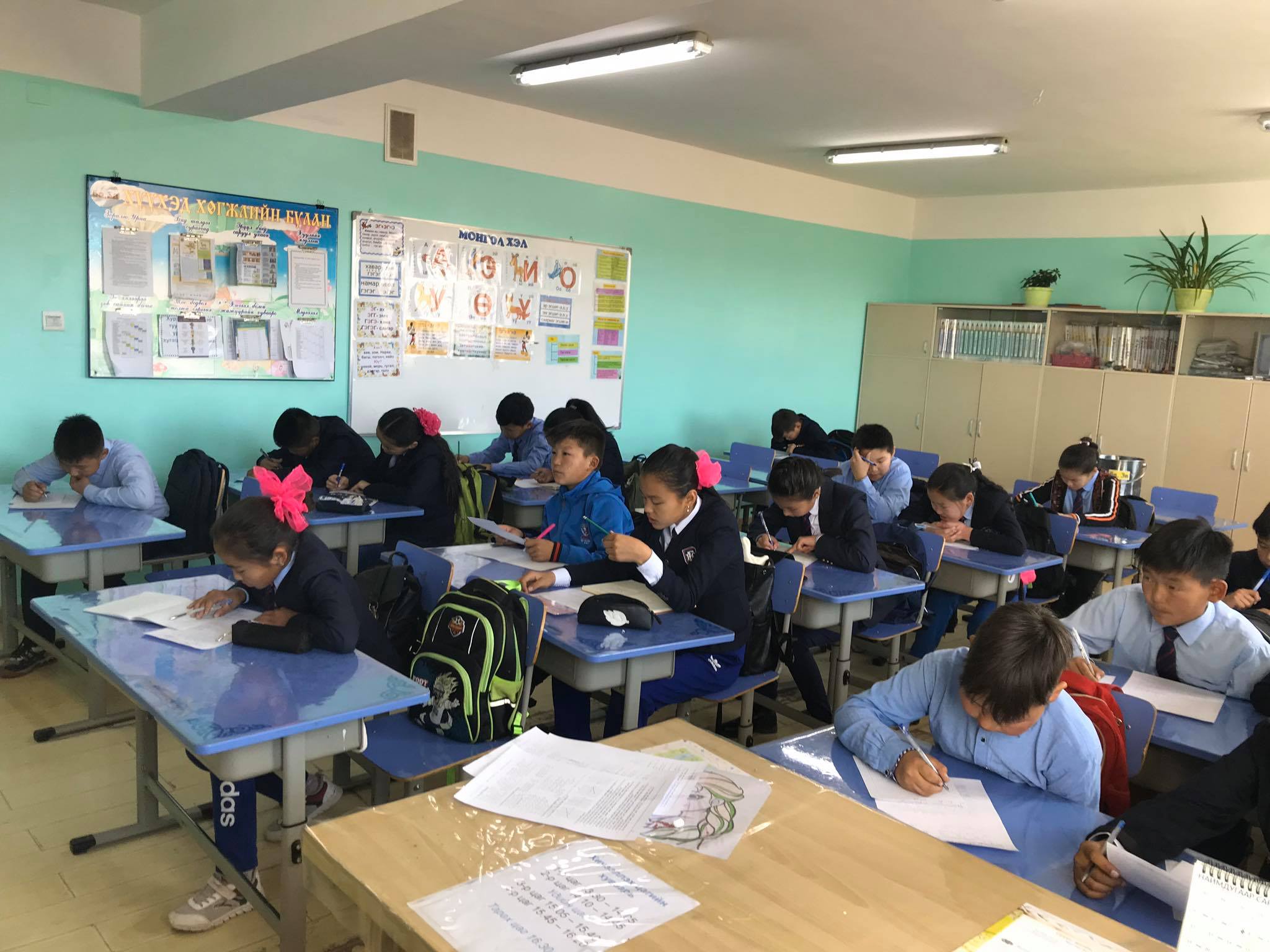
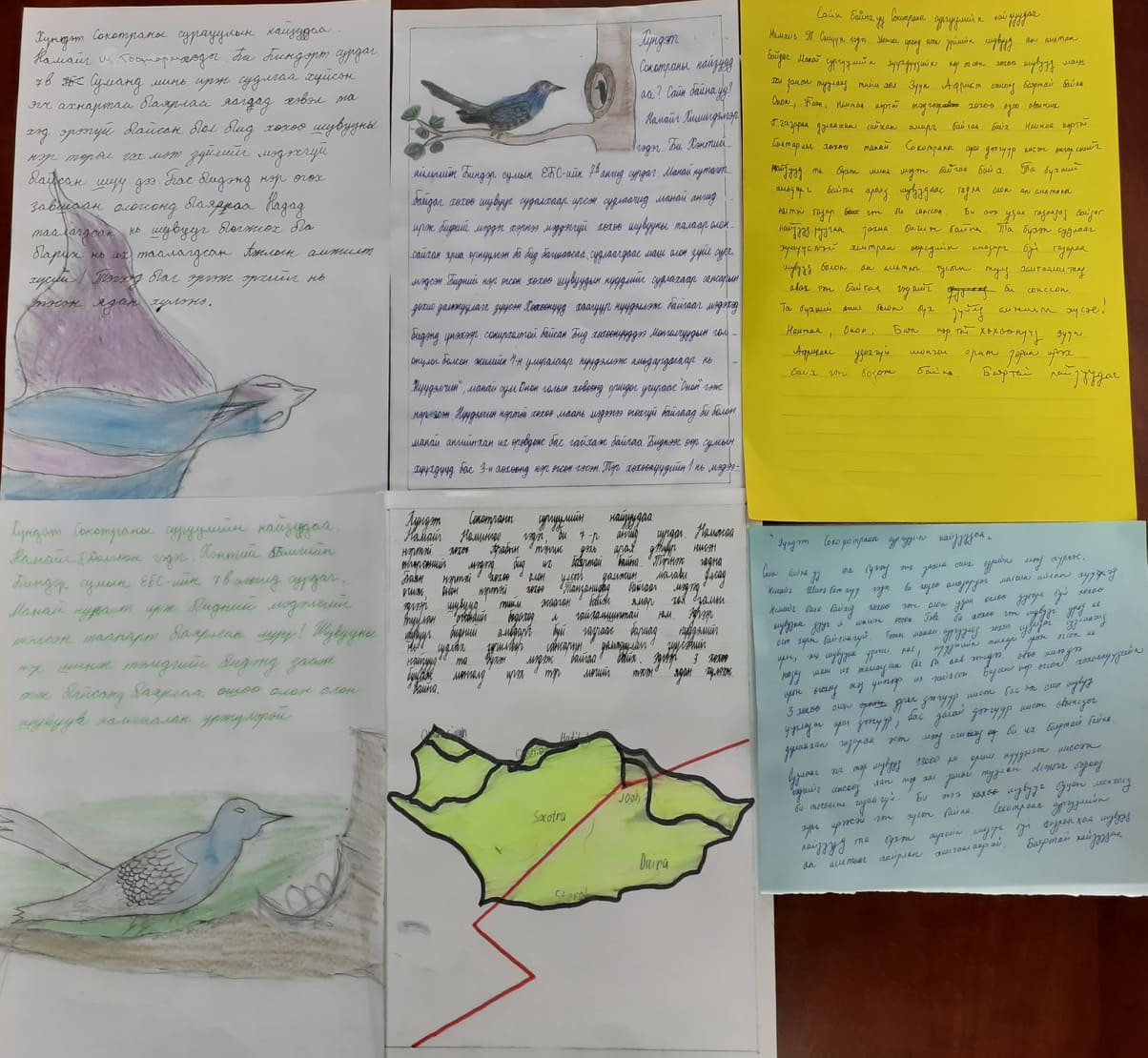
Learning that "their" cuckoo had rested on the island, schoolchildren from Binder and Khurkh villages in north-east Mongolia wrote letters to children on Socotra — to thank them for the safe passage of the cuckoos, and to tell them how important their island is for the millions of migratory birds that cross the Arabian Sea each year.
Schoolchildren from Binder school, near Khurkh in north-east Mongolia, writing to their counterparts on Socotra. Photo by Tuvshinjargal Erdenechimeg.
"I could not imagine how those birds traveled so far, having heard that they had traveled 13,000 km. I really want this bird to return to Mongolia. You should please take care of the birds and wildlife on the island of Socotra." — Shinekhuu, Binder village, Mongolia
A selection of the letters written by the Mongolian schoolchildren to their friends on Socotra.
A few days later, the children of Socotra — at schools in Hadibo — had the letters read aloud by their teachers, and wrote back with letters and drawings of their own, sharing the island's own wonders: the Egyptian Vulture they call "Su'aidoo," the extraordinary Dragon Blood Tree, and the 141 bird species that make Socotra a World Heritage Site.
"Thank you for writing to us, we are amazed by the small bird 'Namjaa' for travelling such long distances. We hope 'Namjaa' will return safely and fly over Socotra on his way back home to Mongolia." — Ashraf Saeed, Khaled Ibn Al Waleed High School, Socotra
Socotra is a World Heritage Site, but with Yemen's civil war and the collapse of tourism, conservation is a daily struggle. It is hoped these letters from far-away Mongolia help raise awareness of the island's importance to migratory birds — and support those working, in the hardest of circumstances, to protect it.
Richard Porter — author of Birds of the Middle East and adviser to BirdLife International's Middle East Programme, and a great supporter of the project.
With thanks to WSCC and Tuvshinjargal Erdenechimeg for facilitating the letters from Mongolia, and to Richard Porter and Karim Nasher — one of Yemen's leading conservationists — for arranging their delivery to Socotra and sending the replies.
In The Media
ONON becomes a star
The Mongolian Cuckoos — ONON in particular — drew coverage across the UK and beyond.
The Mongolia Cuckoo Project was a joint initiative by the Wildlife Science and Conservation Center (WSCC) of Mongolia and the British Trust for Ornithology (BTO), facilitated by Birding Beijing and generously supported by the Oriental Bird Club and Mr Dick Newell. The project team included Chris Hewson (BTO), Lyndon Kearsley, Dick Newell and Terry Townshend, with invaluable support from WSCC — and particular thanks to Nyambayar Batbayar, Batmunkh Davaasuren and Tuvshinjargal Erdenechimeg.
The Mongolia Cuckoo Project built on the Beijing Cuckoo Project — together, they transformed our understanding of one of the great bird migrations, and the shared responsibility to protect it.